Adani and Embraer to Establish Final Assembly Line for Jets in India

Aviation News Editor & Industry Analyst delivering clear coverage for a worldwide audience.
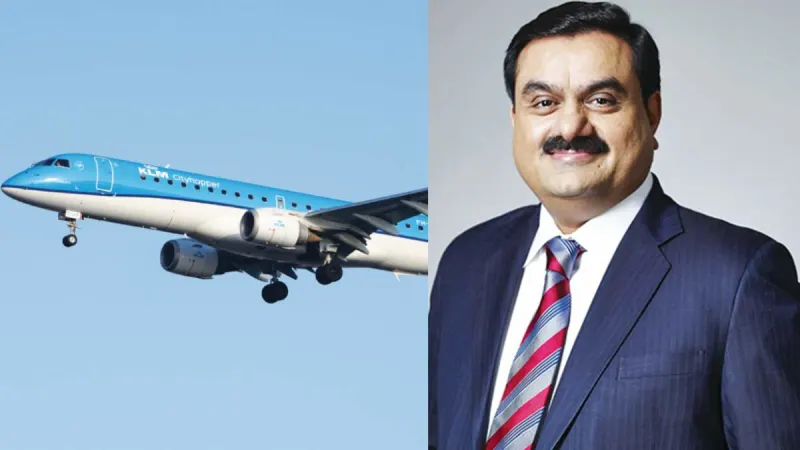
Adani Group and Embraer will establish a Final Assembly Line for commercial jets in India, boosting the nation's 'Make in India' aerospace efforts.
Key Takeaways
- •Adani Group and Embraer are set to sign an MoU on January 27 for a civilian aircraft Final Assembly Line (FAL) in India.
- •The FAL directly supports the 'Make in India' initiative and aims to meet the projected demand for at least 500 regional jets (80-146 seats) over the next 20 years.
- •The venture marks Adani's entry into aircraft building and strengthens Embraer's position in India's fastest-growing civil aviation market, which is seeing 7-10% projected annual domestic traffic growth.
- •The collaboration extends beyond assembly, with plans for Adani to potentially start manufacturing aircraft components locally.
The Adani Group Embraer partnership marks a significant step. They plan a Final Assembly Line India (FAL) for civilian aircraft. This move strongly supports the government’s Make in India aerospace initiative. India is one of the world's fastest-growing civil aviation markets. Air traffic demand is rising quickly across the nation.
A Historic Manufacturing Push
Executives from Adani Defence and Aerospace and Embraer will sign a Memorandum of Understanding (MoU). The signing is scheduled for January 27 in the national capital. Civil Aviation Minister K Rammohan Naidu will attend the event. The plan focuses on setting up the FAL. This line will produce Embraer regional jets in the country.
Embraer manufactures commercial jets with up to 150 seats. The FAL represents Adani Group's first foray into aircraft building. Adani Group already has a strong presence in the fast-growing Indian aviation space. Sources suggest Adani may later start aircraft component manufacturing. This would further deepen local production capabilities.
Capitalizing on Market Demand
This venture is a major boost for the Brazilian aerospace major. It helps Embraer strengthen its position in the Indian civil aviation market. The company aims to offer cost-competitive regional jets. Embraer's E-Jets began Embraer E-Jets operations in India in 2005. The current fleet includes nearly 50 aircraft. These serve the Indian Air Force, government agencies, and commercial airline Star Air.
Regional Jet Requirements
The regional jet demand India is substantial. The Indian market requires at least 500 aircraft. These are needed in the 80-146 seat range. This demand is projected over the next 20 years. India is positioned to lead aviation's next growth cycle. This is according to recent industry reports. Domestic passenger traffic is projected to rise 7-10% year-on-year. This strong growth reaffirms the need for new aircraft.
Embraer is looking to expand its presence significantly. This includes commercial aviation, defence, and business aviation. The company opened a new office in the national capital in October 2025.
Broader Aerospace Ecosystem
This commercial aircraft manufacturing project is critical. It supports India's goal of becoming a global aerospace hub. The government is actively working to boost civilian aerospace manufacturing. This includes improving aerospace maintenance repair overhaul (MRO) activities. For instance, French major Safran's MRO facility for LEAP engines will be operational this year.
The Adani Group Embraer partnership leverages Adani's existing infrastructure. This includes its large footprint in airport operations. This synergy could streamline logistics and support services. The project sets the stage for future component production. This builds domestic technical expertise. It is a major step toward full self-reliance in aerospace. The Directorate General of Civil Aviation (DGCA) oversees this rapidly expanding sector.
This new FAL follows other defense collaborations. Embraer Defense & Security and Mahindra Defence Systems signed an MoU in 2024. This was for the Indian Air Force’s Medium Transport Aircraft (MTA) program. The C-390 Millennium is the aircraft involved.
flying.flights provides comprehensive commercial aviation news covering airlines, aircraft, and airports.
Written by Ujjwal Sukhwani
Aviation News Editor & Industry Analyst delivering clear coverage for a worldwide audience. Covers flight operations, safety regulations, and market trends with expert analysis.
Visit ProfileYou Might Also Like
Discover more aviation news based on similar topics

Airbus Delivers 700th Aircraft from its Tianjin Assembly Line
Airbus delivered its 700th China-assembled A320 family aircraft from its Tianjin plant, highlighting its deepening industrial footprint in a key market.

Airbus Slows A320 Production Ramp-Up Amid P&W Engine Shortage
Airbus is slowing its A320 production ramp-up due to a persistent shortage of Pratt & Whitney engines, impacting its 2026 delivery targets.
Airbus Targets Record 2026 Deliveries Despite Engine Supply Constraints
Airbus targets a record 870 aircraft deliveries for 2026 but faces production constraints due to ongoing engine shortages from supplier Pratt & Whitney.

Boeing 777-9 Simulators Gain Initial FAA and EASA Qualification
Boeing received initial FAA and EASA qualification for its 777-9 flight simulators, a critical step toward commencing pilot training for the new widebody.

Embraer Targets 200-Jet Order for India Assembly Line
Embraer seeks 200 firm aircraft orders from Indian carriers as a prerequisite to establishing a local final assembly line with its partner Adani Group.

Airbus Cuts A320 Targets, Citing Pratt & Whitney Engine Shortages
Airbus is scaling back A320 production targets, publicly blaming Pratt & Whitney for a significant engine shortage that is disrupting its delivery schedule.