Airbus and Tata Launch India Helicopter FAL, First H125 by 2027

Aviation News Editor & Industry Analyst delivering clear coverage for a worldwide audience.
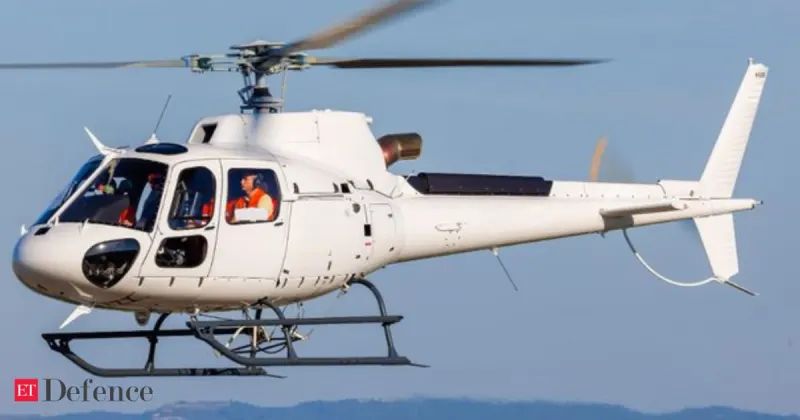
Airbus and Tata have launched India's first private helicopter Final Assembly Line, targeting the first H125 delivery by early 2027 to meet regional demand.
Key Takeaways
- •Establishes India's first private-sector helicopter Final Assembly Line in Vemagal, Karnataka.
- •Targets first 'Made in India' Airbus H125 helicopter delivery by early 2027.
- •Aims to serve domestic civil/military markets and export to neighboring countries.
- •Represents a key milestone for India's 'Make in India' and defense indigenization policies.
Airbus and its partner Tata Advanced Systems Limited (TASL) have established India's first private-sector helicopter Final Assembly Line (FAL), a significant development in the country's aerospace manufacturing capabilities. The facility will produce the Airbus H125 single-engine helicopter, with the first 'Made in India' unit scheduled for delivery in early 2027.
The new FAL, located in Vemagal, Karnataka, is a cornerstone of the Indian government's 'AatmaNirbhar Bharat' (Self-reliant India) and 'Make in India' initiatives. It represents a major step towards the indigenization of defense and aerospace production, moving complex manufacturing and integration into the private sector for the first time. The collaboration builds on the existing partnership between Airbus and Tata, which includes a C295 military transport aircraft FAL in Vadodara.
Production Scope and Market Demand
The facility will initially focus on producing the Airbus H125, described by the manufacturer as the world's best-selling single-engine helicopter. According to an Airbus press release, the production plan aims to reach an output of 10 H125 helicopters annually by 2029. The H125 is known for its versatility and performance in high-altitude and extreme temperature environments; it is the only helicopter to have landed on the summit of Mount Everest.
This joint venture aims to serve both domestic and regional markets. The facility will produce helicopters for India's growing civil market, which is reported to have a potential demand for over 1,000 units for tourism, emergency medical services, and regional connectivity. Furthermore, the Indian Armed Forces are projected to require more than 1,000 helicopters over the next decade to modernize an aging fleet, according to defense analysis firm Bharat Shakti. The FAL will also produce helicopters for export to neighboring South Asian countries.
In an official statement, Bruno Even, CEO of Airbus Helicopters, noted the project's significance. "By establishing this facility with the Tata Group, Airbus is offering the Indian market a versatile and competitive platform with unrivaled performance that is 'Made in India' and tailored for missions across the country's unique topography," he said. N Chandrasekaran, Chairman of Tata Sons, described the FAL as "a landmark step in the nation's journey towards self-reliance in aerospace and defence."
Strategic and Industry Impact
The establishment of the H125 FAL is a key element of the strengthening Indo-French strategic partnership, highlighted by its inauguration by Indian Prime Minister Narendra Modi and French President Emmanuel Macron. It reflects a broader trend of India diversifying its defense procurement away from traditional suppliers and towards partnerships with Western firms that include technology transfer and domestic production components.
The project is expected to create a robust aerospace ecosystem in the region, fostering skill development and supply chain opportunities. By manufacturing a sophisticated rotary-wing platform domestically, India enhances its sovereign capabilities and positions itself as a key player in the regional aerospace market. More details on the partnership can be found in the official Airbus announcement.
Why This Matters
In my view, this Airbus-Tata venture is more than just a new factory; it's a pivotal moment for India's industrial ambitions. The project facilitates a critical transfer of advanced aerospace technology to the Indian private sector, something that has been a long-term strategic goal. This move not only reduces India's dependence on foreign military hardware but also positions the nation as a credible aerospace manufacturing and export hub for South Asia. It's a tangible outcome of the 'Make in India' policy that will have lasting effects on the country's defense and industrial landscape.
Access up-to-date commercial aviation news and airline industry developments via flying.flights. Track policy changes, airspace rules, and global aviation governance in the Regulatory category at flying.flights/regulatory.
Written by Ujjwal Sukhwani
Aviation News Editor & Industry Analyst delivering clear coverage for a worldwide audience. Covers flight operations, safety regulations, and market trends with expert analysis.
Visit ProfileYou Might Also Like
Discover more aviation news based on similar topics

Airbus Delivers 700th Aircraft from its Tianjin Assembly Line
Airbus delivered its 700th China-assembled A320 family aircraft from its Tianjin plant, highlighting its deepening industrial footprint in a key market.

Airbus Slows A320 Production Ramp-Up Amid P&W Engine Shortage
Airbus is slowing its A320 production ramp-up due to a persistent shortage of Pratt & Whitney engines, impacting its 2026 delivery targets.
Airbus Targets Record 2026 Deliveries Despite Engine Supply Constraints
Airbus targets a record 870 aircraft deliveries for 2026 but faces production constraints due to ongoing engine shortages from supplier Pratt & Whitney.

Boeing 777-9 Simulators Gain Initial FAA and EASA Qualification
Boeing received initial FAA and EASA qualification for its 777-9 flight simulators, a critical step toward commencing pilot training for the new widebody.

Embraer Targets 200-Jet Order for India Assembly Line
Embraer seeks 200 firm aircraft orders from Indian carriers as a prerequisite to establishing a local final assembly line with its partner Adani Group.

Airbus Cuts A320 Targets, Citing Pratt & Whitney Engine Shortages
Airbus is scaling back A320 production targets, publicly blaming Pratt & Whitney for a significant engine shortage that is disrupting its delivery schedule.