Aircraft Supply Chain Bottlenecks May Delay New Indian Airlines' Launch for Years

Key Points
- 1Aircraft order backlog surpasses 17,000 globally, equivalent to nearly 12 years of current production, delaying new airline launches by several years.
- 2Former Boeing executive Dinesh Keskar stated that new Indian carriers like Al Hind Air and FlyExpress will not be able to start operations immediately despite government NOCs.
- 3The former executive also highlighted that domestic aircraft manufacturing in India is not currently feasible due to a critical shortage of highly skilled engineers and technicians.
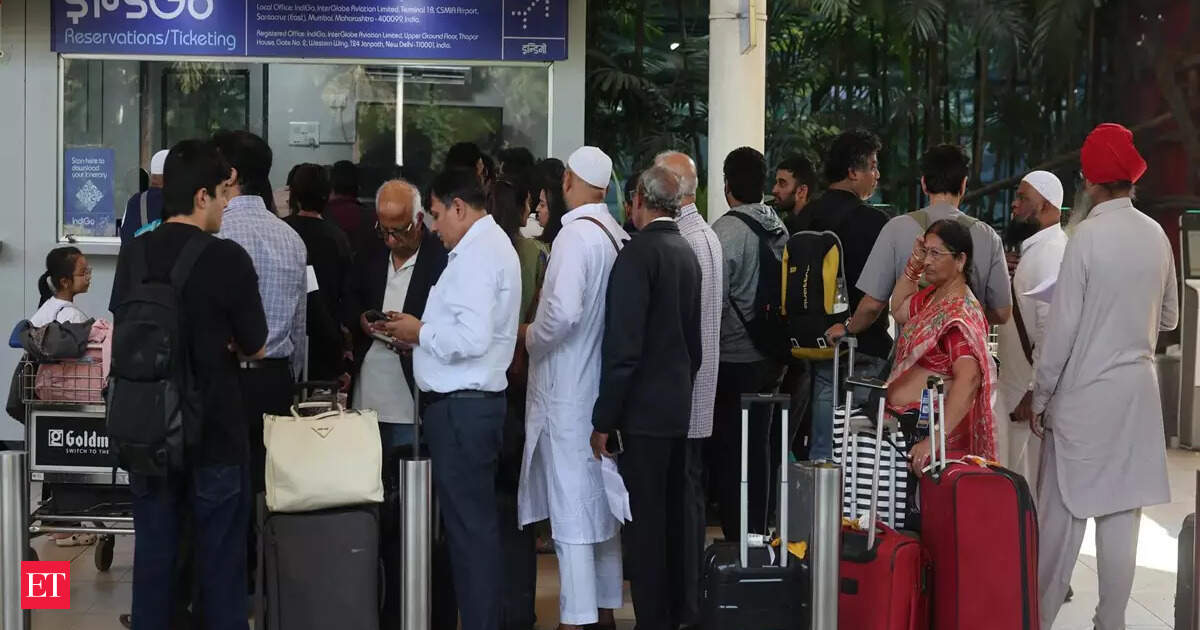
- 4The delays follow a crisis at IndiGo, which exposed the risks of a single company's dominance in the Indian domestic aviation market.
Former Boeing senior vice president for sales, Dinesh Keskar, has warned that new carriers entering the Indian domestic aviation market will face significant delays in starting operations. The primary reason is the global aircraft supply chain crisis and the limited availability of aircraft.
Keskar shared his insights during a Leadership Talk at the Indian Institute of Management (IIM) Nagpur. He stated that although the government has granted approval to new airlines launch plans, commercial operations may take several years to begin.
Global Aircraft Supply Constraints
The core challenge lies in the massive aircraft order backlog at major manufacturers. Global aircraft makers have orders booked until 2032. A new order placed with Boeing today could take approximately six years for delivery.
Industry data confirms this structural problem. The International Air Transport Association (IATA) reports a record-high order backlog of over 17,000 aircraft. This number is nearly 60% of the active global fleet. The current backlog is equivalent to almost 12 years of production at present rates. This mismatch between airline demand and production is not expected to normalize before 2031–2034.
- The global delivery shortfall is at least 5,300 aircraft.
- Airlines face higher leasing costs and reduced scheduling flexibility.
- The ongoing supply issues also slow down the industry's sustainability goals.
Impact on New Indian Carriers
The Indian government recently granted No-Objection Certificates (NOCs) to new carriers, including Al Hind Air and FlyExpress. This action followed IndiGo operational disruptions in late 2025. The crisis was linked to new pilot duty-time limits. It also highlighted the growing dominance of IndiGo in the market.
Keskar voiced concern over the dominance of a single company. He noted that a monopoly in any sector inevitably creates problems. While new entrants are approved, securing aircraft remains a major bottleneck. For example, Al Hind Air plans to use ATR turboprop aircraft.
Domestic Manufacturing Challenges
Keskar also addressed the feasibility of aircraft manufacturing India. He stated that domestic aircraft production is currently not practicable. The biggest hurdle is the skilled manpower shortage.
Government approvals and infrastructure are not enough. Highly-skilled engineers and technicians are difficult to find. This challenge explains why Boeing maintains only two aircraft manufacturing facilities globally, both in the United States.
India's government is pushing for indigenous aircraft development. Initiatives like the Saras Mk2 and a Special Purpose Vehicle are underway. However, industry experts suggest it could take 10 to 15 years to build significant capabilities.
For more insights on global commercial aviation news, visit flying.flights.
Topics
You Might Also Like
Discover more aviation news based on similar topics

Major Airlines Accelerate Bank Borrowing Ahead of 2026 Fleet Surge.
Indian airlines are set to increase bank borrowing in 2026 to fund a surge in aircraft inductions, international network expansion, and rising operating costs, reversing a 2025 slowdown.

Can New Airlines Overcome High Costs and Transform India's Aviation Sector?
Despite multiple bankruptcies and high operating costs, India's aviation sector is poised for massive growth, but new and existing airlines face major financial hurdles.

IndiGo Unlocks Europe: First Airbus A321XLR Lands for Non-Stop Athens Flights
IndiGo received India's first Airbus A321XLR, a long-range narrow-body jet, which will launch non-stop services from Delhi and Mumbai to Athens starting in late January 2026.

Will Airbus and Boeing Production Hopes Ride on 737-10 Certification?
Boeing and Airbus are planning for higher aircraft production in 2026, pending supply chain relief and the critical FAA certification of the Boeing 737-10.

India's Aviation Boom Strained by Crises at IndiGo and Air India
DGCA scrutiny follows IndiGo's massive December flight cancellations from a pilot shortage and Air India's safety lapses after a Boeing 787 crash, straining India's aviation duopoly.
Do IndiGo and Air India Crises Signal a Regulatory Breaking Point?
IndiGo and Air India operational crises expose India's aviation market systemic fragility, forcing government intervention and scrutiny of the DGCA's capacity.