Cairo Airport Remains Open Despite Mass Regional Flight Cancellations

Aviation News Editor & Industry Analyst delivering clear coverage for a worldwide audience.
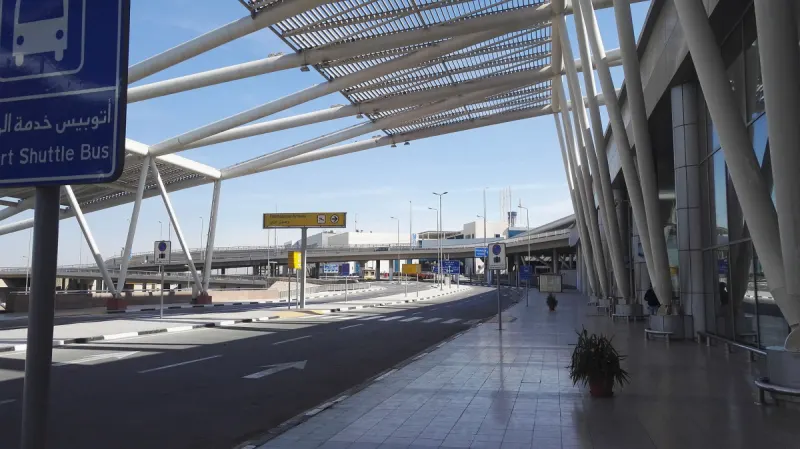
Cairo International Airport remains operational despite widespread Middle East airspace closures but faces significant flight cancellations from the conflict.
Key Takeaways
- •Remains operational despite widespread regional airspace closures from conflict.
- •Handled 22 diverted international flights as neighboring countries shut airspace.
- •Experienced over 75 flight cancellations on a single day, March 3, 2026.
- •EgyptAir suspended flights to 13 regional cities due to the escalation.
Cairo International Airport (CAI) continues to operate, serving as a critical node in a region beset by aviation turmoil following U.S.-Israeli military actions against Iran. While Egyptian airspace remains open, the airport and its hub carrier are navigating significant disruptions, including mass cancellations and the handling of diverted aircraft. On March 3, 2026, airport sources confirmed that over 75 flights were cancelled at CAI due to the escalating regional conflict.
The situation underscores Cairo's strategic importance as other major Middle Eastern hubs face near-total shutdowns. The Egyptian Ministry of Civil Aviation has placed all national airports on a state of maximum readiness to manage the crisis. According to a ministry statement, Egyptian airports received 22 diverted international flights on February 28 and March 1 alone, as neighboring countries implemented widespread airspace closures.
Operational Status and Regional Impact
Despite the external pressures, the core infrastructure at CAI remains functional. The Egyptian Civil Aviation Authority (ECAA) and the Cairo Air Navigation Center (CANC) are maintaining full operational capacity. Minister of Civil Aviation Sameh el Hefny has directed close coordination with authorities in affected countries to manage air traffic and accommodate rerouted flights safely. This proactive stance has positioned Cairo as an essential, if temporary, alternative hub for passengers stranded by the paralysis of transit routes through the Gulf.
The disruption is part of a much larger global event. According to Bloomberg data, over 23,000 flights were cancelled worldwide as of March 5, 2026, directly attributable to the conflict and subsequent airspace restrictions. The impact has been particularly severe for major Gulf carriers, with hubs in Dubai (DXB), Doha (DOH), and Abu Dhabi (AUH) facing unprecedented operational challenges. Compounding the issue, the US State Department issued a stark "DEPART NOW" warning for citizens in 15 Middle Eastern countries, including Egypt, severely depressing travel demand.
EgyptAir Navigates Airspace Closures
Egypt's flag carrier, EgyptAir (MSR), has been forced to make significant network adjustments. The airline announced the suspension of flights to 13 regional cities following the military escalation. The impact was immediately quantifiable; an Egypt Ministry of Civil Aviation statement confirmed that on March 1, 2026, 47 out of 116 scheduled EgyptAir flights to the Gulf region were cancelled. The airline's Integrated Operations Control Center (IOCC) is actively managing reroutings for its long-haul services to Asia, which typically transit the now-restricted airspace.
These disruptions come as EgyptAir is in a period of strategic growth. A ministry statement from November 2025 noted the airline's fleet consisted of approximately 71 aircraft, with ambitious plans to expand to 97 aircraft by the 2030/2031 fiscal year. The current crisis presents a significant operational and financial test for the state-owned carrier, forcing it to absorb the costs of cancellations, longer flight routes, and passenger re-accommodation. In line with industry contingency planning, the airline is offering full refunds and rebooking waivers for affected passengers.
Cairo's Strategic Position
The crisis highlights the robust capacity of Cairo International Airport. According to the Egypt Ministry of Civil Aviation, the airport handled 30.94 million passengers in 2025, a 6.8% increase from the previous year. On a peak day, February 14, 2026, CAI managed 737 flights and 111,212 passengers. Furthermore, OAG Schedules Analyser data shows that CAI was Africa's busiest airport by international flight capacity in January 2026, with 1.75 million departing seats. This existing capacity has been crucial in allowing the airport to absorb diverted traffic without a complete breakdown in services.
Why This Matters
This event demonstrates the profound vulnerability of global aviation networks to geopolitical shocks, with airspace closures capable of paralyzing major international travel corridors in a matter of hours. For Egypt, Cairo International Airport's ability to remain operational amidst regional chaos reinforces its strategic value as a stable and capable hub. The crisis serves as a real-world stress test of Egypt's aviation infrastructure and could influence long-term route planning for airlines seeking resilient transit points in the Middle East.
flying.flights is your source for accurate commercial aviation news and global aviation updates. From aircraft production to supply chains, commercial aviation manufacturing news is covered at flying.flights/manufacturing.
Written by Ujjwal Sukhwani
Aviation News Editor & Industry Analyst delivering clear coverage for a worldwide audience. Covers flight operations, safety regulations, and market trends with expert analysis.
Visit Profile