Delta A321 Pilot Taxiing Error at JFK Sparks Tense ATC Exchange

Aviation News Editor & Industry Analyst delivering clear coverage for a worldwide audience.
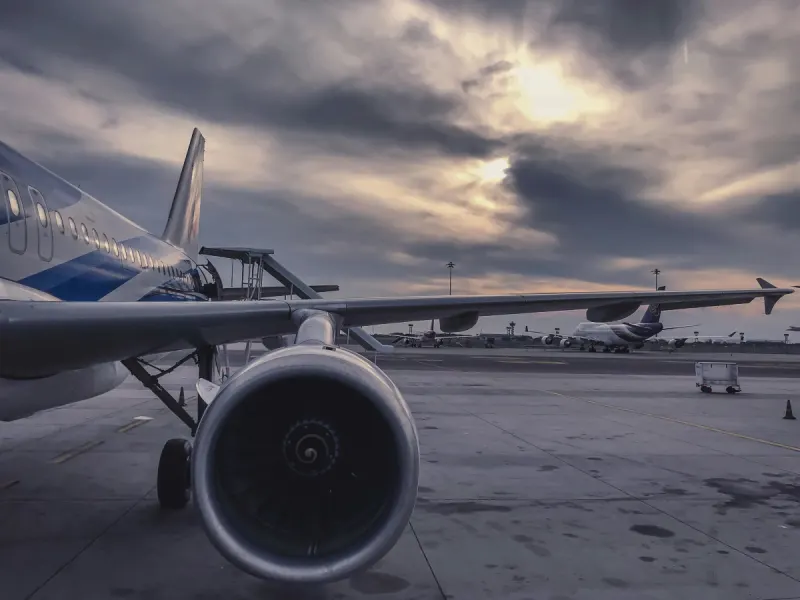
A Delta Air Lines pilot's wrong turn while taxiing at New York JFK led to a critical exchange with air traffic control, highlighting runway safety issues.
Key Takeaways
- •Deviated from ATC taxi instructions, turning onto taxiway Alpha instead of Bravo at JFK.
- •Sparked a tense verbal exchange with air traffic controllers, highlighting communication pressures.
- •Occurred amid heightened FAA scrutiny on runway safety following 1,732 incursions in FY2022.
- •Involved a Delta Air Lines Airbus A321neo, a common aircraft in the carrier's domestic fleet.
A Delta Air Lines flight crew operating an Airbus A321neo made a taxiing error at New York's John F. Kennedy International Airport (JFK) on February 19, 2026, leading to a tense exchange with ground controllers. The incident, involving flight DL806 destined for Las Vegas, did not result in a collision but highlights the ongoing focus on airport surface safety and the critical importance of precise pilot-controller communication.
The event occurred when the pilot of the A321neo was instructed by Air Traffic Control (ATC) to taxi to runway 4L. The clearance specified a right turn onto taxiway Bravo, followed by holding short of taxiway Juliet. However, the pilot mistakenly executed a right turn onto taxiway Alpha, a parallel taxiway, deviating from the cleared route. This error prompted an immediate and critical response from the JFK ground controller, whose exchange with the pilot underscored the seriousness of the deviation in the complex airport environment.
While no official statements regarding the incident have been released by Delta, the Federal Aviation Administration (FAA), or the controllers' union, the event draws attention to the broader issue of runway safety. According to FAA data, there were 1,732 runway incursions recorded in the United States during the 2022 fiscal year. The FAA defines a runway incursion as any occurrence involving the incorrect presence of an aircraft, vehicle, or person on the protected area of a surface designated for landing and takeoff.
A Renewed Focus on Surface Safety
The taxiing error at JFK comes at a time of heightened scrutiny over airport surface operations. Following a series of serious runway incursions across the U.S. in early 2023, the FAA initiated safety summits and increased its investment in airport surface surveillance technology. JFK itself was the location of a significant near-collision in January 2023, when an American Airlines Boeing 777 crossed an active runway directly in front of a departing Delta Boeing 737. That event is the subject of an ongoing National Transportation Safety Board (NTSB) investigation, which provides context for the sensitivity surrounding any surface deviation at the airport.
Delta Air Lines operates a significant fleet of the aircraft type involved. As of March 2025, the airline's fleet included 198 Airbus A321 aircraft, 71 of which were the more modern A321neo variant. These aircraft are mainstays of Delta's domestic network, operating frequently in and out of congested hubs like JFK.
Human Factors and Technological Safeguards
Investigations into surface incidents often identify human factors, such as pilot distraction or misinterpretation of instructions, as primary causes. Standardized phraseology and strict adherence to ATC clearances are fundamental components of the FAA's runway incursion avoidance protocols. Any deviation requires immediate correction to maintain separation and safety on the airfield.
To mitigate such risks, major airports like JFK are equipped with advanced technology. The Airport Surface Detection Equipment, Model X (ASDE-X) system provides controllers with detailed real-time surveillance of ground movements, helping to identify potential conflicts. This technology serves as a critical safety net, alerting controllers to deviations like the one made by the DL806 crew.
The incident serves as a case study in the importance of maintaining professional and clear communication, even under pressure. The tense nature of the recorded exchange highlights the high-stress environment of ATC operations at one of the world's busiest airports and the immediate need to resolve any ambiguity in instructions.
What Comes Next
Minor surface deviations that do not result in a significant safety event are typically handled through internal airline processes and may be reported to the FAA for review. It is uncertain if this specific incident will trigger a formal investigation by the FAA or NTSB. However, the event will likely be used internally by the airline for training purposes to reinforce procedures for taxiing in complex airport environments. The FAA continues to analyze data from all surface events as part of its broader effort to improve the safety of the National Airspace System, with a particular focus on preventing runway incursions.
Why This Matters
This incident, though resolved without harm, reinforces the thin margins of safety in ground operations at major international airports. For aviation professionals, it underscores the persistent challenges of human factors and the critical need for procedural discipline. The event validates the continued investment in both training and technology aimed at preventing surface incidents from escalating into more serious runway incursions.
Visit flying.flights for the latest commercial aviation news and airline industry updates. For detailed airline coverage, route changes, and fleet moves, explore the Airlines section at flying.flights/airlines.
Written by Ujjwal Sukhwani
Aviation News Editor & Industry Analyst delivering clear coverage for a worldwide audience. Covers flight operations, safety regulations, and market trends with expert analysis.
Visit ProfileYou Might Also Like
Discover more aviation news based on similar topics

Air India Sees Technical Incidents Spike Fourfold in January
Air India recorded a fourfold rise in technical incidents to 1.09 per 1,000 flights in January, prompting intensified regulatory scrutiny and new inspections.

AOG Technics Founder Jailed for Global Fake Aircraft Parts Fraud
AOG Technics founder Jose Yrala was jailed for selling 60,000 fake jet-engine parts, causing nearly £40 million in damages to the global airline industry.

Airlines Resume Puerto Vallarta Flights as Jalisco Security Stabilizes
Mexican authorities report Jalisco security has stabilized, allowing airlines to resume flights to Puerto Vallarta and Guadalajara after cartel violence.

AOG Technics Director Jailed for Fake CFM56 Engine Parts Scheme
AOG Technics' director was jailed after the company sold over 60,000 fake CFM56 engine parts, triggering a global aviation safety investigation.

Bullet Holes Found on American Airlines 737 MAX After Colombia Flight
American Airlines is investigating bullet holes found on a Boeing 737 MAX 8 after a flight from Bogotá, prompting a multi-agency security review.

India Investigates Three Aviation Emergencies in a 24-Hour Span
India is investigating three separate aviation emergencies in 24 hours, including a fatal air ambulance crash and two non-fatal incidents with a 737 and helicopter.