Emirates Cancels Accra-Dubai Flight Amid Escalating Middle East Tensions

Aviation News Editor & Industry Analyst delivering clear coverage for a worldwide audience.
Emirates cancelled its Accra-Dubai service following escalating Middle East tensions and reported airspace closures, disrupting a key transit route.
Key Takeaways
- •Cancelled Emirates flight EK 788 from Accra (ACC) to Dubai (DXB) on February 28, 2026.
- •Cites escalating regional tensions and reported airspace closures in the Middle East.
- •Coincides with unconfirmed US claims regarding the death of Iran's Supreme Leader.
- •Disrupts a key transit route for passengers connecting through Dubai, the world's busiest international hub.
Escalating geopolitical tensions across the Middle East have forced the cancellation of Emirates flight EK 788 from Accra to Dubai on Saturday, 28 February 2026. The disruption follows a series of military actions in the region, including reported bombings in Iraq and retaliatory strikes, leading to heightened security concerns and airspace restrictions that are impacting commercial aviation.
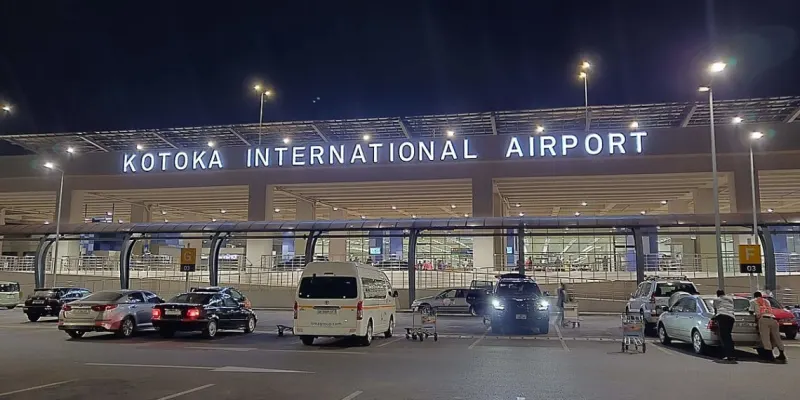
The cancelled service was scheduled to depart from Terminal 3 of Kotoka International Airport (ACC) in Accra at 7:15 pm Greenwich Mean Time (GMT). It was due to arrive at Dubai International Airport (DXB), a major global hub, at 6:50 am local time the following day. Flight tracking data confirms the service will not operate as planned, with gate information now listed as unavailable. The cancellation affects a critical route for passengers from Ghana connecting through the United Arab Emirates to destinations in Asia, Europe, and North America.
Regional Airspace Under Pressure
The decision to suspend the flight coincides with reports that several countries in the Gulf region, including Qatar and Kuwait, have closed their airspace. Such airspace closures are a direct response to the heightened military activity. Under international aviation regulations, sovereign nations retain the right to restrict or close their airspace to ensure the safety of air traffic, a measure that forces immediate and widespread disruption to airline schedules. Airlines are compelled to either suspend services or undertake lengthy and costly rerouting to avoid conflict zones.
The situation has been intensified by unconfirmed claims from former US President Donald Trump. In a post on his Truth Social platform, Mr. Trump stated that Iran’s Supreme Leader, Ayatollah Ali Khamenei, had been killed in an operation allegedly conducted with Israel using “highly sophisticated tracking systems.” He described the act as “justice” and suggested that targeted bombings would continue. As of this report, Iranian authorities have not issued a confirmation or denial regarding the claim. This development has added a significant layer of uncertainty and risk to the regional security landscape.
Impact on Global Hub Operations
Dubai International Airport is the world's busiest airport by international passenger traffic, making any disruption to its operations significant for global travel patterns. The airport's strategic location has established it as a critical transit point connecting major continents. The current instability and resulting flight cancellations underscore the vulnerability of such concentrated hub-and-spoke models to regional conflicts. For Emirates, the flag carrier based in Dubai, the security of flight corridors through the Persian Gulf is paramount to its business model.
This is not the first instance where geopolitical events have impacted aviation in the Middle East. Past conflicts have led to similar airspace closures, forcing airlines to adapt operationally. Carriers with significant exposure to the region must maintain robust crisis management protocols to handle rerouting, passenger communication, and crew safety. Emirates has yet to release a detailed public statement regarding the specific cancellation of EK 788, but like other airlines operating in the region, it is actively reviewing its schedules as the situation evolves.
What Comes Next
Airlines are advising passengers scheduled to travel to, from, or through the affected region to check their flight status frequently. Those impacted by cancellations are being directed to contact their airline for rebooking or refund options. The duration of the flight disruptions remains uncertain and is contingent on the de-escalation of military activities and the reopening of key air corridors. Aviation authorities and airlines will continue to monitor the security situation closely before resuming normal operations. The potential for further retaliatory actions could lead to more widespread and prolonged impacts on air travel across the Middle East and beyond.
Why This Matters
This cancellation highlights the immediate and tangible impact of geopolitical instability on global aviation networks. It demonstrates how regional conflicts can sever vital air links, disrupting travel for thousands of passengers and posing significant operational and financial challenges for airlines. The event serves as a critical reminder of the aviation industry's sensitivity to security threats, forcing carriers that rely on major hubs like Dubai to have contingency plans for rapid, large-scale disruptions.
flying.flights provides comprehensive commercial aviation news covering airlines, aircraft, and airports. From aircraft production to supply chains, commercial aviation manufacturing news is covered at flying.flights/manufacturing.
Written by Ujjwal Sukhwani
Aviation News Editor & Industry Analyst delivering clear coverage for a worldwide audience. Covers flight operations, safety regulations, and market trends with expert analysis.
Visit Profile