India Resumes Limited UAE Flights Amid Mass Cancellations

Aviation News Editor & Industry Analyst delivering clear coverage for a worldwide audience.
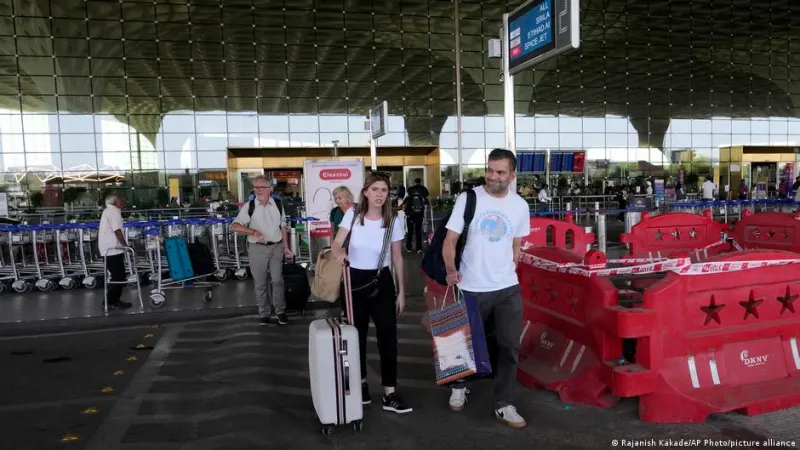
India has initiated limited repatriation flights from the Middle East under its Vande Bharat Mission, despite 80 international flight cancellations at Delhi.
Key Takeaways
- •Reports 80 international flight cancellations at Delhi's Indira Gandhi International Airport.
- •Initiated limited repatriation flights from the United Arab Emirates under the Vande Bharat Mission.
- •Operated amid a broader DGCA ban on scheduled international passenger services since March 2020.
- •Facilitated travel for over 18.3 million passengers via 217,000+ flights by late 2021.
Amid significant air travel disruptions, including the cancellation of 80 international flights at New Delhi's Indira Gandhi International Airport (DEL), India has commenced limited flight operations from the Middle East. The initial flights are part of a large-scale repatriation effort to bring home Indian citizens stranded abroad due to widespread travel restrictions. The first services carrying passengers from Abu Dhabi and Dubai in the United Arab Emirates (UAE) have landed in India, marking a critical step in the government-led response to the global aviation shutdown.
These flights represent the initial phase of the Vande Bharat Mission (VBM), one of the largest civilian repatriation exercises ever undertaken globally. The operation was launched in response to the comprehensive ban on international commercial passenger services imposed by India's aviation regulator. This resumption of limited Middle East flight operations is not a return to normal scheduled services but a series of special, non-scheduled flights coordinated by the government to address the growing number of stranded nationals.
Regulatory Background and VBM Launch
The context for these repatriation flights is the suspension of all scheduled international commercial passenger services to and from India, a directive issued by the Directorate General of Civil Aviation (DGCA). This flight ban originally went into effect on March 23, 2020, to curb the spread of the COVID-19 pandemic. The DGCA extended the ban multiple times, effectively grounding international travel and necessitating a government-managed solution for repatriation.
In response, the Government of India launched the Vande Bharat Mission in May 2020. The mission was designed to systematically bring back Indian nationals from various parts of the world. According to data from Policy Commons, by December 2020, this extensive operation had already facilitated the return of nearly 4 million overseas Indians. It is important to note that the VBM was a commercial operation, with airfares paid by the passengers without any government subsidy, as confirmed by the Press Information Bureau (PIB), Government of India.
Scale of Repatriation Operations
The Vande Bharat Mission grew into a massive logistical undertaking, far exceeding initial expectations. Official government data highlights the immense scale of the program. According to a PIB report, as of October 31, 2021, over 217,000 flights had been operated under the mission. These flights facilitated travel for more than 18.3 million passengers, which includes both inbound and outbound travelers who utilized the special flights and later, the air bubble arrangements.
While the VBM focused on repatriation, the Indian government also established bilateral "air bubble" agreements with numerous countries. These temporary arrangements allowed airlines of both countries in the pact to operate international flights with a set of regulations and restrictions, creating a parallel system for limited international travel to function alongside the VBM. This phased approach reflected a global trend of slowly reopening international air corridors before a full-scale resumption of services could be safely implemented.
Industry Impact
The widespread India flight cancellations and the subsequent launch of the Vande Bharat Mission underscore the profound impact of the health crisis on global aviation. The situation forced a pivot from commercial, market-driven schedules to state-controlled repatriation efforts, a trend seen worldwide during 2020. India's VBM stands out due to its sheer scale and duration, demonstrating the logistical capabilities required to manage such a crisis. The reliance on national carriers like Air India and private Indian airlines for these operations provided them with a critical, albeit government-directed, revenue stream during a period when most of their international fleets were grounded.
Why This Matters
This development signals a fundamental, albeit temporary, shift in the purpose of international aviation from commercial transport to a state-managed utility for citizen welfare. For airlines, it created a new operational paradigm focused on government charters rather than open-market ticket sales. For stranded passengers, these repatriation flights represented a critical lifeline, highlighting the essential role of aviation during global crises beyond tourism and business travel.
For global airline trends and commercial aviation news, turn to flying.flights. Discover how innovation is shaping aviation through aircraft systems, avionics, and digital tools at flying.flights/technology.
Written by Ujjwal Sukhwani
Aviation News Editor & Industry Analyst delivering clear coverage for a worldwide audience. Covers flight operations, safety regulations, and market trends with expert analysis.
Visit Profile