Slabjack Geotechnical Offers Aviation-Grade Runway Repair in WA & N. Idaho

Aviation News Editor & Industry Analyst delivering clear coverage for a worldwide audience.
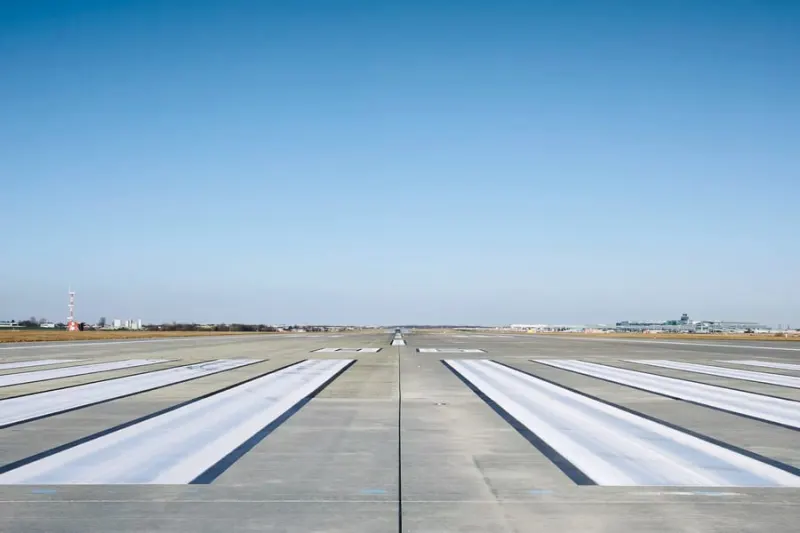
Slabjack Geotechnical is providing specialized airport runway concrete repair using polymer injection technology across Washington and Northern Idaho.
Key Takeaways
- •Utilizes engineered polymer injection for rapid, high-strength runway repairs.
- •Addresses subgrade soil stabilization to prevent slab settlement and cracking.
- •Helps reduce Foreign Object Debris (FOD) risks by eliminating concrete slab movement.
- •Offers a cost-effective alternative, often 50-70% cheaper than full slab replacement.
Spokane-based Slabjack Geotechnical is now providing specialized airport runway concrete repair services across Washington and Northern Idaho, addressing the unique structural demands of airfield pavements. The company, founded in 2011, employs an engineered polymer injection system for concrete stabilization and lifting, a method gaining traction as a cost-effective and less disruptive alternative to full slab replacement for runways, taxiways, and aprons.
Airport pavements are subjected to extreme operational stresses that far exceed those on public roadways. Concentrated loads from commercial, cargo, and military aircraft, combined with constant traffic cycles, braking forces, and environmental factors like freeze-thaw cycles, accelerate sub-surface deterioration. This can lead to voids, differential settlement, and slab cracking, compromising pavement integrity and posing significant safety risks.
Advanced Repair for FAA Compliance
The primary method used by Slabjack Geotechnical is the injection of a high-density, structural polyurethane polymer. This material is engineered to cure into a durable grout that fills voids, stabilizes underlying soils, and restores the load-bearing capacity of concrete slabs. This process is critical for maintaining surface performance compliant with Federal Aviation Administration (FAA) standards. Proper pavement condition is a core component of an airport's Pavement Management Program (PMP), a framework guided by regulations such as FAA Advisory Circular 150/5320-6G, which outlines standards for airport pavement design and evaluation.
By ensuring uniform support beneath the concrete, the stabilization technique mitigates slab movement and rocking. This is crucial for preventing the generation of Foreign Object Debris (FOD), which the FAA defines as any substance or article that could cause damage to aircraft. Loose concrete fragments from deteriorating joints or cracks are a primary source of FOD, which is managed under guidelines like AC 150/5210-24. Eliminating slab movement reduces joint fatigue and minimizes the potential for such hazardous debris.
Operational and Financial Benefits
A key driver for the adoption of polymer injection in aviation is the need to minimize operational downtime. Unlike traditional concrete replacement, which can close runways or taxiways for extended periods, polymer-based repairs cure rapidly. In many cases, repaired surfaces can return to service on the same day, a significant advantage for busy airfields. This aligns with a broader industry trend toward rapid-intervention materials that reduce disruption to flight schedules and ground operations.
From a financial perspective, stabilization and lifting methods present a compelling alternative to complete reconstruction. Industry data indicates that these repair techniques are often 50-70% less expensive than full concrete replacement. This allows airport operators, particularly at smaller regional facilities with limited capital budgets, to extend the service life of existing infrastructure and proactively manage pavement conditions in accordance with FAA maintenance guidelines outlined in AC 150/5380-6C.
Slabjack Geotechnical's services cover a range of airfield surfaces, including runways, taxiways, aprons, and terminal-adjacent concrete. The company operates from locations in Spokane, Tri-Cities, Wenatchee, and Puget Sound, positioning it to serve aviation facilities throughout its specified service area.
Why This Matters
The availability of specialized, modern pavement repair services is critical for maintaining the safety and operational efficiency of regional airports. As aircraft grow heavier and traffic volumes increase, proactive infrastructure maintenance becomes essential for preventing costly failures and ensuring regulatory compliance. Methods like polymer injection offer a technically sound and financially viable solution for airport operators to preserve their most critical assets, ensuring the long-term stability and safety of their airfield pavements.
Get breaking commercial aviation news and expert airline analysis at flying.flights. For airline finances, mergers, and industry strategy, visit the Business category at flying.flights/business.
Written by Ujjwal Sukhwani
Aviation News Editor & Industry Analyst delivering clear coverage for a worldwide audience. Covers flight operations, safety regulations, and market trends with expert analysis.
Visit ProfileYou Might Also Like
Discover more aviation news based on similar topics

Melbourne Airport Announces $4.5B International Terminal Expansion
Melbourne Airport will invest $4.5B to expand its international terminal, adding five gates to accommodate record passenger growth and new aircraft.

Heathrow Pays £10,000 to Passenger in 100ml Liquids Security Dispute
Heathrow Airport paid over £10,000 to a passenger whose collectible whisky was confiscated in a dispute over 100ml liquid and duty-free bag rules.

American Airlines, MIA Announce $1B Concourse D Expansion
American Airlines and Miami officials revealed a $1 billion plan to expand Concourse D at MIA, adding 17 new gates to enhance the carrier's major hub.

High Winds Delay Over 800 Flights at Denver International Airport
High winds at Denver International Airport prompted an FAA ground delay program, causing over 800 flight delays with an average wait time of 92 minutes.

Fire at Cape Town Airport Temporarily Halts International Flights
A fire at Cape Town International Airport prompted a temporary suspension of international departures after impacting critical IT and network services.

Gatwick Airport Adds 12 New International Routes for Summer 2026
London Gatwick Airport is launching 12 new international routes with 8 new airlines for summer 2026, marking its largest network expansion since 2019.