TIA Cancels 18 Flights to Middle East Amid Regional Airspace Closures

Aviation News Editor & Industry Analyst delivering clear coverage for a worldwide audience.
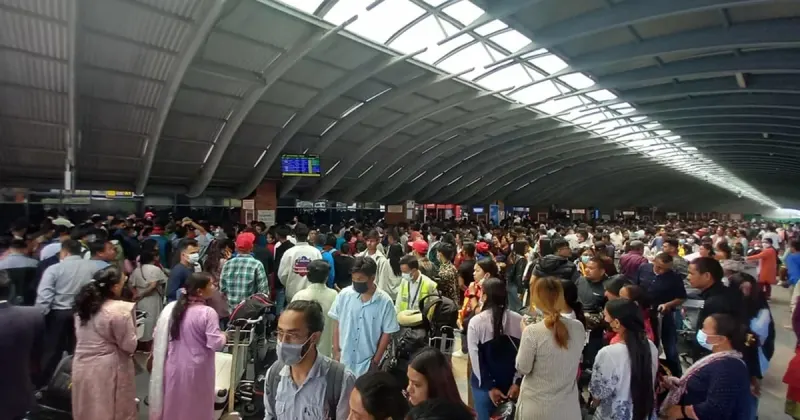
Kathmandu's TIA canceled 18 flights to the Middle East, affecting over 3,000 passengers due to widespread airspace closures from regional tensions.
Key Takeaways
- •Canceled 18 international flights from Kathmandu on March 1, 2026.
- •Impacted over 3,000 passengers traveling to key Middle Eastern hubs.
- •Resulted from widespread airspace closures due to regional geopolitical tensions.
- •Affected major carriers including Nepal Airlines, Qatar Airways, and FlyDubai.
Geopolitical tensions in the Middle East have forced the cancellation of 18 international flights from Nepal's Tribhuvan International Airport (TIA), disrupting travel for over 3,000 passengers. The cancellations on Saturday, March 1, 2026, were a direct result of airspace closures in several Gulf countries, highlighting the vulnerability of international air travel to regional conflicts.
The Civil Aviation Authority of Nepal (CAAN) confirmed the figures, stating that the disruption primarily affected routes to major hubs in the Middle East. Affected destinations included Doha, Dubai, Dammam, Sharjah, and Kuwait. Major carriers impacted by the airspace restrictions were Nepal Airlines, Qatar Airways, FlyDubai, Air Arabia, and Himalaya Airlines. The sudden halt in operations underscores the critical role Middle Eastern airspace plays as a global aviation corridor, particularly for connecting South Asia to the rest of the world.
Official Response and Airport Status
Airport authorities are managing the situation on the ground while awaiting further clarity. Tek Nath Sitaula, General Manager of Tribhuvan International Airport, addressed the indefinite nature of the disruption. "All flights from Nepal scheduled for the afternoon and night have been canceled due to flight restrictions at Sharjah, Doha, Dubai, Kuwait City, Abu Dhabi, Qatar, and Dammam airports," Sitaula stated. "Information regarding when flights will resume will be provided upon further decision."
Both TIA management and CAAN, Nepal's primary aviation regulator, have advised passengers to maintain direct contact with their respective airlines for the most current information on flight schedules and rebooking options. The official CAAN website serves as a key resource for regulatory announcements, though specific flight details remain with the operators.
Impact on Nepal's Connectivity
The flight cancellations expose the significant reliance of Nepal, a landlocked country, on Middle Eastern hubs for global connectivity. Airports in Dubai, Doha, and Sharjah are essential transit points for a large number of Nepali overseas workers traveling to and from their jobs in the Gulf region and beyond. This disruption affects a critical economic lifeline for the country and creates significant logistical challenges for thousands of travelers.
Tribhuvan International Airport, which handled a record 5.04 million international passengers in 2025, is the sole international airport in the country and a vital piece of national infrastructure. The grounding of nearly two dozen flights in a single day represents a major operational challenge for TIA and the airlines that serve it. While some international carriers operating on different routes may continue service, they could face longer flight times and increased operational costs due to the need to reroute around the closed airspace, leading to higher fuel consumption.
Geopolitical Risk in Aviation
This event is a stark reminder of how geopolitical instability can have immediate and far-reaching consequences for the commercial aviation industry. Airspace closures are a severe but necessary measure taken by national authorities to ensure the safety of civil aviation during periods of military activity. For airlines, such events trigger complex operational decisions involving flight cancellations, rerouting, and passenger management, often at significant financial cost.
The situation also highlights a persistent trend where conflict in one region can ripple across the global air transport network. Airlines and passengers are often caught with little warning, leading to stranded travelers and chaotic airport scenes. The industry continues to grapple with managing risks associated with flying over or near conflict zones, with safety remaining the paramount concern.
Why This Matters
This large-scale cancellation at Kathmandu's airport demonstrates the fragility of global aviation networks and their susceptibility to regional conflicts. For a nation like Nepal, heavily dependent on a few key international hubs for its diaspora and trade, such disruptions have a disproportionate impact on its people and economy. The event underscores the critical need for contingency planning and communication between aviation authorities, airlines, and passengers when geopolitical tensions escalate.
Visit flying.flights for the latest commercial aviation news and airline industry updates. Track policy changes, airspace rules, and global aviation governance in the Regulatory category at flying.flights/regulatory.
Written by Ujjwal Sukhwani
Aviation News Editor & Industry Analyst delivering clear coverage for a worldwide audience. Covers flight operations, safety regulations, and market trends with expert analysis.
Visit Profile


