United B787 Makes Emergency Landing at LAX After In-Flight Engine Issue

Aviation News Editor & Industry Analyst delivering clear coverage for a worldwide audience.
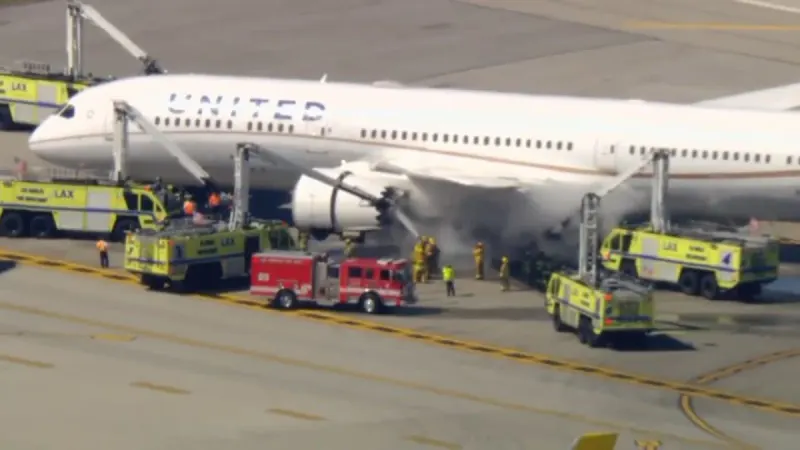
A United Boeing 787 returned to LAX after an engine issue, prompting an emergency evacuation of all 268 passengers and crew; the FAA is investigating.
Key Takeaways
- •Returned safely to LAX after an in-flight engine issue on its Boeing 787-9.
- •Evacuated 268 passengers and crew safely on a taxiway via emergency slides.
- •Prompts FAA and NTSB investigations into the engine issue and aircraft reliability.
- •Adds to increased scrutiny over Boeing's manufacturing quality control.
A United Airlines flight bound for Newark made an emergency landing at Los Angeles International Airport on Monday following a left engine issue. The incident involved United Airlines Flight 2127, operating a Boeing 787-9 Dreamliner, which returned to Los Angeles International Airport (LAX) shortly after takeoff on March 2, 2026. The aircraft landed safely, and all 256 passengers and 12 crew members were evacuated on a taxiway using emergency slides. No serious injuries were reported.
This United flight emergency landing at LAX highlights ongoing concerns regarding aircraft reliability and airline emergency procedures. The event triggered a temporary ground stop at the airport, causing minor operational disruptions. The successful evacuation underscores the crew's adherence to safety protocols, but the underlying engine issue adds to a pattern of incidents placing Boeing's manufacturing quality under increased examination.
Incident Timeline and Response
Flight 2127 departed LAX for Newark Liberty International Airport (EWR) at approximately 10:15 a.m. local time. Shortly after departure, the flight crew reported an issue with the aircraft's left engine and declared an emergency, initiating a return to LAX. The aircraft landed safely at approximately 11:19 a.m. local time. Upon landing, emergency vehicles met the aircraft, and passengers deplaned via slides as a precautionary measure.
In a statement, a spokesperson for the Federal Aviation Administration (FAA) confirmed the details: "United Airlines Flight 2127 returned safely to Los Angeles International Airport around 11:20 a.m. local time on Monday, March 2, due to a left engine issue. Passengers deplaned on a taxiway. The FAA will investigate." United Airlines (UAL) commended its crew, stating, “We are grateful to our pilots and flight attendants for their quick actions to keep our customers safe.”
Regulatory Scrutiny and Investigation
The FAA has launched an immediate investigation into the Dreamliner engine issue. The National Transportation Safety Board (NTSB) is also expected to be involved, which is standard protocol for such aviation safety incidents. The investigation will focus on the cause of the engine malfunction, examining the specific powerplant—either a General Electric GEnx or a Rolls-Royce Trent 1000—and its maintenance records.
This FAA investigation into a Boeing aircraft comes at a time of heightened regulatory oversight for the manufacturer. Recent issues across other models, including the 737 MAX and 757, have intensified scrutiny of the company's quality control processes from design to production. The outcome of this inquiry could have implications for maintenance directives or operational procedures for other 787 operators worldwide.
Broader Industry Context
While engine-related emergencies are rare, they remain a critical focus area for airline operational safety. This event places a spotlight on the reliability of the advanced engines used on modern widebody aircraft like the B787-9. For United Airlines, the incident involves a key component of its long-haul fleet and its modernization strategy, known as "United Next."
According to ch-aviation data cited by Simple Flying, United operated a fleet of 48 Boeing 787-9 aircraft as of January 2026, with 84 more on order. The airline's Q4 earnings report indicated that it expects to take delivery of approximately 20 new Boeing 787s in 2026 alone. The reliability of this fleet is central to the carrier's international expansion and domestic hub-bypassing routes. The Boeing 787-9 typically seats between 290 and 330 passengers, making the flight's load of 256 passengers relatively full.
Why This Matters
This incident, though resolved without injury, reinforces the intense scrutiny on Boeing's production quality and the operational reliability of its aircraft. For airlines like United that have invested heavily in the 787 platform, any systemic issue with key components like engines could have significant financial and operational consequences. The event serves as a critical test case for both the manufacturer's quality assurance programs and the effectiveness of airline and airport emergency response protocols.
Stay ahead of the airline industry with commercial aviation news from flying.flights. For airline finances, mergers, and industry strategy, visit the Business category at flying.flights/business.
Written by Ujjwal Sukhwani
Aviation News Editor & Industry Analyst delivering clear coverage for a worldwide audience. Covers flight operations, safety regulations, and market trends with expert analysis.
Visit Profile