Why Are Major Carriers Ditching Airbus A321 High-Density Seating?

Aviation News Editor & Industry Analyst delivering clear coverage for a worldwide audience.
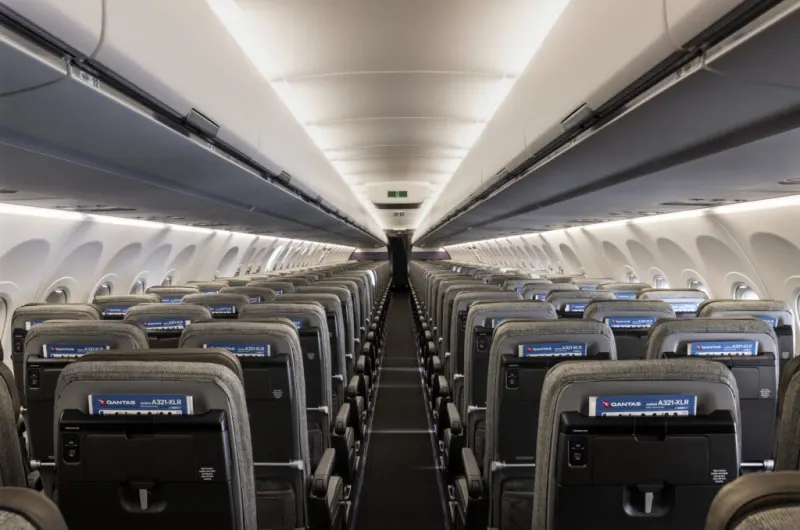
Qantas and Cathay Pacific are reversing high-density Airbus A321 cabin layouts, reducing capacity to boost passenger comfort and lavatory space.
Key Takeaways
- •Qantas A321XLR configuration features a 1:90 lavatory-to-passenger ratio for Economy, prompting a comfort review and reconfiguration.
- •Cathay Pacific is reducing A321neo capacity by increasing economy seat pitch from 30 inches and installing larger bathrooms.
- •The reversal signals a strategic shift away from Airbus's maximum space-efficiency model toward premium passenger experience and higher-yield revenue.
- •The trend affects long-range narrowbody aircraft, where passenger expectations for comfort are higher than on short-haul routes.
European aircraft manufacturer Airbus sold airlines a vision. This vision involved single-aisle jets flying longer routes. It also included the most space-efficient cabin layouts possible. The goal was to maximize seating on the A321neo family. This promised lower operating costs for airlines. It also offered comparable capacity to larger aircraft. The reality for passengers, however, has been less appealing.
Airbus designed the A321neo to hold up to 240 passengers. This was achieved using the "Space-Flex" cabin concept. This high-density cabin pushes the limits of passenger space. Now, two major global carriers are reversing this trend. They are reducing capacity to prioritize passenger comfort.
The Shift Away from Maximum Density
The push for Airbus A321 cabin density is meeting resistance. Airlines are realizing passenger experience is a key revenue driver. This is especially true on longer, narrowbody routes. The primary issue centers on basic amenities. These include lavatory space and seat pitch.
Qantas Reconfigures the A321XLR
Australian flag carrier Qantas is one major airline making changes. The carrier is adjusting its new A321XLR seating configuration. The A321XLR is a long-range version of the A321neo. Qantas initially planned a dense layout with only three lavatories for 200 seats.
This configuration reserves one lavatory for 20 Business Class passengers. This leaves only two bathrooms for the 180 Economy Class travelers. This results in a passenger-to-lavatory ratio of 1:90 for economy. For comparison, Qantas’ widebody jets have ratios around 1:42 to 1:49. This stark difference prompted a re-evaluation. The airline is now reconfiguring the A321XLR fleet. This aims to improve passenger comfort, even at the cost of capacity. This move directly challenges the single-aisle space efficiency model.
Cathay Pacific Prioritizes Comfort
Hong Kong-based Cathay Pacific is also among the airlines reversing course. The carrier is overhauling its A321neo fleet interiors. The plan involves installing larger bathrooms for a better experience.
Crucially, Cathay Pacific is reducing the overall seat count. This allows for an increased economy seat pitch. The current pitch is around 30 inches. This reduction in seats means less revenue-generating capacity. However, it signals a commitment to a premium product. This is a strategic response to customer feedback on space limitations.
Industry Impact and Premium Trend
This reversal by major carriers highlights a growing industry trend. The market is shifting from pure density to premium economy growth. Airlines are finding that maximizing seat count can hurt long-term brand loyalty. It can also limit high-yield revenue opportunities.
- Revenue Shift: Carriers are now focusing on premium seating. These seats generate significantly more revenue per square foot. This offsets the loss from removing standard economy seats.
- Long-Haul Comfort: The A321XLR and A321LR fly routes once reserved for widebody jets. Passengers expect more comfort on these longer flights.
- Competitive Edge: Offering better space becomes a key differentiator. This is especially true in competitive international markets.
Delta Air Lines offers further evidence of this trend. They are introducing a highly premium-heavy A321neo subfleet. This temporary configuration includes 44 first-class seats. This is a massive increase over their standard 20 first-class seats. While a workaround for regulatory delays, it shows the demand for premium narrowbody cabins. The industry is moving past the maximum-capacity blueprint. Airlines are now balancing efficiency with customer value. This is a critical factor for future narrowbody fleet decisions.
For global airline trends and commercial aviation news, turn to flying.flights.
For airline finances, mergers, and industry strategy, visit the Business category at flying.flights/business.
Written by Ujjwal Sukhwani
Aviation News Editor & Industry Analyst delivering clear coverage for a worldwide audience. Covers flight operations, safety regulations, and market trends with expert analysis.
Visit ProfileYou Might Also Like
Discover more aviation news based on similar topics

Airbus Delivers 700th Aircraft from its Tianjin Assembly Line
Airbus delivered its 700th China-assembled A320 family aircraft from its Tianjin plant, highlighting its deepening industrial footprint in a key market.

Airbus Slows A320 Production Ramp-Up Amid P&W Engine Shortage
Airbus is slowing its A320 production ramp-up due to a persistent shortage of Pratt & Whitney engines, impacting its 2026 delivery targets.
Airbus Targets Record 2026 Deliveries Despite Engine Supply Constraints
Airbus targets a record 870 aircraft deliveries for 2026 but faces production constraints due to ongoing engine shortages from supplier Pratt & Whitney.

Boeing 777-9 Simulators Gain Initial FAA and EASA Qualification
Boeing received initial FAA and EASA qualification for its 777-9 flight simulators, a critical step toward commencing pilot training for the new widebody.

Embraer Targets 200-Jet Order for India Assembly Line
Embraer seeks 200 firm aircraft orders from Indian carriers as a prerequisite to establishing a local final assembly line with its partner Adani Group.

Airbus Cuts A320 Targets, Citing Pratt & Whitney Engine Shortages
Airbus is scaling back A320 production targets, publicly blaming Pratt & Whitney for a significant engine shortage that is disrupting its delivery schedule.