Why Did the Air Tindi DHC-6 Twin Otter Continue Flight into Deteriorating Weather?
Key Points
- 1The TSB report (A23W0158) cited the flight crew's decision to continue VFR flight into severely deteriorating weather as the primary cause of the CFIT accident.
- 2Two passengers were seriously injured when the Air Tindi DHC-6 Twin Otter impacted a hill after four attempts at improvised instrument approaches.
- 3Systemic issues included 'plan-continuation bias' and the operator's failure to detect common deviations from Standard Operating Procedures (SOPs).
- 4The TSB highlighted the broader challenge of regulatory oversight in Canada, specifically the difficulty in identifying gaps between written and actual flight practices.
The Transportation Safety Board of Canada (TSB) released its final investigation report (A23W0158) into a 2023 accident. The incident involved a de Havilland DHC-6 Twin Otter aircraft. The aircraft, operated by Air Tindi Ltd., crashed near Lac de Gras, Northwest Territories, on December 27, 2023.
Crew Decision Led to Controlled Flight Into Terrain
The TSB determined the cause was the flight crew's choice to continue the flight. They proceeded into deteriorating weather conditions under Visual Flight Rules (VFR). Visibility was severely limited by blowing snow and low cloud ceilings. Upon arrival, the crew could not visually locate the road camp landing site. They then attempted four improvised instrument approaches to land. During the final attempt, the aircraft descended below 50 feet above ground level. It subsequently impacted a snow-covered hill near the intended landing spot.
Human Factors and Systemic Issues
The investigation highlighted several key human and organizational factors. The crew suffered from plan continuation bias. This was reinforced by their prior success operating in similar marginal conditions. This bias led to a reduced perception of the risks involved.
Systemic safety issues were also a major finding in the TSB report. Deviations from Standard Operating Procedures (SOPs) had become common practice at Air Tindi. Company oversight mechanisms failed to detect or correct these deviations over time.
Broader Regulatory Oversight Challenge
The accident also reflects a wider challenge for Canadian aviation safety. Transport Canada’s regulatory surveillance has a limited ability to identify the gap between documented procedures and actual daily operations. This issue, known as Regulatory Surveillance, is a key item on the TSB Watchlist. It makes detecting operational drifts from current regulations difficult.
The TSB does not assign fault; its sole aim is advancing transportation safety.
Following the accident, Air Tindi implemented several safety actions. These included increased weather limits and enhanced pilot monitoring requirements. They also expanded crew resource management and simulator training. Aircraft instrumentation was upgraded to improve situational awareness.
This event is a critical reminder for all commercial aviation news readers and operators. The risks of VFR flight continuation into marginal weather are significant. It underscores the need for robust internal oversight and effective regulatory checks by bodies like Transport Canada to prevent controlled flight into terrain accidents. For more updates on aviation safety, visit flying.flights. The rugged De Havilland Canada DHC-6 Twin Otter is a workhorse in remote regions, making adherence to strict procedures even more vital in challenging environments.
Topics
You Might Also Like
Discover more aviation news based on similar topics
Why Airbus and Global Regulators Focus on Prevention, Not Blame, in Safety Investigations.
Airbus and global aviation bodies follow ICAO Annex 13, establishing safety investigation as an independent process focused solely on accident prevention, not apportioning blame.
How the FAA and EASA are Uniting to Secure Global Civil Aviation's Future
FAA and EASA signed a Declaration of Intent to deepen their international aviation partnership, focusing on safety data, cybersecurity, and sustainability for global air travel.
Why Aligning with FAA, EASA, and ICAO Rules is Vital for Aviation Safety
FAA, EASA, and ICAO regulatory compliance is vital for aviation safety managers to avoid financial penalties and ensure operational efficiency and public trust.

Air India Express Diverts IX1240 to Indore as Infant Suffers Breathing Crisis
Air India Express Flight IX1240, en route from Jaipur to Bengaluru, made a priority landing at Indore after a one-year-old infant developed severe breathing issues, but the child tragically died during hospital treatment.
LATAM Boeing 767 Suffers Catastrophic Tire Failure During Atlanta Landing
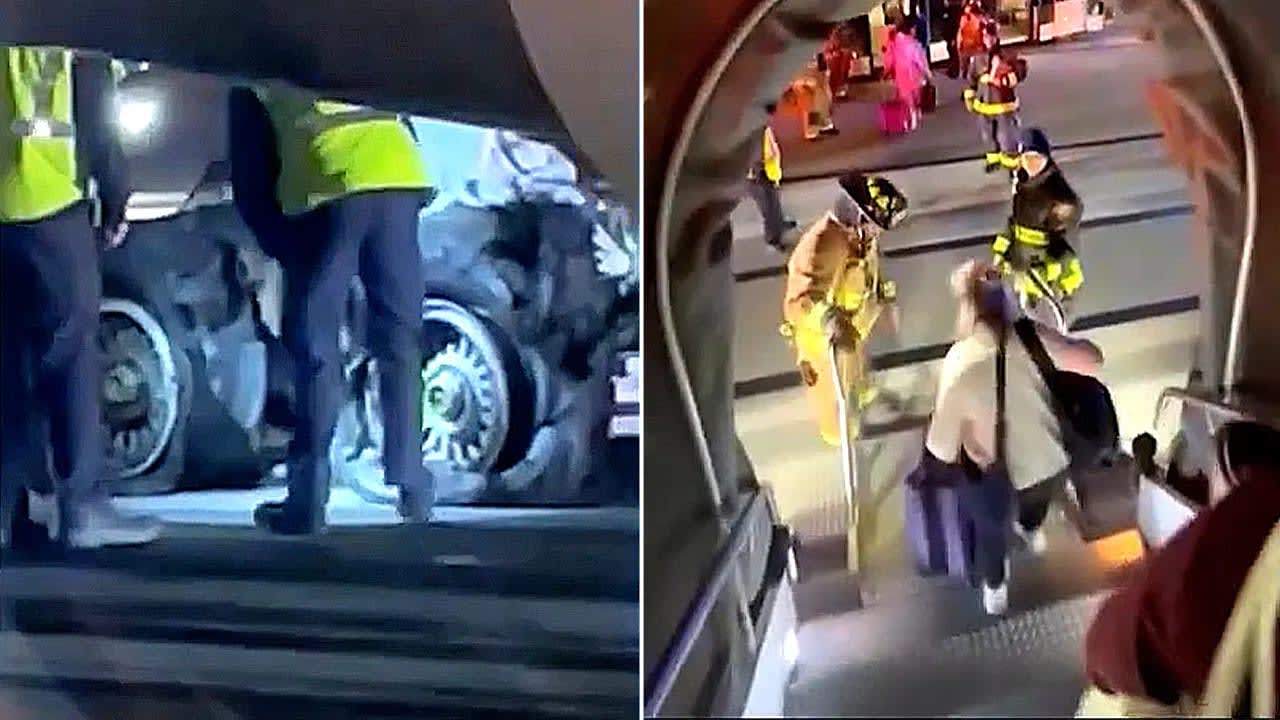
LATAM Airlines Flight 2482, a Boeing 767, suffered a rare, catastrophic blowout of all eight main landing gear tires upon landing in Atlanta, prompting an FAA investigation.
Why is the FAA Mandating New Boeing 737NG Stabiliser Inspections?
The FAA proposes an airworthiness directive mandating inspections of horizontal stabiliser components on all US-registered Boeing 737NGs following reports of pitch oscillations.