

Why Ryanair's CEO rejected Starlink, sparking a feud with Elon Musk


Key Points
- 1Ryanair rejected Starlink Wi-Fi, citing a 2% fuel penalty from antenna drag, costing up to $250 million annually.
- 2Starlink's engineering VP countered, claiming the actual fuel burn increase on a Boeing 737-800 is only 0.3%.
- 3The dispute escalated into a personal feud, with both Michael O'Leary and Elon Musk trading insults and calling each other an "idiot."
- 4The conflict highlights the tension between passenger demand for connectivity and the ultra-low-cost carrier's focus on minimal operating expenses.
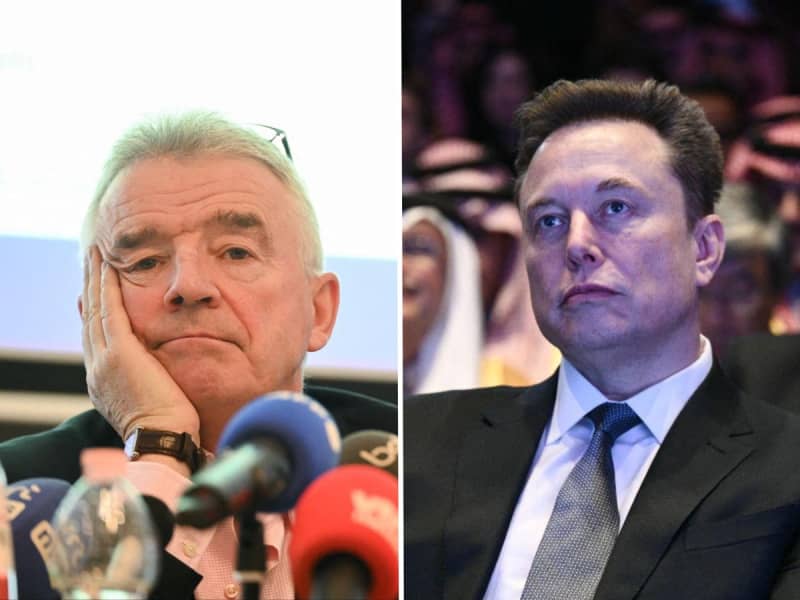
The commercial aviation world is watching a high-profile feud unfold. Ryanair CEO Michael O'Leary and SpaceX founder Elon Musk are locked in a public dispute. The debate centers on the financial viability of installing Starlink in-flight Wi-Fi on the ultra-low-cost carrier's fleet. Ryanair, Europe's largest airline by passenger volume, has firmly rejected the satellite service.
The Core Disagreement: Fuel and Drag
Ryanair's rejection hinges on the increased operating costs. O'Leary stated that installing the necessary aerial antenna on the aircraft fuselage would create additional aerodynamic drag. This drag, combined with the equipment's weight, would cause a significant fuel penalty.
O'Leary claimed the added drag would increase fuel consumption by about two percent. Given Ryanair's annual fuel bill is approximately US$5 billion, this penalty would cost the airline an estimated $200 million to $250 million per year. He calculated this expense as roughly an extra dollar per passenger.
Starlink executives quickly countered this assessment. Michael Nicolls, the Vice President of Starlink Engineering, called O'Leary "misinformed." Nicolls argued that the Starlink terminal is a lower-profile design. Starlink's internal analysis suggests the fuel increase on a Boeing 737-800 is only about 0.3 percent.
A War of Words
The technical disagreement quickly escalated into a personal exchange between the two billionaires. Musk doubted Ryanair's ability to accurately measure the fuel difference. He suggested the incremental drag is "basically zero" during the ascent phase of a short flight.
O'Leary responded sharply during a radio interview. He said Musk knows "zero" about flights and drag. The Ryanair chief then publicly called Musk an "idiot," adding, "very wealthy, but he's still an idiot."
Musk retaliated on social media platform X. He called the airline CEO an "utter idiot" and suggested he should be fired. Musk later joked about buying the airline and replacing the CEO.
The Ultra-Low-Cost Model
The dispute highlights a key strategic difference in the airline industry. Ryanair operates on an ultra-low-cost carrier (ULCC) model. This model prioritizes minimal operating costs and fast turnarounds on short-haul European routes.
O'Leary argued that passengers would not pay for Wi-Fi on an average one-hour flight. He believes that while passengers would use the internet if it were free, they would not pay even one euro for access. For a ULCC, the high cost of the fuel penalty cannot be justified by ancillary revenue.
- Ryanair's Stance: The 2% fuel penalty is too high for short, cost-sensitive flights. The cost is estimated at up to $250 million annually.
- Starlink's Stance: The actual fuel penalty is closer to 0.3% on a Boeing 737-800. The Starlink terminal is more efficient than older systems.
- Industry Trend: Other major carriers, including Lufthansa and United Airlines, are adopting Starlink. They view high-speed connectivity as a standard passenger expectation.
Ryanair's decision underscores the challenge for low-cost airlines. They must balance passenger demand for connectivity against the imperative of cost control and fuel efficiency. The debate over a fraction of a percent in fuel burn has become a public spectacle. It shows the razor-thin margins that define the ULCC business model.
Trusted commercial aviation news and airline industry reporting are available at flying.flights.
Topics

Written by
Ujjwal SukhwaniAviation News Editor & Industry Analyst delivering clear coverage for a worldwide audience.
View ProfileYou Might Also Like
Discover more aviation news based on similar topics

Ryanair CEO Michael O’Leary Rejects Starlink, Sparking 'Utter Idiot' Feud with Elon Musk
Ryanair CEO Michael O’Leary ruled out Starlink Wi-Fi, citing a 2% fuel penalty and $250 million annual cost, leading to an escalating public feud with Elon Musk.

Why Does Ryanair CEO Michael O'Leary Reject Starlink Internet?
Ryanair CEO Michael O'Leary publicly dismissed Starlink internet for his fleet, citing fuel cost increases, leading to a heated exchange with Elon Musk.
Why Ryanair's CEO Rejects Starlink Wi-Fi Despite Elon Musk's Warning
Europe's largest airline, Ryanair, is rejecting Starlink in-flight Wi-Fi due to cost and fuel penalty concerns, sparking a public debate with Elon Musk.

Lufthansa Group Commits to Starlink Wi-Fi for Entire 850-Aircraft Fleet
Lufthansa Group will equip its entire 850-aircraft fleet with Starlink high-speed internet, starting in H2 2026, with free access for Travel ID users.

Qatar Airways Completes Starlink Installation on A350 Fleet, Nearing 120 Aircraft
Qatar Airways has installed SpaceX's Starlink in-flight connectivity on nearly 120 aircraft, completing the rollout across its entire Airbus A350 fleet in eight months.
How Connected Aircraft Systems Create New Cybersecurity Risks for Operators
The FAA and NBAA are addressing new cybersecurity risks in connected private jets, emphasizing network segmentation and a 'zero-trust' approach to protect sensitive data from corporate espionage and insider threats.