Airbus Secures Order for Up to 120 Aircraft from China

Aviation News Editor & Industry Analyst delivering clear coverage for a worldwide audience.

Airbus is set to win an order for up to 120 aircraft from China, a deal announced during German Chancellor Friedrich Merz's state visit to Beijing.
Key Takeaways
- •Announced a potential order for up to 120 Airbus aircraft from China.
- •Deal was unveiled during German Chancellor Friedrich Merz's first state visit to Beijing.
- •Reinforces Airbus's position in a market forecast to need 9,520 new aircraft by 2043.
- •Highlights strong Germany-China trade relations, which reached €251.8 billion in 2025.
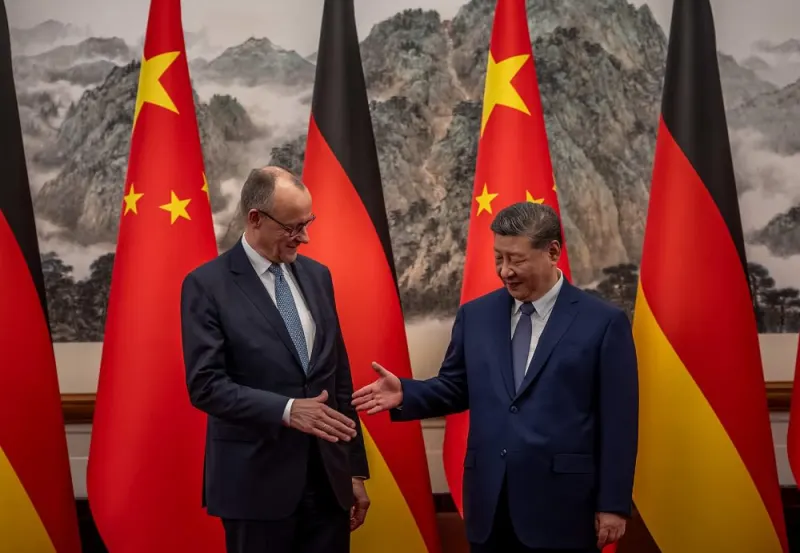
German Chancellor Friedrich Merz announced that China is expected to place a significant order for up to 120 additional aircraft from Airbus. The disclosure was made during the Chancellor's first official state visit to Beijing in February 2026, highlighting the intersection of international diplomacy and the commercial aviation industry.
The potential deal underscores the strategic importance of China's aviation market, which Airbus projects will become the world's largest by 2043. For Airbus, a confirmed order of this magnitude would provide a substantial boost to its production backlog and solidify its competitive standing against Boeing in the region. The announcement also serves as a key outcome of renewed diplomatic engagement between Germany and China.
Diplomatic and Economic Context
The aircraft order was unveiled following a meeting between Chancellor Merz and Chinese President Xi Jinping. Merz, leader of the Christian Democratic Union (CDU), framed the agreement as a positive result of direct engagement. “The Chinese leadership will be ordering a larger number of additional aircraft from Airbus,” Merz stated, specifying the deal involves “up to 120 additional planes.” The visit marks the fourth by a leader from the Group of Seven (G7) in three months, signaling a broader European effort to strengthen economic ties with Beijing.
This diplomatic push comes as China reclaimed its position as Germany's top trading partner in 2025. According to Germany's Federal Statistical Office (Destatis), bilateral trade reached €251.8 billion last year. The aircraft deal represents a high-value component of this trade relationship, potentially helping to address Germany's significant trade deficit with the country. During the visit, President Xi Jinping told Chancellor Merz he expects “new progress” in bilateral relations.
China's Booming Aviation Market
China's demand for new commercial aircraft is driven by rapid growth in its domestic and international travel sectors. An Airbus report noted that China's domestic passenger volume in 2025 had already grown by 17% compared to pre-pandemic levels in 2019. This expansion is projected to continue, solidifying the country's central role in the future of global aviation.
According to the Airbus Global Market Forecast, China is expected to take delivery of 9,520 new aircraft by 2043, accounting for 20% of total global demand over the next two decades. Furthermore, the Airbus Global Services Forecast predicts China's aviation services market will grow from US$23 billion in 2024 to US$61 billion by 2043. This long-term outlook makes China an indispensable market for both Airbus and Boeing.
The Competitive Landscape
The potential order for Airbus comes at a time of intense competition. For years, the Chinese government has strategically balanced its large-scale aircraft purchases between the European manufacturer and its American rival, Boeing. A firm order of this size would be a significant win for Airbus, potentially shifting the market share balance in the narrow-body and wide-body segments.
The competitive dynamic is further complicated by the emergence of China's state-owned aerospace manufacturer, the Commercial Aircraft Corporation of China (COMAC). The company's narrow-body COMAC C919 is now in service and positioned as a direct competitor to the Airbus A320 and Boeing 737 families. The Chinese government has set an ambitious target for COMAC to capture 10% of the domestic market share by 2025, signaling a long-term strategy to reduce its reliance on foreign manufacturers. While COMAC is not yet a major threat in the international market, its growing presence domestically influences the purchasing strategies of Chinese airlines.
Why This Matters
This prospective order is more than a commercial transaction; it is a clear indicator of the geopolitical currents shaping the global aerospace industry. For Airbus, it reinforces its foothold in the world's most critical growth market and provides stability for its production lines for years to come. For Germany and the broader European Union, it showcases how economic diplomacy can yield tangible results. The deal also places pressure on Boeing, which continues to work on restoring its full commercial and political relationships within the Chinese market. Ultimately, the agreement highlights China's powerful role as a kingmaker in the enduring duopoly between the world's top aircraft manufacturers.
Access up-to-date commercial aviation news and airline industry developments via flying.flights. Get the latest updates on major hubs, regional terminals, and airport operations via the Airports section at flying.flights/airports.
Written by Ujjwal Sukhwani
Aviation News Editor & Industry Analyst delivering clear coverage for a worldwide audience. Covers flight operations, safety regulations, and market trends with expert analysis.
Visit Profile