Cessna Training Flight Ditches in Hudson River After Engine Failure

Aviation News Editor & Industry Analyst delivering clear coverage for a worldwide audience.
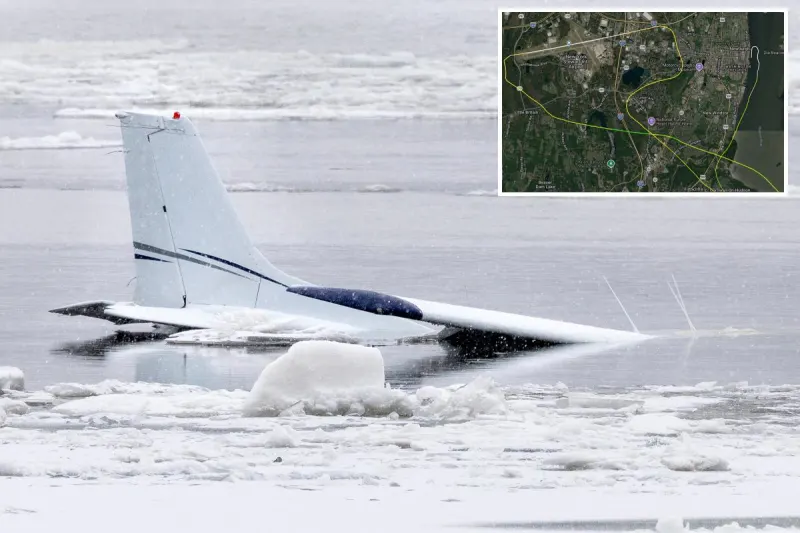
A Cessna 172 training flight from Long Island Flying experienced engine failure, resulting in a successful emergency landing in the Hudson River.
Key Takeaways
- •Cessna 172 training flight ditched in the Hudson River after engine failure.
- •Instructor and student survived with minor injuries after swimming 50 feet to shore.
- •Triggers a joint FAA and NTSB investigation into the cause of the incident.
- •Highlights effectiveness of emergency procedures taught under Part 61 regulations.
A Cessna 172 Skyhawk conducting a training flight made an emergency landing in the Hudson River near Newburgh, New York, on the evening of Monday, March 2, 2026. The flight, operated by Long Island Flying school, reported engine failure shortly before the controlled ditching. Both the flight instructor and student pilot survived the incident with only minor injuries.
The incident has prompted a joint investigation by the Federal Aviation Administration (FAA) and the National Transportation Safety Board (NTSB) to determine the cause of the engine failure. The successful outcome of the emergency water landing has been widely attributed to the skill of the pilot-in-command and the effectiveness of emergency procedure training, drawing comparisons to the 2009 US Airways Flight 1549 incident, also on the Hudson River.
Incident Details
The single-engine aircraft departed from Long Island MacArthur Airport (ISP) earlier in the evening. The flight plan included a night training exercise, a standard component of pilot certification under FAA regulations. Onboard were a 31-year-old flight instructor and a 17-year-old student. According to flight tracking data and official statements, the aircraft performed a 'stop-and-go' maneuver at Stewart International Airport at approximately 7:30 p.m. local time.
Shortly thereafter, while flying near the U.S. Military Academy at West Point, the pilot-in-command (PIC) declared an emergency, reporting a complete engine failure. The instructor successfully guided the Cessna 172 to a controlled landing on an icy section of the river. After ditching, both occupants exited the partially submerged aircraft and swam approximately 50 feet through icy water to reach the shoreline. They were treated for minor injuries and exposure to the cold.
New York State Police Captain Brad Natalizio commented on the outcome, stating, “The fact they made it to the shoreline is nothing short of a miracle.” The event was also described as a "'Miracle on the Hudson' part two" by Orange County Executive Steve Neuhaus, echoing sentiments from New York Governor Kathy Hochul.
Regulatory and Safety Context
The flight was operating under Visual Flight Rules (VFR) as part of a training syllabus consistent with FAA regulations outlined in 14 CFR Part 61. This regulation mandates specific aeronautical experience for private pilot certification, including night and cross-country flying, which are designed to prepare pilots for a range of operating conditions and potential emergencies.
Engine failure in single-engine piston aircraft remains a critical safety focus in general aviation. According to the FAA, the estimated failure rate for such engines ranges from one incident per 1,000 to one per 10,000 flight hours. While relatively rare, the potential for such events necessitates rigorous and recurrent training in emergency procedures, including forced landings and ditching.
Historical data on general aviation safety highlights the risks associated with single-engine operations. A study covering the period between 1984 and 2006 found a fatal accident rate of 1.63 per 100,000 flight hours in the United States for single-engine piston aircraft. The successful outcome of this Hudson River incident serves as a positive case study in managing such an in-flight emergency.
The Investigation Ahead
The NTSB will lead the investigation into the probable cause of the engine failure. Investigators will recover the aircraft wreckage from the river to perform a detailed examination of the engine, fuel systems, and flight controls. The investigation will also include a thorough review of the aircraft's maintenance records, the flight school's operational procedures, and the qualifications and history of the flight instructor.
A preliminary report from the NTSB is typically released within a few weeks of an incident, providing initial factual findings. The full investigation, culminating in a final report with a probable cause determination and any associated safety recommendations, may take between 12 and 24 months to complete.
Why This Matters
This event underscores the critical importance of pilot training and proficiency in handling in-flight emergencies. The successful ditching and survival of both occupants demonstrate the value of established safety protocols and a pilot's ability to execute them under extreme pressure. For the general aviation community, the NTSB's eventual findings will be closely watched for insights that could prevent future incidents and enhance engine reliability and maintenance standards for piston-powered aircraft.
Get breaking commercial aviation news and expert airline analysis at flying.flights. From aircraft production to supply chains, commercial aviation manufacturing news is covered at flying.flights/manufacturing.
Written by Ujjwal Sukhwani
Aviation News Editor & Industry Analyst delivering clear coverage for a worldwide audience. Covers flight operations, safety regulations, and market trends with expert analysis.
Visit Profile