Delta 737 Engine Fails, Sparks Runway Fire in Savannah

Aviation News Editor & Industry Analyst delivering clear coverage for a worldwide audience.
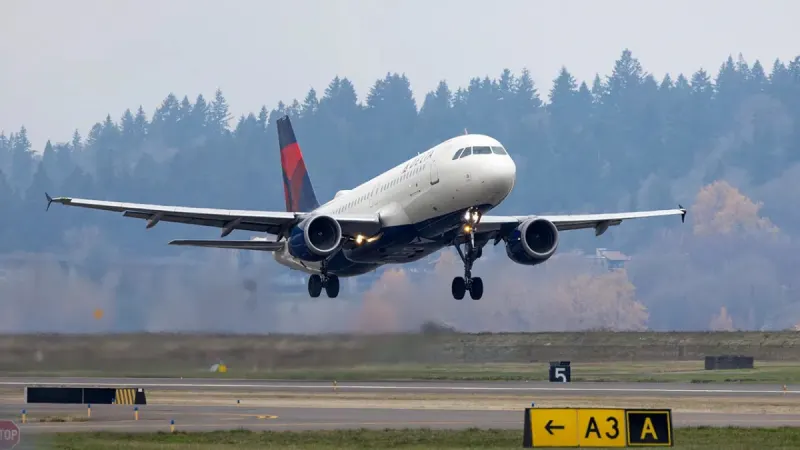
A Delta Boeing 737 returned to Savannah after an engine failure caused a runway fire, prompting an FAA investigation with no injuries reported to 185 onboard.
Key Takeaways
- •Returned safely to Savannah after a left engine failure during takeoff.
- •Sparked a runway-adjacent fire successfully extinguished by airport and local crews.
- •Prompted a Federal Aviation Administration (FAA) investigation into the incident.
- •Involved a Boeing 737-900 with 185 passengers and crew, with no injuries reported.
A Delta Air Lines flight bound for Atlanta returned safely to Savannah/Hilton Head International Airport (SAV) on Sunday, February 22, 2026, after experiencing a significant engine failure shortly after takeoff. The incident, involving Delta Flight 1067, resulted in a fire on the ground adjacent to the runway, which was quickly extinguished by emergency crews. The pilot calmly informed air traffic control, "We lost left engine straight out here," before executing an emergency return.
The flight, operated by a Boeing 737-900 registered as N942DZ, had 179 passengers and 6 crew members on board. According to flight tracking data, the aircraft took off at approximately 6:45 p.m. local time and reached a maximum altitude of less than 3,000 feet before turning back. It landed safely back at SAV at approximately 7:12 p.m. No injuries were reported among passengers or crew. The event triggered a multi-agency emergency response and has initiated a federal investigation into the cause of the engine malfunction.
Incident Details and Emergency Response
Following the engine failure, airport emergency services were immediately activated. The airport's Aircraft Rescue and Fire Fighting (ARFF) department responded to the scene, supported by units from the 165th Airlift Wing Fire Department of the Air National Guard (ANG) as part of a mutual aid agreement. Fire departments from Garden City, Savannah, and Pooler also provided support, highlighting a coordinated local emergency response protocol. The fire, which was located in the grass alongside the runway, was contained and extinguished without impacting airport infrastructure.
In a statement, Delta Air Lines confirmed the incident: “Delta flight 1067 from Savannah to Atlanta returned to the airport soon after takeoff Sunday evening, following a mechanical issue with the aircraft's left engine. The Boeing 737-900 landed safely and was met by fire trucks, with customers deplaning at the gate.” The airline emphasized that the safety of its customers and crew is its highest priority and stated it was working to re-accommodate all passengers on alternate flights to Hartsfield-Jackson Atlanta International Airport (ATL).
Regulatory Investigation Underway
The Federal Aviation Administration (FAA) has confirmed it is launching an investigation into the Delta flight engine failure. Such investigations are standard procedure for incidents involving engine malfunctions, in-flight emergencies, and fires. Investigators will typically examine the aircraft’s maintenance records, flight data recorder, cockpit voice recorder, and the physical components of the affected engine to determine the root cause. The National Transportation Safety Board (NTSB) may also participate in or lead the investigation depending on the severity and complexity of the event.
Engine reliability is a critical focus area in aviation safety. While uncontained engine failures are rare, they can pose significant risks. The investigation will seek to identify whether the failure was due to a component defect, a maintenance error, or another external factor. The findings will inform potential directives or safety recommendations for airlines operating similar aircraft or engine types. Delta Air Lines, which operates a mainline fleet of 989 aircraft as of January 2026, maintains a rigorous maintenance program in compliance with FAA regulations.
What Comes Next
The aircraft involved, N942DZ, will remain out of service pending a thorough inspection by investigators and Delta's technical operations team. The left engine will be removed and analyzed as part of the formal investigation process. A preliminary report from the FAA is typically released within several weeks to a few months, though a final report with a probable cause determination could take a year or longer to complete.
For the passengers, Delta has provided accommodation and rebooking options. Industry-wide, the event serves as a real-world test of established safety protocols, from pilot training for engine-out scenarios to the effectiveness of airport emergency response plans. Passengers on the flight praised the crew for their calm and professional communication throughout the emergency, a key component of airline safety and recurrent training.
Why This Matters
This incident underscores the resilience of the aviation industry's multi-layered safety systems. The successful outcome, with no injuries despite a critical engine failure and ground fire, demonstrates the effectiveness of pilot training, aircraft design, and coordinated emergency response. For regulators and manufacturers, the investigation's findings will be crucial for identifying potential systemic issues and reinforcing maintenance protocols to prevent future occurrences, ensuring continued public confidence in air travel safety.
Get breaking commercial aviation news and expert airline analysis at flying.flights. For airline finances, mergers, and industry strategy, visit the Business category at flying.flights/business.
Written by Ujjwal Sukhwani
Aviation News Editor & Industry Analyst delivering clear coverage for a worldwide audience. Covers flight operations, safety regulations, and market trends with expert analysis.
Visit Profile