Delta 737 Engine Failure Forces Emergency Return, Sparks Runway Fire in Savannah

Aviation News Editor & Industry Analyst delivering clear coverage for a worldwide audience.
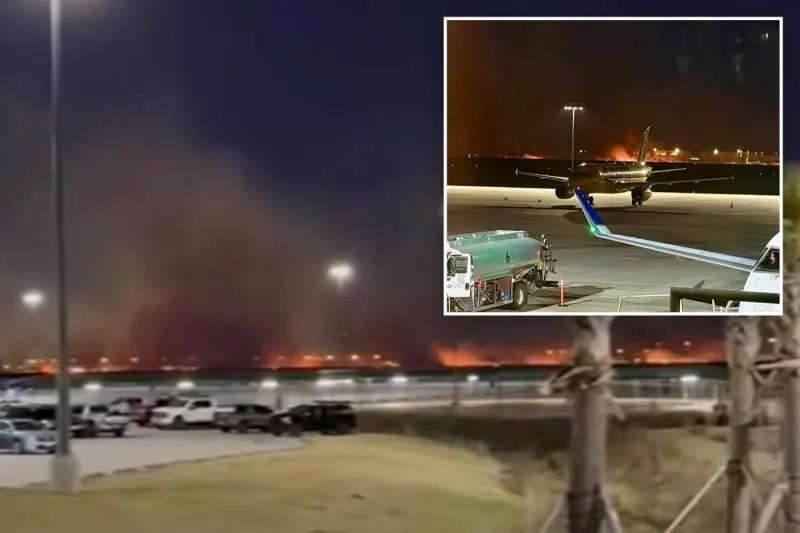
A Delta Boeing 737 returned to Savannah after an engine failure on takeoff caused a significant grass fire, safely landing with 179 passengers onboard.
Key Takeaways
- •Experienced a left engine failure shortly after takeoff from Savannah (SAV).
- •Returned safely to the airport with 179 passengers and 6 crew; no injuries reported.
- •Sparked a significant grass fire along the runway requiring an ARFF response.
- •Passengers were transported to Atlanta on a replacement aircraft after a multi-hour delay.
A Delta Air Lines flight experienced a significant engine failure shortly after takeoff from Georgia, forcing an immediate return to the departure airport and igniting a grass fire along the runway. The incident involved Delta flight 1067, a Boeing 737-900 operating a short-haul service from Savannah/Hilton Head International Airport (SAV) to Hartsfield-Jackson Atlanta International Airport (ATL) on a Sunday evening.
The flight crew declared an emergency moments after departure when the aircraft's left engine failed. The event highlights the effectiveness of crew training in managing critical in-flight emergencies and the vital role of airport emergency services in mitigating ground-based risks. All 179 passengers and six crew members returned to the gate safely, with no injuries reported.
Incident Timeline and Response
Delta flight 1067 departed from Savannah at approximately 6:45 p.m. local time. Shortly after becoming airborne, the flight crew reported a problem with the left engine. Air traffic controllers in the tower observed a large flame emanating from the engine during the takeoff roll. Audio recordings confirmed the pilot's communication: “We lost left engine straight out here for Delta 1067.”
The engine failure expelled debris and ignited the dry grass adjacent to the runway, creating what one controller described as the “whole taxiway is on fire.” The immediate response involved diverting other aircraft and dispatching Aircraft Rescue and Firefighting (ARFF) units to extinguish the blaze. The flight crew successfully managed the aircraft on a single engine and performed an emergency landing back at SAV less than 30 minutes after its initial departure.
In a statement, Delta Air Lines (DL) confirmed the event, citing a “mechanical issue with the aircraft’s left engine.” The airline stated, “The Boeing 737-900 landed safely and was met by [Aircraft Rescue and Firefighting], then customers deplaned normally at the gate. The safety of our customers and crew is our highest priority. We apologize to our customers for this delay in their travels.”
One passenger, Jeanne Miraglia, described hearing a “loud boom” during ascent. She recounted the pilot's calm communication, which informed passengers that an engine had failed but assured them of their safety, preparing them for the sight of emergency vehicles upon landing.
Operational Impact and Recovery
The immediate operational impact included the temporary closure of the affected runway while ARFF crews contained the grass fire. Passengers from flight 1067 were deplaned and accommodated in the terminal. Delta Air Lines arranged for a replacement aircraft to complete the journey to Atlanta. The passengers ultimately arrived at ATL just after 3 a.m. the following morning, experiencing a significant delay but avoiding injury.
The incident aircraft, a Boeing 737-900, will undergo a thorough inspection by Delta's technical operations teams to determine the root cause of the engine failure. Such events typically trigger an investigation by the airline and may also be subject to review by the National Transportation Safety Board (NTSB). The NTSB is the primary U.S. government agency responsible for investigating significant transportation accidents, including in-flight engine failures and fires on commercial aircraft.
Broader Context and Safety Protocols
While dramatic, uncontained engine failures are rare in modern commercial aviation due to high standards of engine design, manufacturing, and maintenance. Aircraft like the Boeing 737 are certified to fly safely on a single engine, and flight crews undergo extensive and recurrent training to manage these specific scenarios. The response of the DL 1067 crew demonstrates the successful application of these established emergency procedures.
The incident also underscores the importance of airport-based ARFF services. Their rapid and effective response prevented the runway-side grass fire from escalating into a larger threat to airport infrastructure or other operations. The seamless coordination between the flight crew, air traffic control, and ground-based emergency services was critical to the safe resolution of the event.
Why This Matters
This incident serves as a practical validation of modern aviation safety protocols. It demonstrates that redundant aircraft systems, rigorous pilot training for single-engine operations, and coordinated airport emergency responses are effective in protecting passengers and crew during critical mechanical failures. For the industry, it reinforces the importance of continuous maintenance oversight and may provide valuable data for engine manufacturers and regulatory bodies during subsequent investigations.
Visit flying.flights for the latest commercial aviation news and airline industry updates. Get the latest updates on major hubs, regional terminals, and airport operations via the Airports section at flying.flights/airports.
Written by Ujjwal Sukhwani
Aviation News Editor & Industry Analyst delivering clear coverage for a worldwide audience. Covers flight operations, safety regulations, and market trends with expert analysis.
Visit ProfileYou Might Also Like
Discover more aviation news based on similar topics

FAA Mandates Replacement of Certain Safran PBEs Due to Failure Risk
The FAA has issued an airworthiness directive mandating the replacement of certain Safran PBEs due to a manufacturing flaw that can block oxygen flow.

GCAA Suspends Two Controllers After Loss of Separation Incident in Guyana
Guyana's GCAA has suspended two air traffic controllers after a United and Turpial Airlines flight came within five miles, half the required separation.

American Airlines 737 MAX Shows Bullet Holes After Colombia Flight
Colombian authorities are investigating an American Airlines 737 MAX after bullet holes were found post-flight in Miami, likely from its landing in Medellín.

Air India Sees Technical Incidents Spike Fourfold in January
Air India recorded a fourfold rise in technical incidents to 1.09 per 1,000 flights in January, prompting intensified regulatory scrutiny and new inspections.

AOG Technics Founder Jailed for Global Fake Aircraft Parts Fraud
AOG Technics founder Jose Yrala was jailed for selling 60,000 fake jet-engine parts, causing nearly £40 million in damages to the global airline industry.

Airlines Resume Puerto Vallarta Flights as Jalisco Security Stabilizes
Mexican authorities report Jalisco security has stabilized, allowing airlines to resume flights to Puerto Vallarta and Guadalajara after cartel violence.