Did a Cyberattack Ground Flights in Greece? Officials Investigate Airspace Failure

Key Points
- 1Radio communications failure on January 4, 2026, grounded approximately 120 flights at Athens and Thessaloniki airports, causing widespread delays and diversions.
- 2Greek government officials, including the Transport Minister, stated a cyberattack is 'unlikely,' pointing instead to an internal technical malfunction in the telecommunications infrastructure.
- 3The Air Traffic Controllers' Association renewed calls for urgent modernization, citing the failure as evidence of systemic issues with Greece's outdated air traffic control equipment.
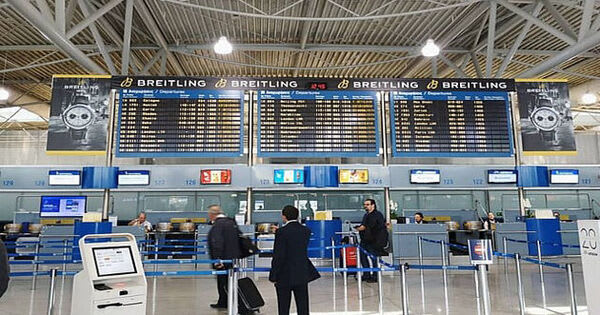
The Greek government has stated a major radio communications failure that shut down the nation's airspace is likely not a cyberattack. The incident occurred on Sunday, January 4, 2026. Flights across Greece were grounded, diverted, or delayed for several hours.
Government spokesman Pavlos Marinakis was clear. He said there is "not the slightest indication" of a cyberattack.
Airspace Shutdown and Investigation
The Hellenic Civil Aviation Authority (HCAA) reported the crisis. It was triggered by massive interference across nearly all air traffic control radio frequencies. This widespread noise, affecting even backup systems, forced a precautionary shutdown. The Athens Flight Information Region (FIR) was significantly impacted.
Initial assessments suggest an internal technical malfunction. This may be linked to telecommunications infrastructure maintenance. The Transport and Infrastructure Minister, Christos Dimas, called it a "very serious incident." However, he stressed that passenger safety was never at risk.
Authorities launched a judicial inquiry and an internal investigation. A special investigative committee was also formed. This group includes representatives from HCAA, the Greek air force, and Eurocontrol.
Industry Impact and Calls for Modernization
The widespread Greece airspace communications failure caused significant disruption. Eurocontrol, the European Organization for the Safety of Air Navigation, assisted with flight redirection. Approximately 120 flights were grounded at major hubs. These included Athens International Airport and Thessaloniki. The knock-on effects of the disruption lasted into early Monday.
Incoming flights were diverted to neighboring countries. This created a large backlog and stranded thousands of passengers. Airlines like Aegean Airlines, Ryanair, and easyJet bore the brunt of the disruptions.
Greece’s Air Traffic Controllers’ Association quickly weighed in. They argued the outage highlighted a critical issue. The association cited long-standing calls to replace outdated air traffic equipment. They described the failure as having "clear systemic characteristics." The reliance on aging technology presents a significant aviation infrastructure vulnerability. This is a key concern for the industry. For more commercial aviation news, visit flying.flights.
Global Aviation Security Context
While a air traffic control cyberattack risk was ruled out, the incident underscores a global challenge. Aviation systems worldwide face increasing scrutiny over cybersecurity. Regulators like the FAA and EASA continuously issue guidance. They aim to protect critical air navigation infrastructure. This incident serves as a reminder that technical failures pose a serious threat. These threats can be as disruptive as malicious attacks. The focus now shifts to the investigative committee's final report. It will detail the exact cause and recommend system upgrades.
Topics
You Might Also Like
Discover more aviation news based on similar topics
Catastrophic Radio Collapse Grounds All Flights Across Greece: Outdated ATC Systems Blamed
Hellenic Civil Aviation Authority shut down Greek airspace on January 4 following a catastrophic radio frequencies collapse at Athens and Macedonia ATC centers, stranding thousands.

Why Did Greece's Air Traffic Control Frequencies Suddenly Collapse?
Greece's air traffic control suffered a radio frequencies collapse at its main facility, grounding all flights and stranding thousands of passengers on Sunday.

Critical Radio Frequency Failure Grounds Flights Across Greece's FIR
Hellenic Civil Aviation Authority faces nationwide flight grounding after a critical radio frequency failure disrupted air traffic control operations on one of the busiest holiday

FAA Airspace Closure Strands US Tourists in Caribbean After Venezuela Operation
FAA restrictions following the Venezuela military operation closed Eastern Caribbean airspace, stranding US tourists after hundreds of flights were canceled.

FAA Selects RTX, Indra to Replace 612 Aging Radar Systems by 2028
The FAA selected contractors RTX and Indra to replace 612 outdated radar systems nationwide by 2028, aiming to modernize the fragile, decades-old air traffic control network.
FAA Taps RTX, Indra to Replace 612 Aging Radars: Will Air Travel Improve?
The FAA awarded contracts to RTX and Indra to replace 612 aging radar systems by June 2028, a major step in the US air traffic control modernization.
Never Miss Critical Aviation Updates
Get the top aviation stories delivered to your inbox every morning