Gulf Airport Closures Cause Asia-Europe Airfares to Soar

Aviation News Editor & Industry Analyst delivering clear coverage for a worldwide audience.
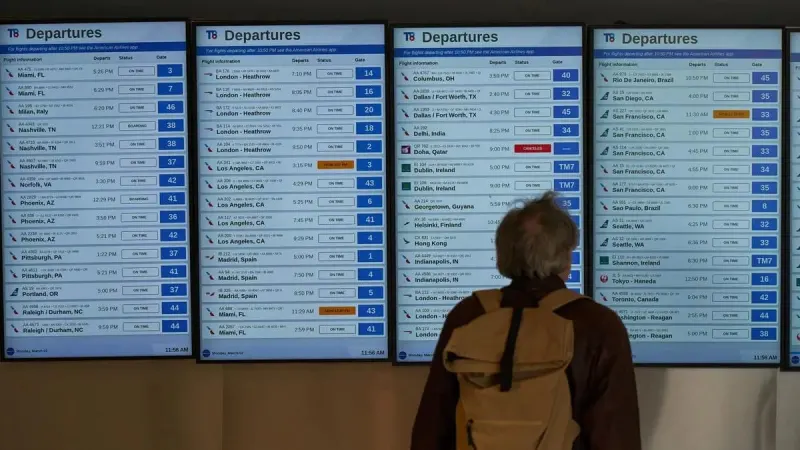
The closure of key Middle Eastern hubs has caused a surge in Asia-Europe flight prices, canceling over 21,300 flights and forcing costly rerouting.
Key Takeaways
- •Over 21,300 flights cancelled across major Middle Eastern hubs including Dubai, Doha, and Abu Dhabi.
- •Adds 1-3 hours of transit time to rerouted Asia-Europe flights, significantly increasing airline operational costs.
- •Spurs major stock drops for European and Asian carriers, with shares falling between 5% and 10.3%.
- •Disrupts global air cargo, with the financial impact on the supply chain estimated to be in the billions of dollars.
The abrupt closure of major Middle Eastern aviation hubs has triggered a severe disruption in global air travel, causing a surge in ticket prices and widespread cancellations on critical Asia-Europe routes. In the initial days of the airspace shutdown, over 21,300 flights were cancelled at seven key airports in the region, including the primary transit hubs of Dubai, Doha, and Abu Dhabi. The disruption has stranded thousands of passengers and forced airlines into complex and costly operational adjustments.
The immediate impact has been most acute at Dubai International Airport (DXB), the world's busiest hub for international passengers, which handled over 95 million passengers in 2025 and normally manages over 1,000 flights per day. The halt in operations at DXB, along with Hamad International Airport (DOH) in Doha and Zayed International Airport (AUH) in Abu Dhabi, has effectively severed the primary air corridor connecting the two continents. OAG Aviation data shows that on the second day of the crisis alone, more than 3,400 flights operated by major Middle Eastern carriers were cancelled, highlighting the scale of the paralysis gripping the region's aviation sector.
Operational and Economic Fallout
Airlines have been forced to implement contingency plans, rerouting flights to avoid the expansive no-fly zone. These alternative flight paths, which track north via the Caucasus and Afghanistan or south over Egypt and Saudi Arabia, add approximately 1 to 3 hours of additional flight time. This increase directly translates to higher operational costs, primarily through increased fuel consumption, crew duty time, and overflight fees. The longer routes also reduce aircraft utilization, creating a ripple effect on network schedules worldwide.
The financial markets reacted swiftly to the instability. Shares in major airline groups exposed to Asia-Europe traffic saw significant declines. British Airways owner IAG, Lufthansa, and Air France-KLM all saw share prices fall between 5% and 8%. The impact was even more pronounced for Asian carriers, with shares of Japan Airlines falling 6.4% and Korean Air Lines dropping 10.3%. The crisis also poses a severe threat to the global air cargo industry, as a substantial portion of freight is transported in the belly holds of passenger aircraft. The financial impact on the cargo sector is estimated to be in the billions of dollars.
Industry Response and Long-Term Concerns
Travel management companies are facing immense pressure. Australia's Flight Centre Travel Group reported a 75% increase in call volume as travelers scramble to rebook flights or find alternative routes. With major hub carriers like Emirates, Qatar Airways, and Etihad Airways grounded, passengers are being re-accommodated on other airlines, creating a capacity squeeze and driving last-minute fares to prohibitive levels. This has created a short-term opportunity for airlines with hubs outside the conflict zone, such as Turkish Airlines, Singapore Airlines, and Cathay Pacific, which are now absorbing displaced passenger demand.
Industry leaders have expressed grave concerns about the long-term implications. Subhas Menon, Director General of the Association of Asia Pacific Airlines (AAPA), commented on the gravity of the situation. "Right now the whole of the Middle East is out of bounds, which is a high price for some airlines," Menon stated. "If then Europe can only be served at a high cost, airline profitability will be undermined. At the end of the day, the price to pay is connectivity." His comments underscore the vital role the Gulf hubs play in the global aviation network, a role that became even more critical following the restriction of Russian airspace.
Why This Matters
This unprecedented shutdown highlights the vulnerability of global aviation to geopolitical shocks and its dependence on a few critical transit corridors. The immediate financial and operational damage to airlines is immense, but the longer-term impact on global connectivity and supply chains could be even more significant. For passengers and businesses, the crisis translates directly into higher costs, longer travel times, and reduced access, demonstrating how regional conflicts can have immediate and far-reaching consequences for the interconnected global economy.
From airline operations to fleet updates, commercial aviation news lives at flying.flights. Get the latest updates on major hubs, regional terminals, and airport operations via the Airports section at flying.flights/airports.
Written by Ujjwal Sukhwani
Aviation News Editor & Industry Analyst delivering clear coverage for a worldwide audience. Covers flight operations, safety regulations, and market trends with expert analysis.
Visit Profile


