How a $12 Billion US Minerals Stockpile Will Shield Boeing's Supply Chain

Aviation News Editor & Industry Analyst delivering clear coverage for a worldwide audience.
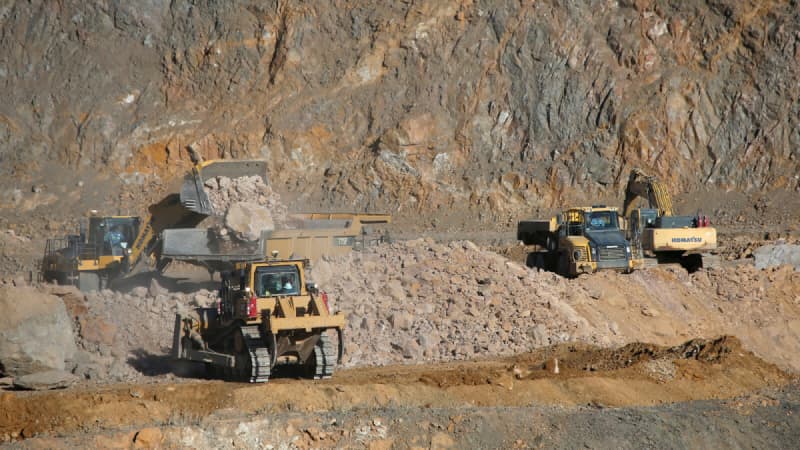
The Trump administration launched "Project Vault," a $12 billion public-private critical minerals stockpile to shield US manufacturers, including Boeing, from China-driven supply shocks.
Key Takeaways
- •The $12 billion Project Vault is a public-private partnership, featuring a $10 billion EXIM Bank loan, to create a strategic civilian critical minerals reserve.
- •Boeing and GE Vernova are confirmed participants, highlighting the aerospace sector's urgent need to secure materials like rare earths, cobalt, and rhenium.
- •The initiative directly addresses U.S. reliance on China, which controls over 80% of global rare earth processing, a key vulnerability for jet engine and avionics manufacturing.
- •The stockpile will act as a buffer against geopolitical supply shocks, ensuring continued production of aircraft components like high-temperature turbine superalloys.
The Trump administration has officially launched a major $12 billion public-private initiative known as Project Vault. This effort creates a strategic reserve of critical minerals stockpile for civilian use. The primary goal is to significantly reduce U.S. reliance on China for raw materials essential to advanced technology and manufacturing.
Project Vault: Structure and Scale
Project Vault is an unprecedented commercial-scale strategic reserve. It differs from the existing military-focused National Defense Stockpile. The initiative is anchored by a massive $10 billion loan from the U.S. Export-Import Bank (EXIM). This loan is reportedly the largest in the agency's history. The remaining $1.67 billion comes from private capital commitments.
Commodity trading houses will manage the procurement and storage of the minerals. The reserve aims to provide a shock absorber for U.S. industry. This prevents production lines from stopping during market disruptions.
Key Industry Participants
A number of major U.S. manufacturers are participating in the project. The list includes General Motors, Stellantis, and Google. Crucially for the aerospace manufacturing vulnerability, Boeing is a confirmed participant. GE Vernova, which is part of the GE aerospace sector, is also involved. Their participation underscores the strategic importance of these materials to the Boeing supply chain security.
Impact on Commercial Aviation
The commercial aviation sector relies heavily on critical minerals. These materials are vital for high-performance components in modern aircraft. The project will stockpile elements like rare earths, cobalt, and gallium.
- Jet Engine Components: Nickel-based and titanium alloys form the majority of a modern jet engine. Rhenium, a minor metal, is alloyed with nickel to create superalloys for turbine blades. These blades must withstand extreme heat and stress. Cobalt is also essential for high-strength alloys in engine parts.
- Avionics and Controls: Rare earth elements, such as Neodymium, are used in permanent magnets. These magnets power electromechanical actuators for critical systems. This includes flaps, landing gear, and engine valves.
Disruptions to the supply of these minerals can severely impact aircraft production. They can also affect maintenance and the development of next-generation aircraft.
Geopolitical Context: China Rare Earth Reliance
The initiative is a direct response to global supply chain risks. China currently dominates the processing of many critical minerals. For instance, China controls over 80% of global rare earth refining and processing. The U.S. is 100% reliant on imports for 12 critical minerals. It imports 50% or more of 29 others.
Past actions, such as China curbing rare earth exports in 2010, highlighted this vulnerability. Project Vault is intended to prevent a repeat of such supply shocks. By creating a commercial reserve, the U.S. aims to ensure stable access for manufacturers like Boeing. This move is designed to strengthen the domestic industrial base. It also advances U.S. economic and national security objectives.
For global airline trends and commercial aviation news, turn to flying.flights.
Get the latest updates on major hubs, regional terminals, and airport operations via the Airports section at flying.flights/airports.
Written by Ujjwal Sukhwani
Aviation News Editor & Industry Analyst delivering clear coverage for a worldwide audience. Covers flight operations, safety regulations, and market trends with expert analysis.
Visit ProfileYou Might Also Like
Discover more aviation news based on similar topics

Airbus Delivers 700th Aircraft from its Tianjin Assembly Line
Airbus delivered its 700th China-assembled A320 family aircraft from its Tianjin plant, highlighting its deepening industrial footprint in a key market.

Airbus Slows A320 Production Ramp-Up Amid P&W Engine Shortage
Airbus is slowing its A320 production ramp-up due to a persistent shortage of Pratt & Whitney engines, impacting its 2026 delivery targets.
Airbus Targets Record 2026 Deliveries Despite Engine Supply Constraints
Airbus targets a record 870 aircraft deliveries for 2026 but faces production constraints due to ongoing engine shortages from supplier Pratt & Whitney.

Boeing 777-9 Simulators Gain Initial FAA and EASA Qualification
Boeing received initial FAA and EASA qualification for its 777-9 flight simulators, a critical step toward commencing pilot training for the new widebody.

Embraer Targets 200-Jet Order for India Assembly Line
Embraer seeks 200 firm aircraft orders from Indian carriers as a prerequisite to establishing a local final assembly line with its partner Adani Group.

Airbus Cuts A320 Targets, Citing Pratt & Whitney Engine Shortages
Airbus is scaling back A320 production targets, publicly blaming Pratt & Whitney for a significant engine shortage that is disrupting its delivery schedule.