ICE Proposes $70M Purchase of Luxury Boeing 737 for Deportation Flights

Aviation News Editor & Industry Analyst delivering clear coverage for a worldwide audience.

DHS seeks approval to purchase a $70M luxury Boeing 737 MAX for ICE deportation flights, raising questions about the aircraft's suitability for the mission.
Key Takeaways
- •Seeks $70 million OMB approval to purchase a luxury Boeing 737 MAX.
- •Justifies purchase for dual-use mission: ICE deportations and cabinet travel.
- •Faces scrutiny over 18-passenger capacity versus typical 50-100 detainee flights.
- •Contrasts with ICE's separate $140 million purchase of six standard Boeing 737s.
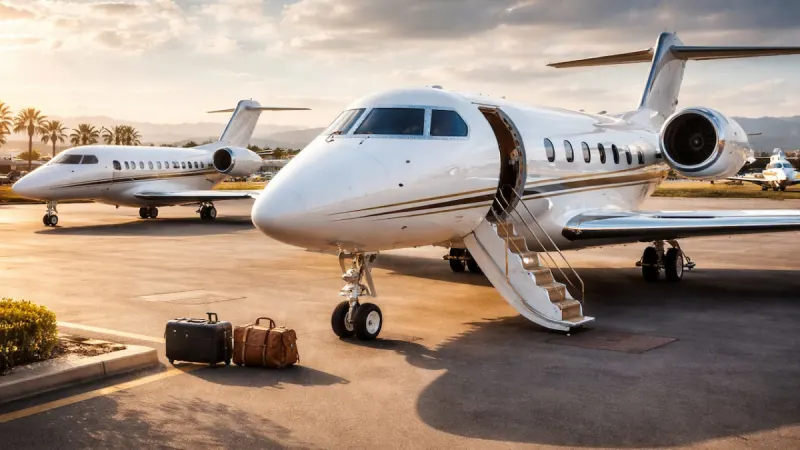
The U.S. Department of Homeland Security (DHS) is seeking approval to purchase a luxury-configured Boeing 737 MAX 8 jet for $70 million. The aircraft, which is currently leased by the department, is intended for a dual-use mission that includes flights for Immigration and Customs Enforcement (ICE) and cabinet-level travel for Secretary Kristi Noem and other officials. The proposed acquisition has drawn scrutiny due to the aircraft's opulent interior and low passenger capacity, which appears mismatched with the operational needs of deportation flights.
The request for purchase is pending review by the Office of Management and Budget (OMB). The aircraft in question is a Boeing Business Jet (BBJ), a variant of the commercial 737 MAX modified for private or executive transport. Its current configuration accommodates only 18 passengers and includes amenities such as a bedroom with a queen-sized bed, showers, a full kitchen, a bar, and four large flat-screen televisions. For its intended mission, a DHS spokesperson confirmed that at least one bedroom is being converted to additional seating.
However, this capacity is significantly lower than what is typically required for ICE Air Operations. Most deportation flights transport between 50 and 100 detainees, making an 18-seat aircraft an inefficient choice for the primary stated mission. An unnamed DHS official involved in the purchase request described the plan to use the luxury jet for deportations as “far-fetched,” according to reports.
DHS Justification and Broader Fleet Strategy
A DHS spokesperson defended the proposed purchase, stating, “This new plane will serve dual missions – both as ICE deportation flights and for cabinet level travel.” The spokesperson also claimed the aircraft operates at a 40% lower cost than military aircraft sometimes used for similar missions and framed the acquisition as part of Secretary Noem's “broader efforts to clamp down on inefficiencies and save taxpayer dollars.”
The move comes as ICE is actively working to establish its own government-operated fleet, shifting away from its historical reliance on charter services. This broader strategy includes a recent contract worth nearly $140 million to purchase six standard-configuration Boeing 737 aircraft. The agency's stated goal is to operate a total of eight dedicated planes for deportation flights, a fleet separate from the luxury BBJ. This simultaneous investment in standard, high-capacity airliners highlights the questions surrounding the procurement of a low-capacity, high-cost executive jet for the same purpose.
Industry Context for Government Aircraft
While the use of a luxury jet for mass deportations is unusual, governments worldwide regularly use business jets for VIP and head-of-state transport. The U.S. military, for example, operates the Gulfstream G550, designated as the C-37B, for such missions. These aircraft are valued for their long range, security features, and operational efficiency for small groups of high-level officials.
The $70 million price tag for the Boeing 737 MAX reflects its status as a used aircraft. According to Boeing, the list price for a new BBJ based on the 737 MAX airframe can range from approximately $88 million to over $110 million, before the cost of extensive interior customization. The current lease arrangement and potential purchase represent a significant financial commitment for a single, specialized asset.
What Comes Next
The immediate future of the aircraft depends on the decision from the OMB, which must approve the expenditure. If approved, DHS will proceed with the purchase and the planned interior modifications to increase seating capacity. The process will likely continue to face oversight from congressional members who question the allocation of funds for a luxury asset when standard aircraft are being procured for the same mission at a lower per-seat cost.
Why This Matters
This proposed acquisition raises fundamental questions about federal procurement priorities and the definition of cost-effectiveness in government operations. The decision pits the operational requirements of a high-volume mission like ICE Air Operations against the transportation needs of cabinet-level officials. For the aviation industry, it underscores the niche but lucrative market for government and VIP aircraft, while for taxpayers and oversight bodies, it serves as a case study in fiscal accountability and mission alignment for high-value government assets.
flying.flights provides comprehensive commercial aviation news covering airlines, aircraft, and airports. From aircraft production to supply chains, commercial aviation manufacturing news is covered at flying.flights/manufacturing.
Written by Ujjwal Sukhwani
Aviation News Editor & Industry Analyst delivering clear coverage for a worldwide audience. Covers flight operations, safety regulations, and market trends with expert analysis.
Visit Profile