IndiGo Flight 6E 1025 Delayed 4+ Hours by Technical Snag, Crew Change

Aviation News Editor & Industry Analyst delivering clear coverage for a worldwide audience.
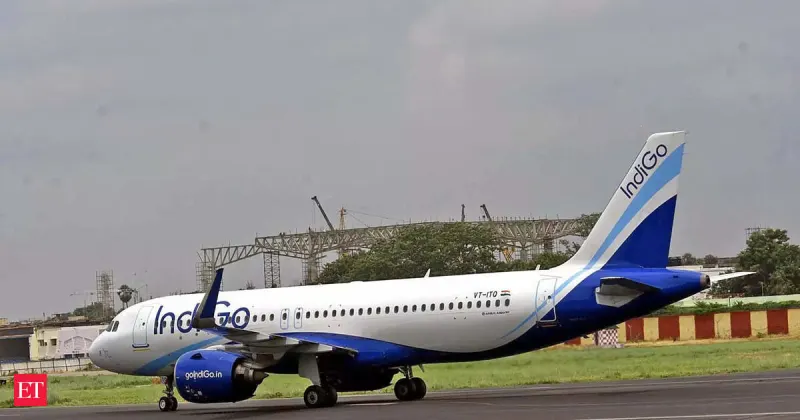
IndiGo flight 6E 1025 from Chennai to Singapore was delayed over four hours after a technical snag led to a mandatory crew change due to FDTL rules.
Key Takeaways
- •Delayed flight 6E 1025 from Chennai to Singapore by over 4 hours on Feb 24, 2026.
- •Caused by an initial technical snag that led to a mandatory crew change due to FDTL rules.
- •Affected more than 200 passengers, highlighting passenger rights and communication issues.
- •Illustrates how minor operational problems cascade into major delays under DGCA regulations.
An IndiGo flight bound for Singapore from Chennai experienced a significant operational disruption on February 24, 2026, resulting in a delay of over four hours and affecting more than 200 passengers. The incident on flight 6E 1025 from Chennai International Airport (MAA) underscores the cascading effects of technical issues when combined with stringent regulatory requirements for flight crew duty times. The IndiGo flight delay Chennai began with a technical fault and was extended by rules governing flight crew fatigue.
The extended delay highlights a common operational challenge where a seemingly minor issue triggers a chain reaction with significant consequences for passengers and airline schedules. The initial problem, cited by the airline as a "minor technical snag," spiraled into a more complex situation when the cockpit crew's duty period expired. This required a full crew change, a process that substantially lengthened the ground time and led to passenger agitation, particularly concerning onboard conditions and communication from the airline.
Incident Timeline and Breakdown
IndiGo flight 6E 1025 was scheduled to depart from Chennai for Singapore Changi Airport (SIN) at 7:20 am local time. Passengers boarded the aircraft as planned, but the flight did not depart. The initial cause for the delay was identified as a technical issue with the aircraft's air conditioning system. As maintenance crews addressed the problem, passengers remained on board, with some reporting discomfort due to poor ventilation.
The situation was compounded by regulatory oversight. The initial ground delay pushed the assigned cockpit crew beyond their mandated Flight Duty Time Limitations (FDTL). These safety rules, enforced by India's Directorate General of Civil Aviation (DGCA), are designed to prevent crew fatigue and are not flexible. Consequently, IndiGo had to arrange for a replacement crew to operate the flight, a logistical step that added several more hours to the delay. The aircraft ultimately departed at 11:39 am, resulting in a total delay of approximately 4 hours and 19 minutes.
In a statement, an IndiGo spokesperson commented on the 6E 1025 flight delay: “IndiGo flight 6E 1025 operating from Chennai to Singapore on 24 February 2026 had returned to bay due to a minor technical snag. While necessary checks and maintenance were being carried out on the aircraft, the cockpit crew exceeded their flight duty time limitations, necessitating the change of crew and further delaying the flight. We regret the inconvenience caused to our customers and did our best to minimise it by offering refreshments and sharing timely update.”
Regulatory and Passenger Rights Context
The incident brings into focus India's strengthening framework for passenger rights in aviation. The DGCA has established clear guidelines for airlines to follow during extensive delays. Under the Civil Aviation Requirements (CAR) Section 3, Series M, Part IV, airlines are obligated to provide passengers with meals and refreshments for delays exceeding two hours. IndiGo's provision of refreshments aligns with these regulatory mandates.
The event also reflects a broader industry trend where passengers, empowered by social media, are increasingly vocal during service disruptions. Reports of agitated passengers arguing with airline staff during the delay are indicative of this trend. For airlines, such incidents pose a reputational risk that extends beyond the immediate operational disruption, emphasizing the need for proactive and transparent communication during irregular operations.
The FDTL regulations that necessitated the crew change are a critical safety pillar in aviation. While they can create operational headaches for airlines and passengers, their purpose is to ensure that flight crews are sufficiently rested to operate aircraft safely. This incident serves as a practical example of how safety regulations can directly impact airline punctuality and the passenger experience.
Why This Matters
This delay of an IndiGo flight from Chennai to Singapore is more than an isolated service failure; it is a case study of operational fragility in a tightly regulated industry. For airlines, it demonstrates how a minor maintenance issue can cascade into a significant disruption that incurs additional costs, impacts network schedules, and damages customer goodwill. The event highlights the critical balance airlines must strike between technical readiness, regulatory compliance with rules like FDTL, and effective passenger communication. For the industry, it reinforces the non-negotiable role of safety regulations and the growing importance of robust passenger compensation and care protocols as mandated by authorities like the DGCA.
flying.flights provides comprehensive commercial aviation news covering airlines, aircraft, and airports. Get the latest updates on major hubs, regional terminals, and airport operations via the Airports section at flying.flights/airports.
Written by Ujjwal Sukhwani
Aviation News Editor & Industry Analyst delivering clear coverage for a worldwide audience. Covers flight operations, safety regulations, and market trends with expert analysis.
Visit ProfileYou Might Also Like
Discover more aviation news based on similar topics
United Nigeria Airlines to Launch Lagos-New York Flights by Mid-2026
United Nigeria Airlines will launch nonstop Lagos-New York flights by mid-2026, marking its ambitious entry into the transatlantic long-haul market.

Philippine Airlines Targets Chicago Route Launch by Summer 2026
Philippine Airlines plans a new nonstop Manila-Chicago route, filing with the U.S. DOT to launch the service by the IATA summer 2026 season.

Porter Airlines Resumes Mexico Flights After Regional Safety Concerns
Porter Airlines, with other Canadian carriers, has resumed flights to Puerto Vallarta, Mexico, after a temporary suspension due to regional civil unrest.

Northeast Winter Storm Grounds Thousands of Flights Across Major Hubs
A major winter storm grounded over 11,000 flights in the U.S. Northeast, triggering widespread cancellations, delays, and proactive airline travel waivers.

Qantas Launches World-First Non-Stop Flights from Sydney to Las Vegas
Qantas announced a world-first non-stop seasonal route from Sydney to Las Vegas, citing strong international travel demand and robust financial performance.

STARLUX Airlines Targets Fleet of 48 Aircraft by End of 2026
STARLUX Airlines plans to more than double its fleet to 48 aircraft by 2026, leveraging its premium model to expand its transpacific and Asian routes.