Iran Strikes Gulf Airports, Disrupting Global Aviation Hubs

Aviation News Editor & Industry Analyst delivering clear coverage for a worldwide audience.
Iranian strikes on civilian airports in Gulf nations have crippled major travel hubs, threatening the super-connector airline model and regional stability.
Key Takeaways
- •Targets civilian airports in six Gulf Cooperation Council nations with missiles and drones.
- •Disrupts the 'super-connector' model of airlines in Dubai, Abu Dhabi, and Doha.
- •Fires at least 390 ballistic missiles and 830 drones in the conflict's first two days.
- •Sparks the largest global travel disruption since the COVID-19 pandemic due to airspace closures.
Iranian retaliatory strikes targeting civilian infrastructure across the Persian Gulf have severely disrupted global aviation, with a drone strike on Dubai International Airport (DXB) on Feb. 28 highlighting the vulnerability of the region's critical air hubs. The attacks, part of a wider conflict, have forced widespread airspace closures, stranding tens of thousands of passengers and grounding the fleets of major carriers.
The scale of the disruption threatens the foundation of the Gulf's 'super-connector' airline model, which has positioned carriers in Dubai, Abu Dhabi, and Doha as central nodes in international travel. Iran’s targeting of airports, ports, and hotels across all six Gulf Cooperation Council (GCC) nations—Bahrain, Kuwait, Oman, Qatar, Saudi Arabia, and the United Arab Emirates—is a deliberate strategy to inflict economic pain and pressure the United States and its regional allies. This escalation marks a significant departure from previous, more restrained conflicts and jeopardizes years of effort to establish the Gulf as an oasis of stability for business and tourism.
A New Level of Escalation
The current conflict represents a severe intensification compared to prior regional clashes. In the first two days of hostilities, Iran launched at least 390 ballistic missiles and 830 drones at targets within the GCC states. This volume of attacks starkly contrasts with a 12-day war in June 2025, during which Iran’s response was limited to a single, pre-warned strike of 14 ballistic missiles on the Al-Udeid air base in Qatar.
Civilian infrastructure has been a primary target in the current campaign. Airports in Bahrain, Dubai, Abu Dhabi, and Kuwait have all been hit, alongside hotels in Bahrain and Dubai. While regional air defense systems have intercepted most incoming projectiles, the psychological impact on cities that have built their reputations on safety and security is profound. The attacks serve to puncture the image of invulnerability that underpins the business models of cities like Dubai, the world's busiest airport for international travel.
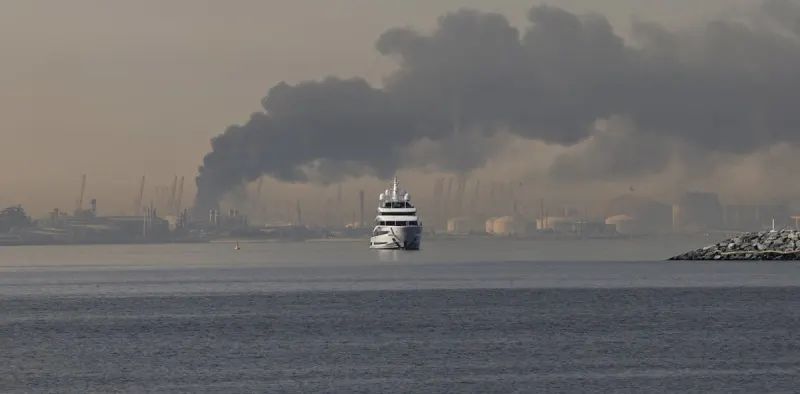
In a further escalation, Iran has also targeted critical energy infrastructure, including Ras Laffan in Qatar and Ras Tanura in Saudi Arabia. This move prompted a direct military response from Qatar, which shot down two Iranian jets on March 2. Gulf leaders are reportedly concerned that desalination plants, vital for the region's water supply, could be the next targets.
Impact on Global Aviation and Commerce
The attacks have triggered the most significant disruption to global travel since the COVID-19 pandemic. The immediate closure of airspace over Qatar, the UAE, Bahrain, and Kuwait has created a cascading effect across international airline networks. The super-connector model, which relies on concentrating intercontinental traffic through a few massive hubs, is uniquely vulnerable to such disruptions.
Dubai, Abu Dhabi, and Doha have invested billions in creating airlines and airports capable of linking nearly any two points on the globe with a single stop. The Feb. 28 drone strike on DXB demonstrated how a single incident can paralyze this intricate system. Beyond passenger travel, cargo operations essential for regional supply chains have been heavily impacted, compounding the disruption caused by interruptions to seaborne trade through the Strait of Hormuz.
The economic fallout has been immediate. Unlike the brief spike in oil prices during the 2025 conflict, the current targeting of energy facilities has led to sustained increases in both energy prices and insurance premiums for shipping and aviation in the region.
An Uncertain Future
Iran’s strategy appears calculated to maximize economic and political pressure on Gulf nations, hoping they will in turn press the U.S. to de-escalate. By expanding the conflict, Tehran aims to significantly raise the costs of the war for Washington and its partners. Not since the 1990-91 Gulf War has the region faced such a high degree of peril and uncertainty.
However, this approach carries significant risks for Tehran. Instead of forcing Gulf leaders to seek a quick resolution with the U.S., the widespread attacks could rupture any remaining diplomatic ties and push these nations back into a tighter security alliance with Washington. The long-term stability of the region and its role in the global economy now hangs in the balance.
Why This Matters
This conflict demonstrates the profound vulnerability of the globalized aviation network to regional geopolitical shocks. The targeting of Gulf super-connector hubs threatens not only regional economies but also the efficiency of international travel worldwide. For the aviation industry, it underscores the critical need to account for geopolitical risk that can ground fleets and close airspace with little warning, potentially redrawing major international air routes.
flying.flights provides comprehensive commercial aviation news covering airlines, aircraft, and airports. Stay informed on aviation incidents, investigations, and best practices in the Safety category at flying.flights/safety.
Written by Ujjwal Sukhwani
Aviation News Editor & Industry Analyst delivering clear coverage for a worldwide audience. Covers flight operations, safety regulations, and market trends with expert analysis.
Visit Profile