Joby Eyes Brisbane 2032 Olympics for Australian Flying Taxi Launch

Aviation News Editor & Industry Analyst delivering clear coverage for a worldwide audience.
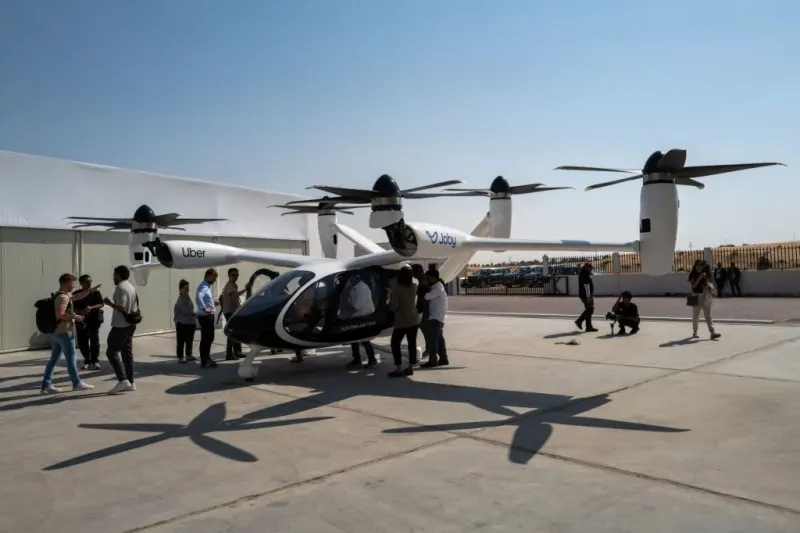
Joby Aviation and Uber are exploring an electric air taxi launch in Australia for the 2032 Brisbane Olympics, pending CASA certification.
Key Takeaways
- •Targets Brisbane 2032 Olympics for Australian eVTOL service launch.
- •Initiated certification discussions with Australia's CASA, seeking to validate FAA approval.
- •Plans commercial launch in Dubai in 2026 ahead of expansion to the US, UK, and Japan.
- •Features a 4-passenger, 200 mph electric aircraft integrated into the Uber app.
Following a public demonstration of its electric aircraft in Dubai, Joby Aviation has signaled its intent to launch an electric air taxi service in Australia, potentially in time for the Brisbane 2032 Olympic Games. The company, in partnership with ride-sharing giant Uber, is in discussions with Australia's Civil Aviation Safety Authority (CASA) regarding the certification process for its novel aircraft, a critical step toward commencing operations.
The potential Australian launch is part of a broader global strategy for the burgeoning Advanced Air Mobility (AAM) sector. The move aims to provide a new transportation option to alleviate urban congestion in major cities. This follows Uber's previous attempt to launch a similar service in Melbourne, which was later paused. According to Uber's global head of autonomous mobility operations, Annie Duvnjak, significant advancements in technology and urban planning have prompted the revival of these ambitions. “As cities have gotten bigger and congested… this is a great opportunity to have different options to save time,” Duvnjak stated.
Path to Australian Skies
For Joby's electric Vertical Take-Off and Landing (eVTOL) aircraft to operate in Australia, it must receive regulatory approval from CASA. Joby Aviation Chief Product Officer, Eric Allison, confirmed the company is actively engaged with the regulator. The process is expected to leverage a bilateral agreement between CASA and the U.S. Federal Aviation Administration (FAA), which would allow for a streamlined validation of the FAA's original type certification. Joby has formally applied to CASA to begin this validation process.
While additional work will be required for full approval, Allison expressed optimism about the 2032 timeline. “Whenever there are big events that have a global stage, there’s opportunity,” he said, referencing the Brisbane Games. “I certainly think that’s something we will be paying close attention to.”
The aircraft at the center of these plans is a piloted, four-passenger vehicle designed for rapid urban transit. According to official company specifications, the eVTOL features six propellers and four battery packs for redundancy. It is capable of reaching a top speed of 200 mph (approximately 322 km/h) and is engineered to be significantly quieter than a conventional helicopter.
Global Rollout Strategy
Before any potential Australian debut, Joby and Uber are focused on their first commercial launch in Dubai, planned for 2026. The initial network will connect four key locations, or 'skyports', across the city. This Middle Eastern launch is seen as a blueprint for subsequent expansions into major markets including New York, Los Angeles, the UK, and Japan. The company's phased rollout targets regions with strong regulatory support and public demand, a strategy common in the emerging Urban Air Mobility (UAM) market.
The partnership between Joby and Uber is foundational to this strategy, building on Joby's acquisition of the Uber Elevate division in 2020. Once operational, the service will be integrated directly into the Uber app. Customers will see the air taxi as an option, with ground transportation to and from the skyports included in the booking. Uber estimates that a journey taking an hour by car could be completed in as little as 11 minutes by air, with a price point comparable to its Uber Black service.
Industry Context and Market Growth
The push into new markets like Australia aligns with strong growth projections for the UAM industry. According to market analysis, the global UAM sector was valued at over $3.5 billion in 2023 and is forecast to exceed $29 billion by 2030. This growth is driven by advancements in electric propulsion, battery technology, and a growing need for sustainable transportation solutions in congested urban environments. Joby's CEO, JoeBen Bevirt, has publicly stated, "We're incredibly excited about the potential for air taxis to offer new and more sustainable ways to travel around Australia's global cities."
Joby has already achieved a significant regulatory milestone in the U.S., receiving its Part 135 Air Carrier Certificate from the FAA in May 2022. This certificate is a prerequisite for operating a commercial air taxi service, pending the final type certification of the aircraft itself. The focus on major events like the Olympics is a key industry trend, providing a global platform to showcase the technology and operational viability of AAM services, as detailed in the company's partnership announcement.
Why This Matters
This development marks a tangible step toward the commercialization of eVTOL services in the Asia-Pacific region. For Australia, a successful launch by 2032 would position the country as a leader in Advanced Air Mobility. The project serves as a critical test case for regulatory frameworks, public acceptance, and the economic viability of integrating air taxis into existing urban transportation networks.
Stay ahead of the airline industry with commercial aviation news from flying.flights. For airline finances, mergers, and industry strategy, visit the Business category at flying.flights/business.
Written by Ujjwal Sukhwani
Aviation News Editor & Industry Analyst delivering clear coverage for a worldwide audience. Covers flight operations, safety regulations, and market trends with expert analysis.
Visit Profile