NASA WB-57 Research Plane Slides on Runway After Landing Gear Failure in Texas.

Aviation News Editor & Industry Analyst delivering clear coverage for a worldwide audience.
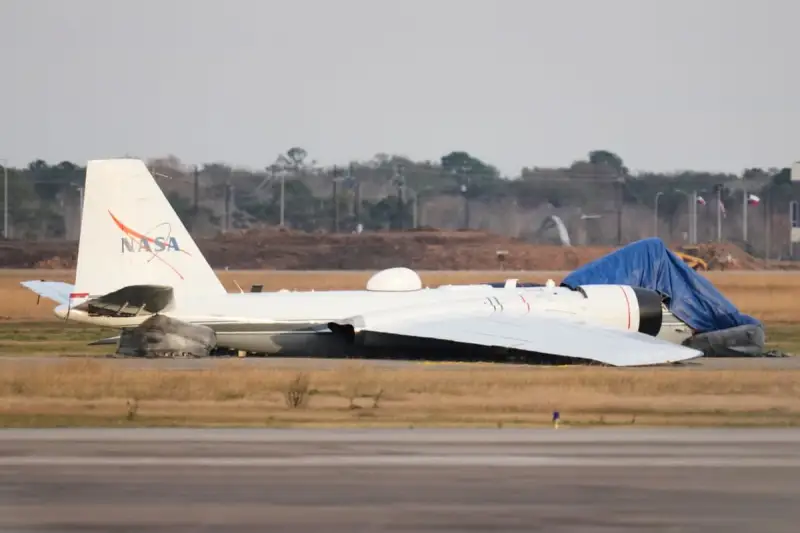
A NASA WB-57 research plane made an emergency belly landing at Ellington Airport in Texas after a mechanical issue prevented the landing gear from deploying; the crew is safe.
Key Takeaways
- •A NASA WB-57 high-altitude research aircraft performed a gear-up landing at Ellington Airport, Houston, on Tuesday, January 27, 2026.
- •The incident was caused by a mechanical issue that prevented the landing gear from deploying, resulting in the aircraft sliding on the runway.
- •The two-person crew safely exited the aircraft without injury, and NASA has initiated a thorough investigation into the mechanical failure.
- •The WB-57 is a critical, low-density asset used for scientific and atmospheric research at altitudes above 63,000 feet.
A NASA WB-57 research plane incident occurred Tuesday morning in Houston, Texas. The aircraft was forced to execute an Ellington Airport emergency landing without its landing gear deployed. Video footage captured the dramatic moment. It showed the plane sliding across the runway. Sparks and flames burst from beneath the fuselage. The incident happened around 11:30 a.m. local time.
NASA confirmed the aircraft experienced a WB-57 mechanical issue. The agency stated that all crew members are safe. No injuries were reported from the two-person crew. Emergency responders quickly secured the scene. The affected runway was closed temporarily for aircraft removal.
Gear-Up Landing Investigation
NASA has launched a gear-up landing investigation. This thorough review will determine the cause of the landing gear malfunction. The Federal Aviation Administration (FAA) also confirmed the event. The FAA stated they will also investigate the circumstances.
Incidents like this highlight the critical importance of pre-flight checks. They also stress the value of crew training for emergency procedures. A gear-up landing is a serious aviation safety event. However, the safe outcome here demonstrates effective crew response.
The WB-57 High-Altitude Research Aircraft
The WB-57 is a high-altitude research aircraft. It is a vital scientific research platform for the agency. The aircraft is based at NASA Johnson Space Center near Ellington Field.
- The plane can fly at altitudes exceeding 63,000 feet.
- It has been flying research missions since the early 1970s.
- Missions include atmospheric science and rocket launch support.
- The WB-57 can carry up to 8,800 pounds of payload.
NASA operates a small fleet of these specialized jets. The NASA WB-57 landing gear failure impacts a low-density, high-demand asset. Any downtime for repairs affects ongoing scientific projects. The aircraft's long, thin fuselage is distinctive. Its design allows for high-altitude, long-range flights.
Aviation Safety and Future Missions
The incident is a reminder of the challenges in operating aging, specialized aircraft. The WB-57 fleet is crucial for many research programs. The extent of the damage to the airframe is not yet known. NASA officials promised transparent updates on the investigation. The goal is determining the root cause of the mechanical issue. This will help prevent similar future occurrences. Maintaining high aviation safety investigation standards is paramount for the agency. The return of the WB-57 to service is critical for future atmospheric research. The NASA program provides unique data collection capabilities.
For global airline trends and commercial aviation news, turn to flying.flights.
Track policy changes, airspace rules, and global aviation governance in the Regulatory category at flying.flights/regulatory.
Written by Ujjwal Sukhwani
Aviation News Editor & Industry Analyst delivering clear coverage for a worldwide audience. Covers flight operations, safety regulations, and market trends with expert analysis.
Visit ProfileYou Might Also Like
Discover more aviation news based on similar topics

FAA Mandates Replacement of Certain Safran PBEs Due to Failure Risk
The FAA has issued an airworthiness directive mandating the replacement of certain Safran PBEs due to a manufacturing flaw that can block oxygen flow.

GCAA Suspends Two Controllers After Loss of Separation Incident in Guyana
Guyana's GCAA has suspended two air traffic controllers after a United and Turpial Airlines flight came within five miles, half the required separation.

American Airlines 737 MAX Shows Bullet Holes After Colombia Flight
Colombian authorities are investigating an American Airlines 737 MAX after bullet holes were found post-flight in Miami, likely from its landing in Medellín.

Air India Sees Technical Incidents Spike Fourfold in January
Air India recorded a fourfold rise in technical incidents to 1.09 per 1,000 flights in January, prompting intensified regulatory scrutiny and new inspections.

AOG Technics Founder Jailed for Global Fake Aircraft Parts Fraud
AOG Technics founder Jose Yrala was jailed for selling 60,000 fake jet-engine parts, causing nearly £40 million in damages to the global airline industry.

Airlines Resume Puerto Vallarta Flights as Jalisco Security Stabilizes
Mexican authorities report Jalisco security has stabilized, allowing airlines to resume flights to Puerto Vallarta and Guadalajara after cartel violence.