Qantas-Emirates Deal Exposes Passenger Risks in Mideast Airspace Crisis

Aviation News Editor & Industry Analyst delivering clear coverage for a worldwide audience.
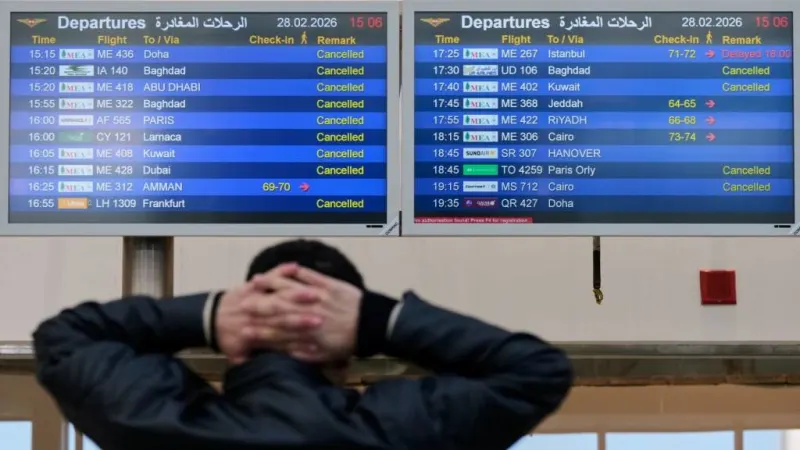
The Qantas-Emirates partnership faces scrutiny as Mideast airspace closures highlight risks to passengers and gaps in Australian customer protection.
Key Takeaways
- •Exposes passenger risks from Qantas's heavy reliance on Emirates' Dubai hub during regional crises.
- •Highlights gaps in Australian Consumer Law for protecting travellers during mass network disruptions.
- •Impacts Qantas customer access to over 50 European, Middle Eastern, and North African cities.
- •Demonstrates how geopolitical events can cripple airline networks built on single-hub partnerships.
A hypothetical, sudden closure of Middle Eastern airspace following regional conflict has exposed significant vulnerabilities in Qantas's international network, primarily stemming from its deep partnership with Emirates. The scenario, which involves the shutdown of major hubs including Dubai International Airport (DXB), highlights the passenger protection risks inherent in a strategy that outsources a substantial portion of European and African travel to a single partner airline.
The strategic alliance, first established in 2013, shifted Qantas's primary hub for European flights from Singapore to Dubai, granting customers access to over 50 cities in Europe, the Middle East, and North Africa. However, this reliance on Gulf mega-hubs creates a critical point of failure. When these hubs close, as envisioned in the disruptive scenario, tens of thousands of Australian passengers on codeshare flights face being stranded, raising questions about airline liability, re-routing obligations, and the adequacy of existing consumer protections under Australian Consumer Law.
The Qantas-Emirates Alliance: A Strategic Pillar
The partnership between Qantas and Emirates, authorized by the Australian Competition and Consumer Commission (ACCC) and extended to run until at least March 2028, has been a cornerstone of Qantas's international strategy for over a decade. According to Qantas, more than 13 million passengers have travelled on the joint network since its inception. Then-Qantas Group CEO, Alan Joyce, described the deal as a "seismic shift" in aviation, arguing it would make long-haul travel more seamless for millions of Australians. The core benefit for Qantas was expanding its network reach without the cost of operating its own aircraft on less dense routes. In return, Emirates gained access to over 55 Australian domestic destinations via the Qantas network.
This deep integration, however, means that Qantas's operational fate on many key international routes is tied directly to Emirates' hub at DXB. As Emirates President, Sir Tim Clark, said when extending the partnership, it "is testament to its success," but the hypothetical disruption underscores the risks of such concentrated dependency.
Geopolitical Risk and Network Fragility
The scenario of a shutdown at the three Gulf mega-hubs—Dubai (DXB), Doha (Hamad International Airport, DOH), and Abu Dhabi (Zayed International Airport, AUH)—is a stark reminder of aviation's vulnerability to geopolitical events. Industry analysis shows that air traffic between Europe and Asia has become increasingly concentrated through the Middle East following the restriction of Russian airspace due to the war in Ukraine. This makes the region's stability more critical than ever for global aviation connectivity.
When a hub like DXB closes, the cascading effects are immediate and widespread. It's not just a matter of cancelling flights to and from that airport; it severs a key transit point for countless passengers travelling between continents. For Qantas passengers booked on Emirates codeshare flights, the responsibility for re-accommodation, refunds, and care becomes a complex issue, often blurring the lines of accountability between the two carriers.
Passenger Protections Under Strain
A mass disruption event tests the limits of consumer protection regulations. While Australian Consumer Law provides passengers with rights to remedies for flight cancellations, the scale of a multi-day regional airspace closure can overwhelm airline support systems. The situation draws parallels to the repatriation challenges faced during the COVID-19 pandemic. At that time, over 30,000 Australians were officially registered with the Department of Foreign Affairs and Trading (DFAT) as stranded overseas, with some industry estimates suggesting the true figure was closer to 100,000.
In such events, airlines are typically obligated to rebook passengers on the next available flight or offer a refund. However, "next available" could mean days or weeks of waiting, and finding alternative routes that bypass an entire region is a monumental logistical challenge. The ACCC has previously emphasized airlines' responsibilities to inform passengers of their right to a refund, as outlined in its guidance on Qantas flight cancellations. The current scenario, however, questions whether these frameworks are robust enough to handle systemic, geopolitically-driven network collapses and protect consumers who booked with one airline but are effectively customers of another.
Why This Matters
This hypothetical crisis serves as a critical stress test for the dominant airline partnership model. While alliances like the Qantas-Emirates deal offer expanded networks and efficiencies, they can also concentrate risk and reduce operational resilience. For passengers, it underscores the fine print of codeshare agreements and highlights that the airline they book with may not be the one responsible—or capable—of getting them home in a crisis. For regulators like the ACCC, it raises questions about whether the consumer benefits of such deep partnerships are adequately weighed against the systemic risks of creating single points of failure in critical international travel corridors. The event forces a re-evaluation of how airlines and governments plan for and manage large-scale disruptions in an increasingly volatile world.
Trusted commercial aviation news and airline industry reporting are available at flying.flights. For reporting on UAP sightings, investigations, and aviation-related encounters, see the UAPs section at flying.flights/uaps.
Written by Ujjwal Sukhwani
Aviation News Editor & Industry Analyst delivering clear coverage for a worldwide audience. Covers flight operations, safety regulations, and market trends with expert analysis.
Visit Profile