Security Gaps at MMIA Could Jeopardize Nigeria's Global Aviation Standing

Key Points
- 1Nigeria scored approximately 71.4% in the March 2024 ICAO Universal Security Audit Programme (USAP) CMA, below the 75% benchmark, signaling significant security gaps.
- 2Former Commandant Ojikutu warns that MMIA's poor perimeter control and clustered terminal layout violate ICAO Annex 17 standards, exposing the country to international sanctions.
- 3The country's delisting from the FAA IASA Category One status in 2022, combined with unresolved security issues, jeopardizes Nigerian airlines' ability to operate direct flights to the United States.
- 4Ojikutu estimates that systemic mismanagement prevents Lagos Airport from generating at least N500 billion annually, highlighting a major economic impact of poor oversight.
Group Captain John Ojikutu (rtd), former Commandant of the Murtala Muhammed International Airport (MMIA), Lagos, has issued a stark warning. He claims Nigeria’s aviation safety and security architecture is fundamentally flawed. These persistent failures could expose the country to serious international sanctions and safety downgrades.
Ojikutu, a respected aviation security expert, argues that robust security is the necessary foundation for aviation safety. He stated, "If you don’t have security, you can’t guarantee safety." This principle is central to global aviation standards.
Security Gaps at Murtala Muhammed International Airport (MMIA)
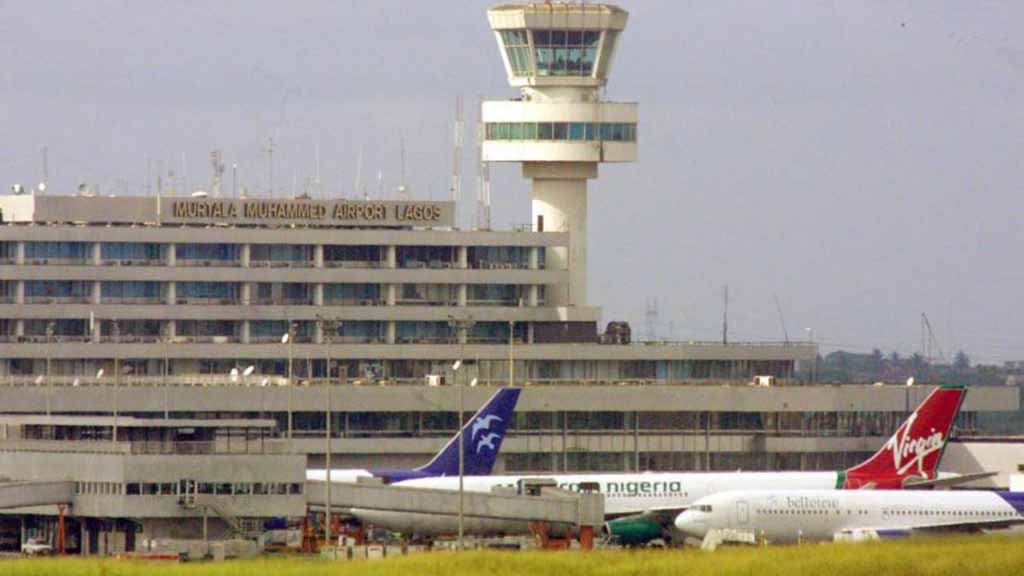
MMIA, Nigeria’s busiest airport, was cited as a major case study. Ojikutu described its location and poor land-use control as critical vulnerabilities. Residential and commercial buildings encroach on the airport’s perimeter. This makes MMIA one of the most vulnerable major international airports globally, he argued.
He noted that a proper security fence has been recommended for over 20 years. However, the airport still relies on a basic perimeter fence. This falls short of the ICAO Annex 17 compliance standards for aviation security. Annex 17 specifically addresses measures to prevent unlawful interference, while Annex 14 covers aerodrome design.
ICAO Audit Findings and International Standing
Recent international assessments underscore these concerns. Nigeria underwent an ICAO Universal Security Audit Programme (USAP) Continuous Monitoring Assessment (CMA) in March 2024. Reports indicate the country scored approximately 71.4% in the USAP-CMA, a drop from a 96% score in 2015. This score is below the 75% benchmark often considered a successful outcome.
Ojikutu also disclosed that ICAO formally queried Nigeria earlier this year. The question concerned its threat and risk assessment for MMIA, a significant development. Unresolved security issues could also hinder Nigeria’s bid to regain its FAA IASA Category One status. Nigeria was delisted in September 2022. The delisting was officially attributed to the lack of indigenous airlines operating direct flights to the United States for two years, not safety deficiencies. However, security concerns add another layer of complexity to re-certification efforts.
Operational and Regulatory Failures
The former commandant also pointed to broader systemic issues. He cited reports of an unidentified aircraft sighted over the Aso Rock Presidential Villa. The Nigerian Airspace Management Agency (NAMA) reportedly detected the aircraft but failed to communicate with it. Ojikutu called this a clear instance of "negligence."
He criticized the physical layout of MMIA as a security risk. The international, domestic, cargo, and general aviation terminals are all clustered together. This configuration is often flagged by foreign security partners, including the United States.
- Cargo terminals should be separated from passenger areas due to different risk profiles.
- Inter-agency coordination and airspace surveillance require immediate reform.
- Runway overruns suggest a failure in strict adherence to maintenance programmes.
Ojikutu further criticized the Nigerian Civil Aviation Authority (NCAA). He accused the NCAA of failing to consistently enforce regulations. He also questioned the appointment of non-aviation professionals to lead aviation security departments. Experienced aviation security professionals are being sidelined, he noted.
Economic Impact and Revenue Leakages
MMIA is a major African hub, handling approximately 16.8 million total passengers in 2024. This traffic is comparable to other leading continental airports like Cairo International Airport and O.R. Tambo International Airport. Despite this high volume, Ojikutu argued that the airport's revenue potential is severely underutilized. He estimated that a properly run Lagos Airport should generate at least N500 billion annually. This revenue loss is attributed to systemic leakages and mismanagement.
Stakeholders across the industry rely on safe and secure operations. The failure to address these fundamental security and infrastructure concerns places Nigeria’s entire commercial aviation news sector at risk. This includes airlines, insurers, and international code-share partners. Urgent and holistic reforms are needed to restore global confidence and avoid further sanctions.
To learn more about global aviation standards, visit the ICAO website. The FAA also provides information on its IASA program.
Topics
You Might Also Like
Discover more aviation news based on similar topics
Nigeria's Aviation Sector Soars and Stumbles: MMIA, Air Peace, and Safety in 2025
Nigeria's 2025 aviation year saw the N712 billion MMIA renovation approved, Air Peace secure a coveted Heathrow slot, and the NCAA tighten rules following a surge in unruly passenger

Antigua Airport Security Failure Raises Alarms Ahead of ICAO Audit
The Antigua Barbuda Airport Authority's security drill failed to address major breaches involving two dozen corporate aircraft on former Runway 10, risking ICAO audit compliance.

What Does ICAO's New Global Aviation Security Plan Mean for Air Travel?
ICAO has adopted the new Global Aviation Security Plan (GASeP), establishing enhanced international security measures for global air transport and aviation stakeholders.

Nigeria's Tax Overhaul: How Removing the 10% Aircraft Lease Tax Will Boost Airlines.
Nigeria's Presidential Fiscal Policy and Tax Reforms Committee has removed the 10% withholding tax on aircraft leases, a non-recoverable levy described as the single biggest financial burden on Nigerian airline operating margins.

Urgent Reforms: Can Nigeria's Aviation Sector Avoid Collapse?
Nigerian aviation professionals warn that urgent reforms are needed to save the sector from collapse, citing poor infrastructure, weak regulation, and financing deficits as key challenges.

Why is Your 150ml Perfume Not Allowed on Domestic Flights? The 100ml Rule Explained
BCAS mandates that all liquids, aerosols, and gels, including perfume, in carry-on baggage on Indian domestic flights must be in containers of 100 ml or less, a rule often misunderstood by travelers.
Never Miss Critical Aviation Updates
Get the top aviation stories delivered to your inbox every morning