SpiceJet Operates Special Flights to Repatriate Indians from UAE

Aviation News Editor & Industry Analyst delivering clear coverage for a worldwide audience.
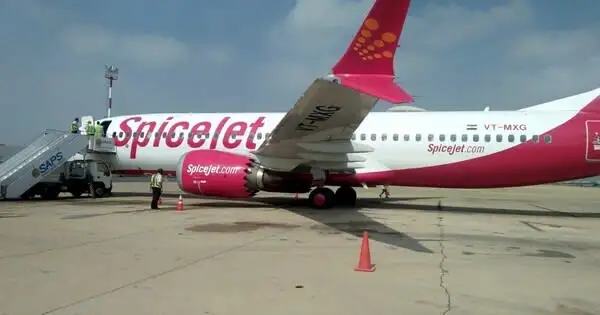
SpiceJet is operating eight special flights from the UAE to repatriate Indian nationals stranded by the ongoing conflict and airspace closures in West Asia.
Key Takeaways
- •Operates eight special flights from Fujairah, UAE to repatriate Indian nationals.
- •Addresses widespread flight cancellations totaling 1,221 for Indian carriers.
- •Coordinates with other Indian airlines, including IndiGo and Air India, planning 58 additional flights.
- •Navigates significant airspace restrictions in West Asia by using alternative routes.
Indian carrier SpiceJet will operate eight special flights from the United Arab Emirates (UAE) on Wednesday to repatriate Indian nationals stranded due to the escalating conflict in West Asia. The airline's initiative provides critical capacity as regional airspace restrictions have led to widespread flight cancellations and travel disruptions.
According to a statement from the airline, all eight repatriation flights will depart from Fujairah. The operation includes four flights to New Delhi, three to Mumbai, and one to Kochi. This follows a similar operation on Tuesday when SpiceJet flew four special flights from the UAE to the same Indian cities. These flights are part of a broader, coordinated effort by Indian carriers and the government to manage the logistical challenges posed by the conflict and ensure the safe return of citizens.
Widespread Disruptions and Cancellations
The need for these special flights stems from significant disruptions to international air travel following recent military actions. The conflict, which began with U.S. and Israeli airstrikes in Iran on February 28 and subsequent retaliation, has resulted in extensive airspace closures across the region. According to India's Ministry of Civil Aviation, the ongoing tensions have caused 1,221 flight cancellations by Indian carriers to date. Foreign carriers have also been heavily impacted, with 388 flights cancelled on routes involving India.
The partial reopening of airspace over Dubai and Fujairah has allowed for a limited resumption of services, leading to an influx of returning passengers at major Indian airports in Delhi, Mumbai, and Kochi. Despite these openings, operations remain constrained. On Tuesday, Indian carriers operated a total of 24 flights from the Gulf region, while major Gulf airlines Emirates and Etihad operated a combined nine flights.
Coordinated Industry Response
The Indian government and its airlines are working in tandem to address the situation. The Ministry of Civil Aviation confirmed that Indian carriers are planning to operate 58 flights on Wednesday, March 4. This includes 30 flights by IndiGo and 23 by Air India and Air India Express, demonstrating a significant mobilization to clear the backlog of stranded passengers.
In a statement, the ministry noted, "Foreign carriers operating between India and the Gulf region are also undertaking limited operations, subject to operational and airspace considerations." This highlights the complex, day-to-day nature of flight planning in the current environment, where airlines must continuously adapt to evolving security information and airspace availability.
The ministry further elaborated on the strategy being employed: "Special arrangements are being made to facilitate the movement of stranded passengers, with airlines deploying additional capacity where required and coordinating closely with foreign aviation authorities and Indian missions abroad to ensure safe and orderly passenger movement."
Navigating Airspace Restrictions
The primary operational challenge for all airlines has been navigating the restricted airspace. Carriers have been forced to make calibrated adjustments to their schedules, particularly for long-haul and ultra-long-haul flights that typically transit the region. According to the Ministry of Civil Aviation, these operations are being "progressively resumed through alternative routings that avoid restricted airspace."
This dynamic rerouting is a common industry practice during geopolitical crises, allowing airlines to maintain essential connectivity while prioritizing safety. However, it often results in longer flight times and increased operational costs due to higher fuel consumption. The use of Fujairah as the sole departure point for SpiceJet's special flights may also suggest a strategy to utilize airports with available capacity or those situated within corridors of partially opened airspace, away from more congested primary hubs.
Why This Matters
This coordinated repatriation effort underscores the critical role airlines play in national crisis response, functioning as essential infrastructure for citizen welfare during geopolitical instability. The situation highlights the aviation industry's vulnerability to regional conflicts, which can instantly sever vital air corridors and create immense logistical hurdles. For airlines and regulators, it demonstrates the necessity of robust contingency planning and international cooperation to manage airspace and ensure passenger safety in a volatile global landscape.
flying.flights is your source for accurate commercial aviation news and global aviation updates. Discover how innovation is shaping aviation through aircraft systems, avionics, and digital tools at flying.flights/technology.
Written by Ujjwal Sukhwani
Aviation News Editor & Industry Analyst delivering clear coverage for a worldwide audience. Covers flight operations, safety regulations, and market trends with expert analysis.
Visit Profile