Middle East Airspace Closures Trigger Global Flight Disruptions

Aviation News Editor & Industry Analyst delivering clear coverage for a worldwide audience.

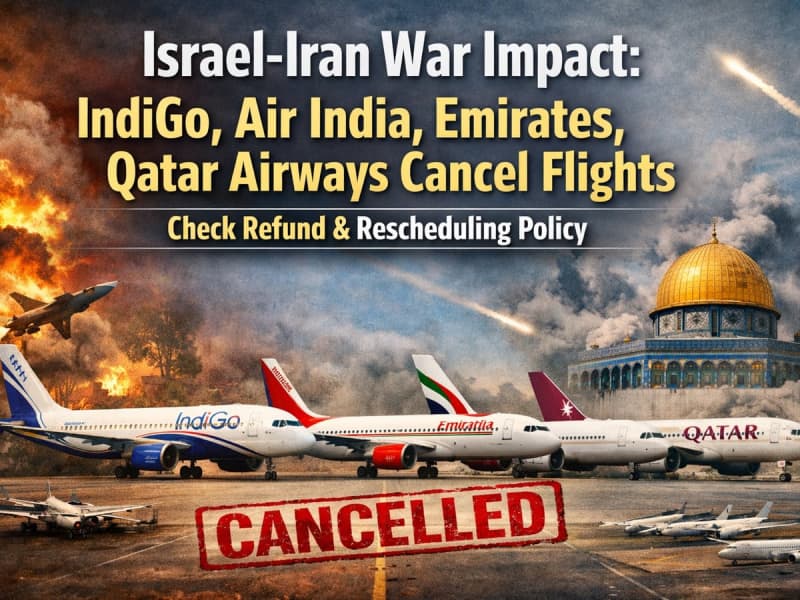
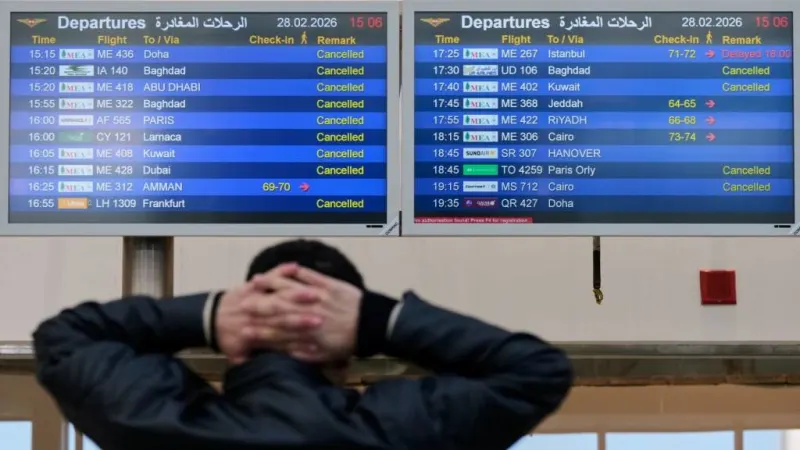
Widespread Middle East airspace closures have cancelled thousands of flights, stranding an estimated one million passengers daily and causing global travel chaos.
Key Takeaways
- •Cancelled over 3,400 flights on the first day of the crisis, impacting an estimated one million passengers daily.
- •Forces long reroutes, adding two to five hours to Europe-Asia journeys and increasing airline operational costs.
- •Cripples major global hubs like Dubai (DXB), disrupting the critical East-West transit corridor.
- •Exposes vulnerability of global aviation networks, with experts warning of weeks-long passenger backlogs.
Widespread airspace closures across the Middle East have triggered a severe global aviation crisis, with flight disruptions and cancellations affecting hundreds of thousands of passengers. According to data from OAG Aviation, over 3,400 flights were cancelled on March 1 alone as multiple countries, including Iran, Iraq, and Jordan, closed their airspace to civilian traffic following military actions.
The immediate impact has paralyzed a critical corridor for East-West travel, with independent analyst Brendan Sobie estimating that the number of impacted passengers could be around one million per day. The disruption is particularly acute for the three major Gulf hubs of Dubai, Doha, and Abu Dhabi, which collectively handle approximately 500,000 passengers daily. The situation has been described as a "mess" by industry consultants, highlighting the fragility of global air networks in the face of geopolitical conflict.
Scale of the Disruption
Aviation data analytics firms have quantified the extensive scale of the flight cancellations. OAG Aviation (OAG) reported that more than 1,800 flights operated by major Middle Eastern airlines were scrapped on the first day. Data from FlightAware showed at least 1,425 flight cancellations across Middle Eastern airports on March 2. Concurrently, analytics firm Cirium reported that over 2,000 flights to the Middle East were cancelled on March 1, representing about half of the region's scheduled traffic for the day.
The passenger impact is significant. Dubai International Airport (DXB), the world's busiest for international traffic, typically processes over 200,000 passengers a day. With its operations severely curtailed, a massive backlog of travelers is forming globally. UK-based consultant John Strickland noted it could take weeks for airlines to clear the passenger backlog, creating a complex logistical challenge for repatriation and rebooking.
Operational and Financial Impact
Airlines are now forced into complex and costly rerouting operations to bypass the closed airspace. Flights between Europe and Asia are being funneled into congested, narrow corridors over the Caucasus region or longer southern routes via Saudi Arabia and the Indian Ocean. These alternative flight paths can add between two and five hours to journey times, significantly increasing fuel consumption and labor costs.
This disruption is compounded by the existing ban on Russian airspace, which had already made Middle Eastern corridors more critical for Europe-Asia traffic. The closures have effectively crippled the global hub-and-spoke model that relies heavily on DXB, Doha (DOH), and Abu Dhabi (AUH). The increased operational costs are widely expected to be passed on to passengers through higher fares if the situation persists. Mayur Patel of OAG warned that the consequences could be "severe and structural" for the industry if the conflict is prolonged.
Regulatory and Government Response
In response to the escalating security risks, the European Union Aviation Safety Agency (EASA) declared the region as 'high risk to civil aviation' and issued a strong recommendation for airlines to avoid the affected airspace. This followed the issuance of Notices to Airmen (NOTAMs) by the national aviation authorities of Iran, Iraq, Israel, Jordan, Syria, the UAE, Bahrain, Kuwait, and Qatar, which officially closed or restricted their airspace.
Governments have also issued advisories to their citizens. The UK Foreign, Commonwealth & Development Office (FCDO) and Global Affairs Canada are among those that have issued notices advising against travel to the region, warning that the security situation could deteriorate without notice. These advisories further dampen travel demand and add another layer of complexity for airlines and passengers.
Analyst Henry Harteveldt of Atmosphere Research Group stated the disruptions "will be felt across all six populated continents." The sentiment was echoed by Alex Macheras, who commented that airspace will not reopen without a "hardline reassurance" that the military situation has concluded, suggesting a prolonged period of uncertainty for airline network planners.
Why This Matters
This crisis starkly illustrates the vulnerability of the global aviation system to geopolitical shocks. The closures not only cause immediate logistical chaos for millions of passengers but also threaten the financial stability of airlines through increased operational costs. For the industry, it forces a critical reassessment of contingency planning and the risks associated with routes over politically sensitive regions, potentially leading to long-term structural shifts in global air traffic patterns.
For in-depth airline coverage and commercial aviation news, flying.flights delivers timely industry insights. Follow aviation sustainability efforts, emissions research, and green initiatives in the Environmental section at flying.flights/environmental.
Written by Ujjwal Sukhwani
Aviation News Editor & Industry Analyst delivering clear coverage for a worldwide audience. Covers flight operations, safety regulations, and market trends with expert analysis.
Visit Profile