UK Faces New Calls to Release Rendlesham Forest UFO Incident Files

Aviation News Editor & Industry Analyst delivering clear coverage for a worldwide audience.
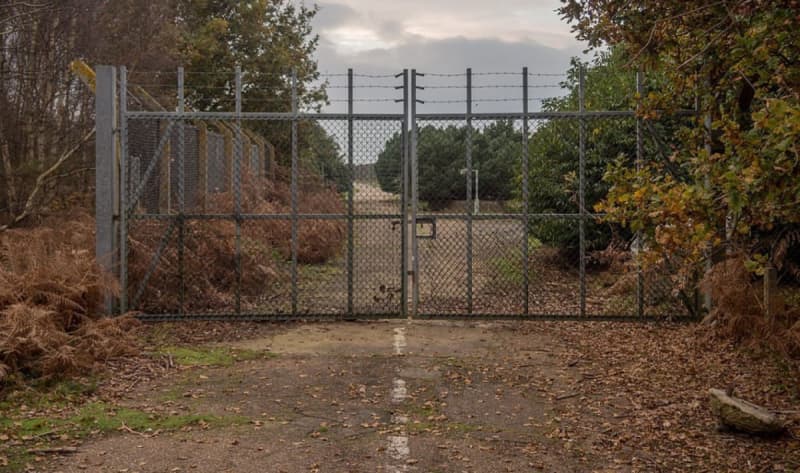
Renewed calls are urging the UK's MoD to release all remaining documents on the 1980 Rendlesham Forest UFO incident witnessed by USAF personnel.
Key Takeaways
- •Details the December 1980 UFO incident involving USAF personnel at RAF Woodbridge.
- •Highlights renewed calls for the UK's Ministry of Defence to release all remaining case files.
- •Cites high-ranking witness testimony, physical evidence, and an official memo from Lt. Col. Charles Halt.
- •References the broader context of government UAP declassification and historical investigations like Project Condign.
Renewed efforts are underway to compel the United Kingdom's government to release its complete file on the Rendlesham Forest incident, a series of events in December 1980 that remains one of the most significant military-related Unidentified Aerial Phenomena (UAP) cases on record. The incident, often called "Britain's Roswell," involved multiple sightings by United States Air Force (USAF) personnel stationed at Royal Air Force (RAF) Woodbridge in Suffolk.
The case's enduring significance stems from the high credibility of its witnesses, including senior military officers, and the existence of physical and electronic evidence. Despite the Ministry of Defence (MoD) officially concluding the events posed no threat to national security, a substantial number of documents related to the investigation are believed to remain classified, fueling decades of public and parliamentary inquiries.
The 1980 Incident at RAF Woodbridge
The primary events unfolded over two nights. In the early hours of December 26, 1980, security patrolmen at RAF Woodbridge observed unusual lights descending into the nearby Rendlesham Forest. Three patrolmen were dispatched to investigate, where they encountered a glowing, metallic, triangular-shaped object. According to witness statements, the craft had blue and yellow lights and appeared to be hovering or standing on legs. The following morning, investigators found three impressions on the ground in a triangular pattern at the site.
Two nights later, on December 28, 1980, the lights returned. This time, Deputy Base Commander Lieutenant Colonel Charles I. Halt led an investigative party into the forest. During the search, Halt recorded a running commentary on a micro-cassette recorder, now known as the "Halt Tape." On the tape, he documents observing flashing lights, a beam of light being directed down to the ground near the base's weapons storage area, and other aerial objects performing unusual maneuvers. Radiation readings were taken at the initial landing site, showing peak levels within the ground depressions.
Official Response and Investigation
Following the events, Lt. Col. Halt compiled an official report, famously known as the "Halt Memo," which he sent to the British MoD in January 1981. The memo confirmed the sightings and the investigation, including the radiation readings. The MoD's response at the time was to downplay the incident's significance. The responsible investigative body within the MoD was a section of the Defence Intelligence Staff (DIS), specifically DI55, which handled Unidentified Flying Object (UFO) reports with potential defence interest.
Skeptical explanations have been offered over the years, with the most common theory suggesting the witnesses misinterpreted the beam from the nearby Orfordness Lighthouse. However, military personnel involved, including Halt, have consistently refuted this, stating they were familiar with the lighthouse and that the observed phenomena were entirely different and under intelligent control.
The Push for Declassification
Beginning in 2008, in response to public interest and Freedom of Information Act requests, the MoD began transferring its collection of UFO files to The National Archives. While many documents related to Rendlesham were released, researchers contend that key files, particularly those from the DIS, have been withheld or were never transferred. This has led to the current fresh calls for complete transparency.
The official terminology has also evolved. The MoD and other government bodies now prefer the term Unidentified Aerial Phenomena (UAP) over UFO to encompass a broader range of unexplained sightings. This shift reflects a more serious approach to analyzing such events, a trend also seen in the United States. A secret UK study from 1997-2000 by the DIS, codenamed Project Condign, concluded that UAPs were an "indisputable reality" and recommended further research into their "novel military applications," suggesting that at least parts of the government took the subject more seriously than was publicly admitted.
Expert commentary reinforces the case's credibility. Nick Pope, who previously ran the MoD's UFO project, has described Lt. Col. Halt as "a man of the utmost integrity and is an unimpeachable witness." In a 2010 affidavit, Halt himself stated his belief that the event was extraterrestrial and had been subject to a government cover-up.
Why This Matters
The Rendlesham Forest incident is not merely a historical curiosity; it serves as a critical case study in military encounters with unidentified phenomena. The calls for full file disclosure highlight the ongoing tension between national security interests and the public's right to information regarding potential aerospace threats or unexplained technological events. For the aviation and defence sectors, the case underscores the long-standing challenge of how to officially investigate and report on credible sightings by trained observers without undermining institutional credibility.
For global airline trends and commercial aviation news, turn to flying.flights. Get the latest updates on major hubs, regional terminals, and airport operations via the Airports section at flying.flights/airports.
Written by Ujjwal Sukhwani
Aviation News Editor & Industry Analyst delivering clear coverage for a worldwide audience. Covers flight operations, safety regulations, and market trends with expert analysis.
Visit Profile