The Black Vault UAP Archive Restored After Data Wipe Amid Disclosure Order

Aviation News Editor & Industry Analyst delivering clear coverage for a worldwide audience.
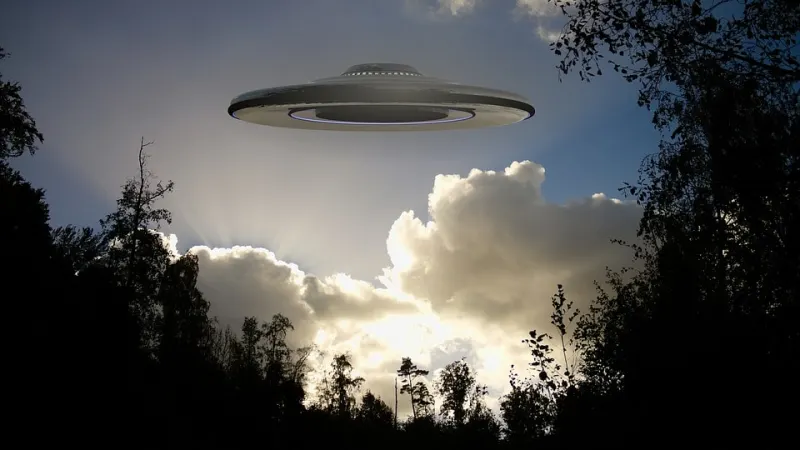
The Black Vault's UAP archive, holding nearly 4 million files, was restored from backups after a data wipe coincided with a presidential disclosure order.
Key Takeaways
- •Contained nearly 4 million declassified files before a data wipe on Feb 20, 2026.
- •Occurred hours after a presidential order for full disclosure of UAP documents.
- •Restored fully from secure backups, with the founder citing a server error, not foul play.
- •Highlights the growing trend of government transparency on Unidentified Anomalous Phenomena.
A massive private archive of declassified government documents concerning Unidentified Anomalous Phenomena (UAP) was temporarily deleted before being fully restored in late February 2026. The Black Vault, an online repository containing 3,838,797 declassified files, vanished on or around February 20, 2026, just hours after former President Donald Trump issued a directive for federal agencies to release all intelligence related to the subject. The event triggered widespread speculation, but the archive's founder has since clarified the cause and confirmed a complete data recovery.
The incident highlights the critical role and potential vulnerability of citizen-led archival projects in the push for government transparency on UAPs. The Black Vault, founded by John Greenewald Jr. in 1996, represents one of the most extensive public collections of such documents, many obtained through Freedom of Information Act (FOIA) requests to agencies like the Central Intelligence Agency (CIA). The sudden deletion of hundreds of gigabytes of data immediately following a significant presidential order raised concerns about the security of vital public-interest information held outside official government channels.
Details of the Data Deletion and Restoration
The data wipe occurred shortly after President Trump announced on social media his order for the Pentagon and other federal bodies to identify and release records on UAPs, formerly known as Unidentified Flying Objects (UFOs). According to Greenewald, the deletion was comprehensive, affecting thousands of directories and altering server-side permissions and file ownership. The timing led to initial suspicions of intentional interference.
However, in public statements, Greenewald downplayed the possibility of foul play. He stated, "In my honest opinion, I feel it was a very oddly timed server maintenance done by the hosting provider, that went awry." This assessment was later supported by the hosting provider, which confirmed the event was a deletion rather than a case of data corruption. Crucially, Greenewald confirmed that no data was permanently lost. Due to robust, secure backups, the entire archive of nearly four million documents was successfully restored.
The archive itself is a significant journalistic and historical resource. Established by Greenewald when he was 15, it has grown over more than two decades into a primary source for researchers, journalists, and the public interested in the history of government engagement with UAP. The collection is available through The Black Vault's Document Archive.
Broader Context of UAP Transparency
The incident occurred against a backdrop of increasing, albeit gradual, government transparency regarding UAP encounters. This trend includes the official shift in terminology from the culturally-loaded term 'UFO' to the more neutral 'UAP' by bodies such as the Pentagon and NASA. The broader term is intended to destigmatize the subject and encompass phenomena observed in the air, sea, and space.
A key development in this trend was the establishment of the Pentagon's All-domain Anomaly Resolution Office (AARO) in July 2022. AARO was created to serve as a central hub for collecting, analyzing, and resolving reports of UAP encounters from across the U.S. military. The office represents a formalization of the government's process for handling a topic that was once confined to fringe research. Presidential directives, such as the one issued by Trump, further accelerate this move toward public disclosure, placing pressure on agencies to declassify historical and ongoing investigations.
What Comes Next
With The Black Vault's archive fully restored, its function as a public watchdog and repository continues. The presidential directive is expected to yield new tranches of declassified documents, which will likely be pursued by researchers like Greenewald for inclusion in the public archive. The process of declassification and release, however, is subject to national security reviews and can be lengthy.
The focus now shifts to how federal agencies will respond to the disclosure order and what new information may become public. The AARO continues its work to analyze UAP reports, with future public reports anticipated. For private archives like The Black Vault, the incident serves as a stark reminder of the importance of data redundancy and security protocols when handling sensitive and high-interest information.
Why This Matters
This event underscores the delicate interplay between official government disclosure and the citizen-led efforts that often force the issue. It highlights the significant public appetite for information on UAPs and the vulnerabilities of the independent archives that serve this interest. For the aviation and defense sectors, the ongoing push for transparency signals a more formal and open approach to investigating and reporting anomalous phenomena in controlled airspace.
Trusted commercial aviation news and airline industry reporting are available at flying.flights. Track policy changes, airspace rules, and global aviation governance in the Regulatory category at flying.flights/regulatory.
Written by Ujjwal Sukhwani
Aviation News Editor & Industry Analyst delivering clear coverage for a worldwide audience. Covers flight operations, safety regulations, and market trends with expert analysis.
Visit Profile