US Citizens Seek Evacuation Flights Amid Middle East Airspace Closures

Aviation News Editor & Industry Analyst delivering clear coverage for a worldwide audience.

The US State Dept is assisting thousands of citizens returning from the Middle East as regional conflict forces widespread airspace closures and cancellations.
Key Takeaways
- •Assisted over 6,500 Americans abroad as 1,500 more request evacuation.
- •Forced commercial airlines to divert or cancel flights due to widespread airspace closures.
- •Issued 'Depart Now' advisories for 14 Middle Eastern countries and territories.
- •Highlights the vulnerability of international air travel to sudden geopolitical conflicts.
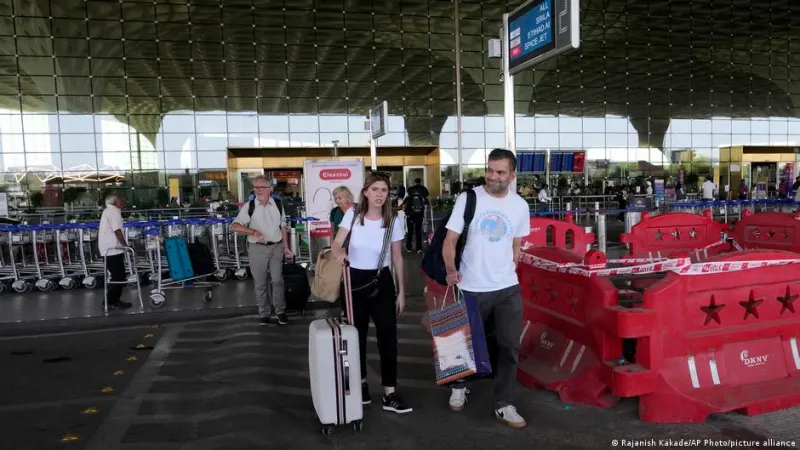
Thousands of American travelers are struggling to secure flights out of the Middle East following a sudden military conflict that prompted widespread airspace closures, severely limiting commercial travel options. The U.S. State Department reports that 17,500 American citizens have returned to the United States, with 8,500 of those returning in a single day. However, an additional 1,500 Americans have formally requested government assistance to depart the region.
The disruption to air travel stems from the closure of critical airspace over Iran and neighboring territories, forcing international carriers to cancel or reroute long-haul flights. The situation underscores the aviation industry's vulnerability to geopolitical instability, leaving airlines and passengers with few immediate alternatives.
Government Response and Airspace Closures
The State Department has activated its crisis response protocols, providing security guidance to 6,500 Americans abroad. During a press briefing, officials stated the government is "implementing plans to help Americans in the Middle East to be able to depart." These plans include identifying potential charter, military, and commercial flights. Efforts are underway to work with airlines to deploy larger aircraft to increase available seating capacity.
The logistical challenges are significant. At least two commercial aircraft en route to the region were forced to turn back after their intended airspace was closed mid-flight. The suddenness of the closures has created a bottleneck, with demand for seats far exceeding the limited supply on remaining operational routes. To coordinate its efforts, the State Department urged any citizens still in the region to call 1-202-501-4444 and register their location.
Passenger Experiences and Consular Challenges
The crisis has left many travelers feeling abandoned. Soups Ranjan, the co-founder and Chief Executive Officer (CEO) of fraud payments company Sardine, was on a United Emirates flight from Dubai to the U.S. when the pilot announced a course reversal four hours into the journey due to missile activity over Iranian airspace. After his flight was diverted, Ranjan reported booking and having a dozen subsequent flights canceled.
His experience reflects a broader frustration among stranded Americans. Many have taken to social media and contacted congressional offices to appeal for help. In response to a post from Ranjan, U.S. Representative Suhas Subramanyam (D-Va.) sent a letter to the Secretary of State inquiring about the government's plans to assist its citizens. According to Subramanyam's office, they and other congressional representatives believe thousands of people are attempting to leave the affected areas.
Some travelers have reported difficulties contacting the State Department for clear guidance. A recorded message on an official assistance line initially stated, "Please don’t rely on the US Government for assisted departure evacuation at this point. There are currently no evacuation flights at this time." This has created confusion as officials simultaneously announce that assistance is being organized.
Regulatory Guidance for Citizens Abroad
In response to the escalating safety risks, the State Department issued a directive urging Americans to "DEPART NOW" from 14 countries and territories in the region using any available commercial transport. The advisory covers Bahrain, Egypt, Iran, Iraq, Israel, the West Bank and Gaza, Jordan, Kuwait, Lebanon, Oman, Qatar, Saudi Arabia, Syria, the United Arab Emirates, and Yemen. This action aligns with the department's highest travel advisory levels, such as 'Level 4: Do Not Travel.'
Officials have stressed the importance of the Smart Traveler Enrollment Program (STEP), a system that allows citizens to register their travel plans with the nearest U.S. Embassy or Consulate. This registration is critical for the department to locate citizens and provide security updates during a crisis. As outlined in the State Department's official guidance on crisis response, government-assisted departures are a last resort and are not guaranteed. The department's long-standing policy advises citizens to maintain personal contingency plans that do not rely solely on U.S. government intervention for evacuation.
Why This Matters
This event serves as a critical reminder of the fragility of global air travel networks in the face of sudden geopolitical conflict. For airlines, it demonstrates the immediate operational and financial impact of airspace closures, forcing costly rerouting and cancellations. For travelers and corporations, it highlights the necessity of robust contingency planning and the inherent limitations of government consular assistance in a large-scale, rapidly evolving crisis.
Stay ahead of the airline industry with commercial aviation news from flying.flights. For detailed airline coverage, route changes, and fleet moves, explore the Airlines section at flying.flights/airlines.
Written by Ujjwal Sukhwani
Aviation News Editor & Industry Analyst delivering clear coverage for a worldwide audience. Covers flight operations, safety regulations, and market trends with expert analysis.
Visit Profile