US Commerce Department Revokes Plan to Restrict Chinese Drones, Easing Trade Tensions.

Key Points
- 1The US Commerce Department withdrew its proposed rule to restrict Chinese-made drones on Friday, January 9, 2026, citing a desire to ease US-China trade tensions ahead of a planned summit.
- 2The decision avoids a broader ban that would have undercut major unmanned aircraft makers like DJI, which holds over 70% of the global commercial drone market share.
- 3The reversal contrasts with a standing FCC ban from December 2025 that still blocks the import and sale of new Chinese drone models, including from DJI and Autel, over national security concerns.
- 4The restrictions create significant challenges for US commercial operators, as up to 97% of surveyed fleets use DJI drones, with many lacking a suitable FCC-approved alternative.
The US Commerce Department has withdrawn a proposed rule. This rule would have restricted Chinese-made drones and components. The reversal was posted as a low-key update on Friday. This decision follows months of interagency review. It is seen as a move to ease US-China trade tensions.
This action comes ahead of a planned summit. President Trump and President Xi Jinping will meet in April. Analysts suggest the move supports the existing trade framework. Ali Wyne of the International Crisis Group noted this. He said it highlights President Trump's trade-centric view.
China's embassy in Washington responded. A spokesman urged the US to lengthen cooperation. He called on the US to correct "erroneous practices."
Background on Drone Restrictions
The proposed rule was meant to address national security concerns. The Commerce Department sought input in January 2025. It cited threats from China and Russia. These threats could allow remote access to devices. This could expose sensitive U.S. data. The restrictions targeted leading unmanned aircraft makers like DJI and Autel.
China dominates the commercial drone market. Shenzhen-based DJI holds over 70% of the global market share. This dominance creates supply chain concerns for the Pentagon.
The FCC's Separate Action
The Commerce Department's reversal follows a related action. The Federal Communications Commission (FCC) acted in December 2025. The FCC barred imports of new foreign-made drones. This was done by adding them to the "Covered List." The ban was based on a White House determination. It cited unacceptable risks to national security.
However, the FCC later announced a partial rollback. On Wednesday, the agency exempted certain drones. These include those on the Department of Defence's "Blue List." They also exempted drones meeting "Buy American" standards. This exemption is temporary, lasting until 2027.
FCC Chairman Brendan Carr welcomed the DOD's work. He said it would restore US airspace sovereignty. He stated the goal is to unleash American drone dominance. However, the core ban on new models from Chinese makers like DJI still persists.
Impact on Commercial Aviation
The drone industry relies heavily on Chinese technology. Surveys show that up to 97% of commercial fleets use at least one DJI drone. Many operators have no approved alternative. The restrictions pose a significant challenge. They could force some businesses to close.
The US Commerce Department (Commerce Department) decision provides some relief. It avoids a broader, more comprehensive ban. However, the FCC's Covered List still blocks new foreign models. This creates uncertainty for operators. They need new equipment for critical tasks. These include agriculture and public safety. The situation highlights the complexity of balancing trade and security. This is a key issue in commercial aviation news and the drone sector. The FAA continues to regulate the national airspace. The US seeks to foster a domestic drone industry. This effort is critical for future technology. For more on this and other industry developments, visit flying.flights.
Topics
You Might Also Like
Discover more aviation news based on similar topics

FCC Ban on Foreign Drones Reshapes U.S. Aviation Supply Chain Security
The FCC added foreign-produced Unmanned Aircraft Systems (UAS) and components to its Covered List, effectively banning new models from import and sale over national security concerns,

How Las Vegas Police's New Drone Skyports Redefine Airspace Operations
Las Vegas Metropolitan Police Department (LVMPD) unveiled its Fusion Watch Center and 13-site drone skyport network, setting a new US standard for public safety UAS missions with over 10,000 flights in 2025.

Can GDU's New UAV-P300 Drone Solve Aviation's Fog Visibility Problem?
GDU, a professional-grade drone leader, unveiled the UAV-P300, the world's first AI-powered drone with optical and electronic fog penetration, boosting visibility by 50% for critical enterprise operations.
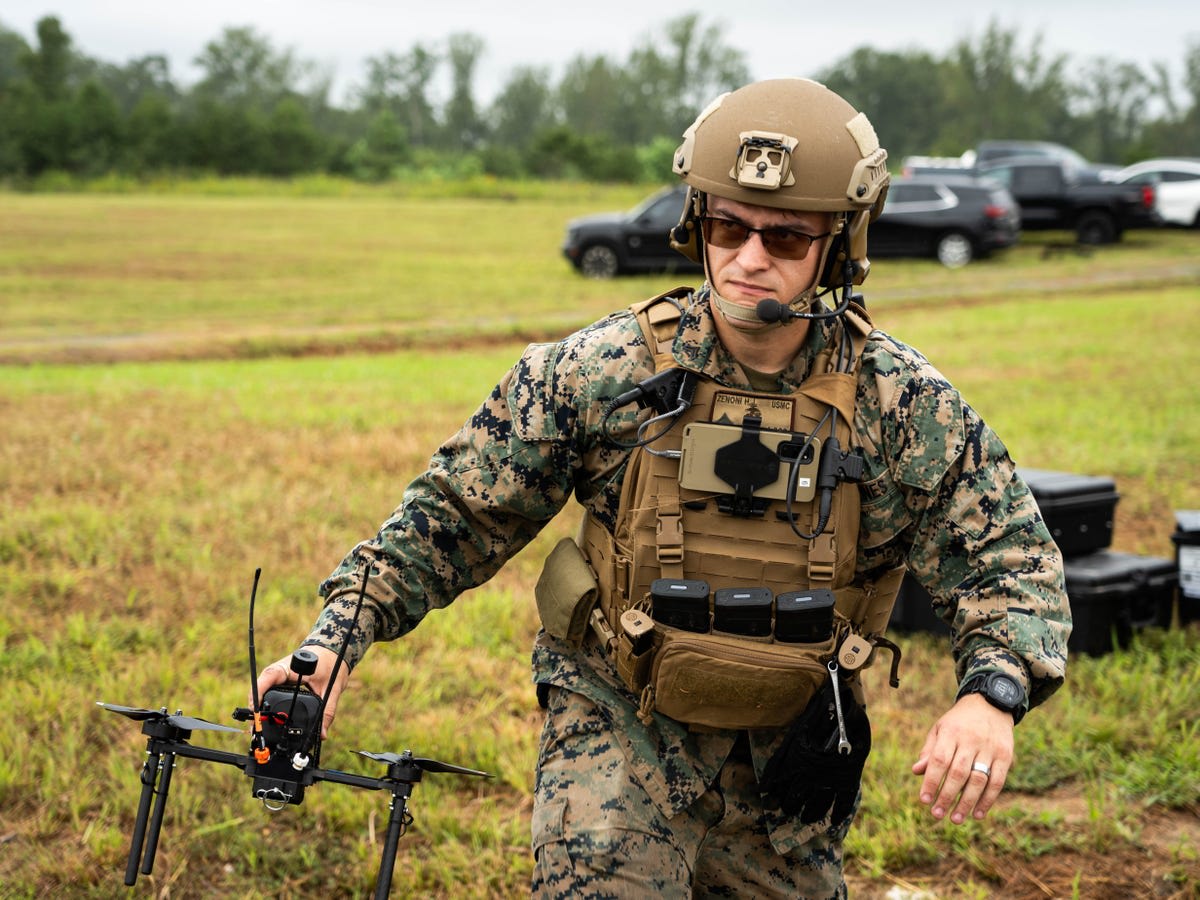
Why the US Counter-Drone Force Commander Says a "Silver Bullet" Won't Stop Small UAS
The Joint Interagency Task Force 401 commander, Brig. Gen. Matt Ross, stated that no single technology can defeat the threat from small uncrewed aerial systems (UAS), necessitating a
Will China's New Jet End the Boeing-Airbus Commercial Aviation Duopoly in 2026?
China's push for aerospace self-reliance, highlighted by the wider adoption of its new commercial jet, challenges the long-standing Boeing-Airbus duopoly, signaling a major shift in

Air Force Expert: Trump Could Release Recovered UAP Craft Photos in 2026
A former Air Force nuclear specialist claims Donald Trump may become the UAP "disclosure" president, potentially releasing "photos of a recovered craft" as early as 2026, raising