Why Did the Delhi High Court Demand More Than Refunds From IndiGo?

Aviation News Editor & Industry Analyst delivering clear coverage for a worldwide audience.
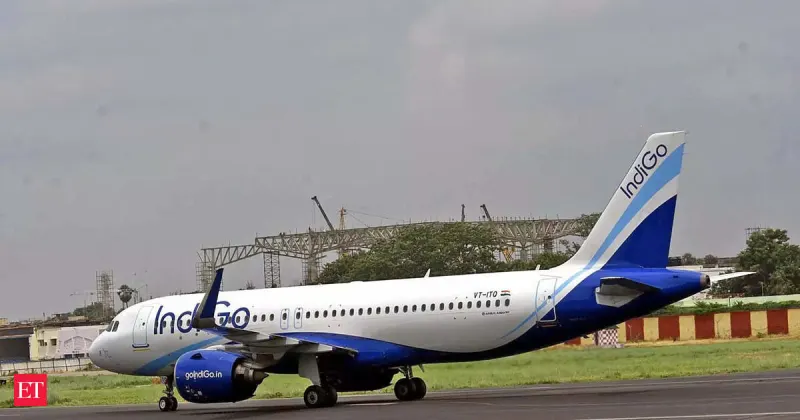
IndiGo must detail its passenger compensation strategy to the Delhi High Court, which ruled that mere refunds for December's flight cancellations are insufficient.
Key Takeaways
- •Delhi High Court ordered IndiGo to file an affidavit detailing its full passenger compensation strategy within two weeks, ruling that refunds alone are insufficient.
- •The chaos in December 2025 involved 2,507 cancelled and 1,852 delayed flights, impacting over 300,000 passengers, primarily due to IndiGo's failure to implement new DGCA pilot rest norms.
- •IndiGo is currently offering ₹10,000 travel vouchers to severely impacted flyers, but the court questioned the need for passengers to claim compensation proactively.
- •The Directorate General of Civil Aviation (DGCA) previously imposed a record ₹22.2 crore penalty on IndiGo for the operational lapses.
The Delhi High Court IndiGo compensation case has intensified.
The court has directed IndiGo to file a detailed affidavit. This document must explain its plan for passenger compensation. The directive follows the widespread IndiGo flight cancellation chaos last December. The court observed that simply refunding fares is not enough. Justice must be done for all affected flyers.
Court Demands Action Beyond Refunds
On Thursday, the court bench questioned the airline's current approach. They noted that refunds do not account for passenger inconvenience. The court asked for clarity on civil aviation rules for compensation. The airline was given two weeks to file the affidavit. This ruling sets a strong precedent for airline compensation beyond refunds in India.
The Voucher vs. Cash Debate
IndiGo informed the court it processed all refunds. For the "most severely impacted" flights, the airline offered travel vouchers. These vouchers were valued at ₹10,000 for each passenger. IndiGo also created a website for passengers to claim this compensation.
However, the court raised a critical question. They asked why flyers must apply for compensation. The airline already knows who the affected passengers are. Furthermore, the court questioned the voucher's 12-month validity. They sought an alternative for passengers who cannot use the voucher in that time.
The public interest litigation (PIL) petitioners argued for cash compensation. They stated that a travel voucher versus cash payment is restrictive. Vouchers limit where and when a passenger can fly next.
The December Operational Crisis
The court case stems from a major operational meltdown. In early December, IndiGo cancelled thousands of flights. The December flight cancellations left over three lakh passengers stranded.
The main cause was the airline’s failure to adapt. They were not ready to implement new Flight Duty Time Limitation (FDTL) norms. The Directorate General of Civil Aviation (DGCA) introduced these new pilot rest rules. IndiGo's tight scheduling and pilot shortages amplified the crisis.
Regulatory and Financial Consequences
The DGCA took significant Indian aviation regulatory action. An inquiry found serious systemic lapses at the airline. The regulator imposed a record penalty of ₹22.2 crore on IndiGo. They also ordered the removal of a senior vice president of operations.
This regulatory scrutiny highlights the importance of compliance. Airlines must balance commercial goals with safety standards. The DGCA's action ensures strict adherence to crew rest rules.
Impact on Passenger Rights
The Delhi High Court IndiGo compensation ruling is a landmark event. It strengthens flight disruption passenger rights in India. DGCA rules already mandate compensation for untimely cancellations. This compensation is in addition to the full ticket refund.
- DGCA rules specify compensation up to ₹10,000 for late-notified cancellations.
- The court is now pushing for a proactive, fair, and accessible compensation process.
This case signals a shift in consumer protection. Airlines must now consider the full impact of disruptions. They must move beyond minimum regulatory requirements. The industry is watching IndiGo's final passenger compensation strategy closely. Its details will shape future airline liability in India.
Visit flying.flights for the latest commercial aviation news and airline industry updates.
Written by Ujjwal Sukhwani
Aviation News Editor & Industry Analyst delivering clear coverage for a worldwide audience. Covers flight operations, safety regulations, and market trends with expert analysis.
Visit ProfileYou Might Also Like
Discover more aviation news based on similar topics

Nigeria Considers Foreign Carrier Curbs to Boost Local Airlines
Nigeria is reportedly considering restricting foreign airline access to its primary hubs to foster growth for domestic carriers in international markets.

EASA Issues New Maintenance Directive for Airbus BelugaXL Fleet
EASA has issued a new airworthiness directive for the Airbus A330-743L BelugaXL fleet, mandating updated structural integrity inspection schedules.

CBI Seeks to Close Air India Aircraft Leasing Irregularities Case
India's CBI has filed a closure report in the Air India aircraft leasing case, concluding no criminal intent was found in the long-running investigation.

US Airlines Fear EU-Wide Impact from Dublin Airport Cap Ruling
US airlines warn an EU court ruling on Dublin's passenger cap could allow planners across the bloc to unilaterally restrict airport capacity.

House Rejects ROTOR Act Mandating Aircraft Locator Systems
The U.S. House failed to pass the ROTOR Act, a bill requiring collision avoidance systems on all aircraft following last year's fatal midair collision.

US Eliminates 10% Tariff on Brazilian Aircraft Exports After Court Ruling
The US has eliminated a 10% tariff on Brazilian aircraft, a move that levels the playing field for manufacturer Embraer against its global competitors.