

Why Every Aviation Professional Needs This Essential Guide to Aircraft Parts


Key Points
- 1The commercial aircraft aftermarket parts market was valued at $44.45 billion in 2024, driven by MRO demand and extended fleet life.
- 2Supply chain bottlenecks are a major crisis, expected to cost the airline industry over $11 billion this year due to parts shortages.
- 3Regulatory bodies mandate FAA Form 8130-3 or EASA Form 1 for parts traceability to combat the rising risk of Suspected Unapproved Parts (SUPs).
- 4Advanced materials like Ceramic Matrix Composites (CMCs) and 3D printing are key trends for future component manufacturing.
Aircraft are remarkable feats of engineering. They rely on thousands of meticulously crafted essential aircraft parts.
These components work together in seamless coordination. Understanding these various parts is absolutely essential. Every component plays an indispensable role. This ensures smooth, efficient flight operations. This guide covers the fundamental categories of commercial aviation components.
The $44 Billion Commercial Aircraft Parts Market
The commercial aircraft aftermarket parts market is robust. It was valued at $44.45 billion in 2024. This market is projected to grow significantly. The compound annual growth rate (CAGR) is about 5.4% through the forecast period. The Maintenance, Repair, and Overhaul (MRO parts market) segment is a market leader.
However, the aircraft parts supply chain faces challenges. An unprecedented supply chain crisis exists today. Bottlenecks could cost the airline industry over $11 billion this year. A record backlog of over 17,000 aircraft exists. This forces airlines to extend the life of older fleets.
Understanding Airframe and Propulsion Systems
The airframe is the aircraft’s foundational structure. It includes the fuselage, wings, and empennage. Modern fuselages use aluminum alloys and advanced composite materials. Wings generate the necessary lift for flight. They have a precisely designed aerodynamic profile.
Aircraft engines are highly sophisticated systems. They transform fuel into necessary thrust or power. Turbine engines dominate commercial aviation. They offer exceptional power-to-weight ratios. The current shortage has led to an aircraft engine crisis. Some newer Airbus A320neo and A321neo jets are being dismantled. Their engines are reportedly worth more than the airframes. New materials like Ceramic Matrix Composites (CMCs) are used. These offer extreme heat resistance for turbine sections.
Flight Controls and Avionics
Flight control systems allow pilots to maneuver the aircraft. Primary controls include ailerons, elevators, and rudders. Secondary controls like flaps and slats enhance performance. They are vital during takeoff and landing. Modern aircraft rely on complex avionics packages. These integrate navigation and communication systems. The systems use cohesive digital platforms.
The Critical Challenge of Parts Traceability
Regulatory compliance is paramount for safety. FAA parts traceability is a critical process. It tracks a part's history and airworthiness. Authorities like the FAA and EASA require documentation. This includes the FAA Form 8130-3 or EASA Form 1. These forms verify a part's approved origin.
- The supply shortage increases the risk of fraud.
- Suspected Unapproved Parts (SUPs) can infiltrate the supply chain.
- Using SUPs severely compromises flight safety.
- Traceability records help prevent counterfeit parts.
- Records for life-limited parts are mandatory.
Life Support and Hydraulic Systems
Life support systems maintain survivable conditions. Pressurization systems ensure comfortable cabin pressure. Oxygen systems provide emergency breathing gas. Fire detection and suppression systems are also essential. They guard against in-flight emergencies.
Hydraulic systems deliver powerful force multiplication. They operate flight controls and landing gear. Multiple independent systems ensure redundancy. This maintains critical functions during a failure. Pneumatic systems use compressed air. Applications include engine starting and wing anti-icing.
The Future of Aircraft Components
Advanced aerospace materials drive innovation. Carbon-fiber-reinforced polymers (CFRPs) are increasingly common. They offer superior strength-to-weight ratios. This improves aircraft fuel efficiency. Additive Manufacturing (3D Printing) is also growing. It allows for complex, customized component production. This technology may help ease future supply chain pressures. Staying informed on these parts is crucial. It is vital for all aviation stakeholders.
For global airline trends and commercial aviation news, turn to flying.flights.
Topics

Written by
Ujjwal SukhwaniAviation News Editor & Industry Analyst delivering clear coverage for a worldwide audience.
View ProfileYou Might Also Like
Discover more aviation news based on similar topics
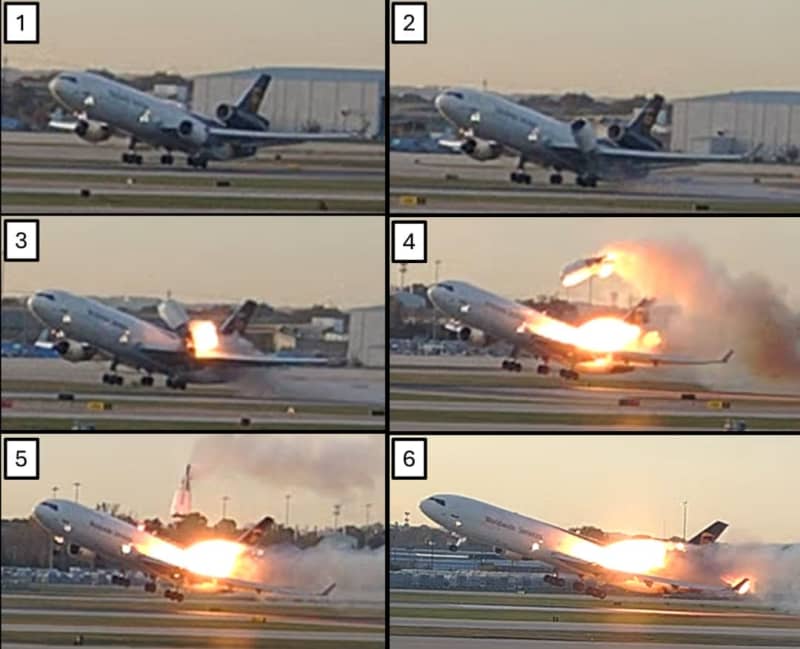
NTSB: Boeing Knew of MD-11F Structural Flaw Years Before Deadly UPS Crash
NTSB reports Boeing knew of a structural flaw in the MD-11F spherical bearing assembly since 2011, years before the November 2025 UPS cargo jet crash in Louisville that killed 15.

NTSB Reveals Broken Part in Fatal UPS MD-11 Crash Failed Four Times Before
NTSB's factual report on the November 2025 UPS MD-11 crash revealed a critical engine mount part that failed was documented by Boeing to have failed four times previously, raising questions about maintenance and safety warnings.

American Airlines Disturbance in Miami Highlights FAA Unruly Passenger Fines
American Airlines faced a passenger disturbance at Miami International Airport (MIA) after two reportedly intoxicated individuals refused crew instructions, underscoring the FAA's zero-tolerance policy against unruly behavior on flights.

FAA Mandates Stricter Safety Standards for Regional Airlines: What Changes Now?
The FAA approved stricter safety standards for regional airlines, enhancing pilot training and aircraft maintenance to address recent commercial aviation safety concerns.

Ryanair Boeing 737-800 Engine Pod Strike Undetected for 24 Hours at Faro
Ryanair Boeing 737-800 suffered an engine pod strike landing at Faro, with the significant damage reportedly going undetected for approximately 24 hours.

DGCA Issues Notice to Air India Over Boeing 787 Dreamliner Snags
DGCA issued a show-cause notice to Air India for allegedly operating a Boeing 787-8 Dreamliner on June 28 despite repetitive technical snags and non-compliance with the Minimum