Airlines Halt Middle East Flights After Iran-Israel Military Strikes

Aviation News Editor & Industry Analyst delivering clear coverage for a worldwide audience.
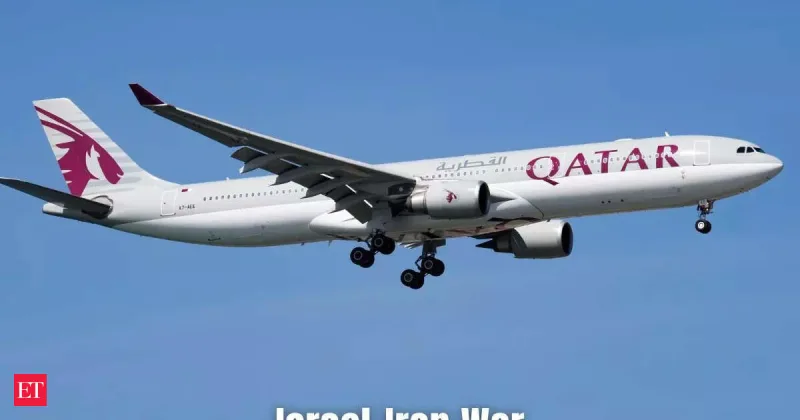
Major airlines, including Emirates and Qatar Airways, suspended Middle East flights after regional airspace closures followed military strikes in Iran.
Key Takeaways
- •Suspended all operations at major hubs including Dubai (DXB) and Doha (DOH).
- •Cancelled 6.7% of all scheduled flights to the Middle East on Feb 28, 2026.
- •Issued a Conflict Zone Information Bulletin (CZIB) by EASA citing 'high risk'.
- •Rerouted long-haul flights, increasing operational costs and flight times.
A massive wave of flight cancellations and airspace closures has swept across the Middle East following military strikes in Iran on Saturday, February 28, 2026. According to aviation data research firm Cirium, 232 out of 3,422 scheduled flights to the region were cancelled, representing 6.7% of total traffic. The disruption has effectively severed critical east-west air transit corridors, impacting global travel networks.
The immediate trigger for the shutdown was a series of military actions that led national aviation authorities to close their airspace as a primary safety measure. This rapid, coordinated response underscores the aviation industry's protocol for managing geopolitical crises and prioritizing passenger and crew safety above all else.
Widespread Airspace Closures and Cancellations
Multiple countries issued notices closing their airspace to all civilian flights on February 28. The closures included Iran, Israel, Qatar, Iraq, Kuwait, Bahrain, Jordan, and the United Arab Emirates. The shutdown of Dubai International Airport (DXB), the world's busiest hub for international traffic, and Hamad International Airport (DOH) in Doha has caused significant disruption to global flight schedules.
In response, major carriers immediately suspended operations. Emirates (EK), the Dubai-based carrier, confirmed it had temporarily suspended all flight operations to and from its hub. A statement from the airline noted, "The safety and security of our passengers and crew remain our highest priority." Similarly, Qatar Airways (QR) Group announced a temporary suspension of all flights to and from Doha.
European and other international airlines followed suit:
- Lufthansa suspended flights to Tel Aviv, Beirut, and Amman until March 7, with Dubai services halted through the weekend.
- British Airways cancelled services to Tel Aviv and Bahrain until March 3.
- Air France cancelled all flights to Tel Aviv and Beirut.
- Wizz Air suspended all flights to and from Israel, Dubai, Abu Dhabi, and Amman until March 7.
- Air India cancelled all flights to its Middle East destinations.
Data from Cirium indicates that the highest percentage of flight cancellations on February 28 was to Israel at 37.3%, followed by Jordan at 13.3% and Qatar at 10.1%.
Regulatory Response and Safety Advisories
The European Union Aviation Safety Agency (EASA) responded by issuing a Conflict Zone Information Bulletin (CZIB) covering the Middle East and Persian Gulf. The bulletin cited a "high risk to civil aviation" within the affected Flight Information Regions (FIRs). This advisory serves as a strong recommendation for all air operators to avoid the specified airspace. The initial CZIB is valid until March 2, 2026, and will be reviewed as the security situation evolves.
The issuance of a CZIB by EASA is a standard procedure when geopolitical or military events pose a direct or indirect threat to commercial flights. These advisories are developed in coordination with the International Civil Aviation Organization (ICAO) and member states to ensure a harmonized approach to aviation security.
Operational and Economic Fallout
The immediate operational impact for airlines is the need to reroute flights that would typically transit through the affected airspace. These reroutings lead to longer flight times, increased fuel consumption, and higher operational costs. The closure of key hubs like Dubai and Doha disrupts not only point-to-point travel but also the connecting traffic that forms the backbone of their global networks.
Henry Harteveldt, President of Atmosphere Research Group, commented on the passenger impact, stating, "For travelers, there's no way to sugarcoat this. You should prepare for delays or cancellations for the next few days as these attacks evolve and hopefully end." The long-term economic effects could be significant. Analysts predict a potential surge in oil prices due to fears of supply disruptions in the Strait of Hormuz, which would further inflate airline fuel costs, a major component of their operating expenses.
Why This Matters
This event highlights the extreme vulnerability of the global aviation system to geopolitical shocks. The rapid and comprehensive shutdown of a critical air corridor demonstrates the industry's risk-averse, safety-first approach in active conflict zones. For airlines, it presents a major operational and financial challenge, while for passengers, it signals a period of significant uncertainty and disruption for travel to and through the Middle East. The incident will likely serve as a modern case study in airline crisis management and the importance of dynamic risk assessment for flight operations.
From airline operations to fleet updates, commercial aviation news lives at flying.flights. For airline finances, mergers, and industry strategy, visit the Business category at flying.flights/business.
Written by Ujjwal Sukhwani
Aviation News Editor & Industry Analyst delivering clear coverage for a worldwide audience. Covers flight operations, safety regulations, and market trends with expert analysis.
Visit Profile