BEA Highlights Phraseology Risk After Air France Hop E190 Near-Miss

Aviation News Editor & Industry Analyst delivering clear coverage for a worldwide audience.

France's BEA stresses strict radio phraseology for flight safety following a near-miss incident involving an Air France Hop Embraer 190.
Key Takeaways
- •Highlights insufficient adherence to radio phraseology as the cause of a near-miss.
- •Involved an Air France Hop Embraer E190 and a microlight aircraft.
- •Reinforces the critical importance of ICAO standards for pilot and ATC communication.
- •Underscores communication breakdown as a persistent human factor in aviation safety.
France's air accident investigation agency, the BEA (Bureau d'Enquêtes et d'Analyses pour la sécurité de l'aviation civile), has released its final report on a near-miss incident, concluding that insufficient adherence to standard radio phraseology was the primary cause. The event involved a loss of separation between an Air France Hop-operated Embraer 190 and a microlight aircraft, highlighting persistent risks associated with pilot and controller communication.
The investigation underscores a critical vulnerability in aviation safety: the potential for miscommunication even in controlled airspace. The final report explicitly states that the loss of separation was a direct result of non-standard communication from both the microlight pilot and the Air Traffic Control (ATC) personnel involved. This incident serves as a stark reminder that clear, concise, and standardized communication is a fundamental pillar of flight safety, a point continuously emphasized by global aviation authorities.
Incident Details and BEA Findings
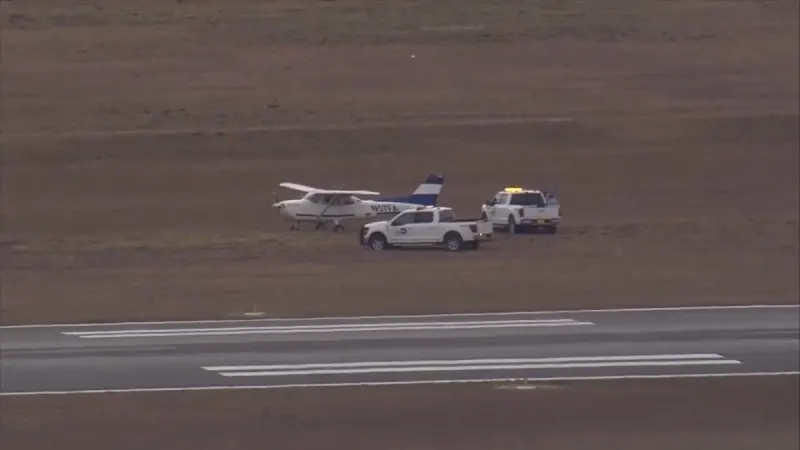
The serious incident involved a Hop Embraer E190, a regional jet with a capacity for up to 98 passengers, and an Atec 321 microlight. While the specific date and location of the incident were not detailed in the summary report, the BEA's focus was on the causal factors rather than the operational specifics. The core of the investigation's conclusion, as noted in expert analysis of the report, centered on the failure to use prescribed terminology during radio exchanges.
This breakdown in communication protocol led to a misunderstanding of aircraft positions and intentions, resulting in the dangerous loss of separation. The BEA's findings assign responsibility to both the general aviation pilot and the air traffic controllers, indicating a systemic issue rather than a single point of failure. Such events are receiving increased scrutiny from safety bodies worldwide as they provide crucial data for preventing future accidents. The full report can be accessed via the official BEA website.
The Regulatory Framework for Communication
To prevent such incidents, the ICAO (International Civil Aviation Organization) has established a comprehensive framework for aeronautical telecommunications. These global standards are designed to eliminate ambiguity and ensure every transmission has a clear, universally understood meaning. Key documents governing this area include:
- ICAO Annex 10, Volume II: This document specifies the international standards for aeronautical telecommunications, including the technical requirements for communication systems and the procedures for their use.
- ICAO Doc 4444 (PANS-ATM): This provides the detailed procedures for air navigation services, including the precise phraseology that pilots and controllers must use for every phase of flight. It is the primary manual for standardizing ATC communication.
- ICAO Doc 9432 (Manual of Radiotelephony): This manual offers comprehensive guidance and examples of standardized phraseology, serving as a critical training and reference tool for aviation professionals.
The near-miss involving the Air France Hop aircraft demonstrates a departure from these established international protocols, highlighting the need for continuous reinforcement and training.
Broader Industry Context
The incident places a spotlight on Air France Hop, the French flag carrier's regional arm. The airline operates a fleet of 37 aircraft and serves approximately 50 destinations, primarily on domestic and short-haul European routes. Its fleet includes the Embraer 190, a workhorse of regional aviation known for its efficiency and a range of up to 4,260km.
More broadly, the BEA's conclusion aligns with a persistent trend in aviation safety analysis, where human factors, particularly communication, are frequently identified as contributory elements in accidents and incidents. Ambiguous or non-standard phraseology has been cited in numerous investigations over the decades. This report reinforces the industry consensus that technical solutions alone cannot guarantee safety; human performance, discipline, and adherence to standard operating procedures are equally critical. The focus on near-miss events allows regulators and operators to identify and mitigate risks proactively before they escalate into catastrophic failures.
What Comes Next
While the BEA's report is final, its findings will likely trigger reviews of training curricula and operational procedures for both pilots and air traffic controllers in France and potentially across Europe. The report's recommendations, though not publicly detailed, are expected to call for enhanced recurrent training with a specific focus on radiotelephony discipline and the strict use of ICAO-standardized phraseology. For operators like Air France Hop, this may involve updates to their internal training modules and increased emphasis on communication protocols during simulator sessions.
Why This Matters
This investigation is significant because it highlights a fundamental, non-technical vulnerability that persists across the global aviation system. In an era of increasing automation and complex airspace, this incident serves as a powerful case study on the indispensable role of clear and precise human communication. For aviation professionals, it reinforces the message that mastery of basic skills, including standard phraseology, is not just a matter of compliance but a critical defense against accidents.
From airline operations to fleet updates, commercial aviation news lives at flying.flights. For detailed airline coverage, route changes, and fleet moves, explore the Airlines section at flying.flights/airlines.
Written by Ujjwal Sukhwani
Aviation News Editor & Industry Analyst delivering clear coverage for a worldwide audience. Covers flight operations, safety regulations, and market trends with expert analysis.
Visit Profile