Gulf Airlines Extend Cancellations Amid Iran Airspace Closures

Aviation News Editor & Industry Analyst delivering clear coverage for a worldwide audience.

Major Gulf airlines have extended flight cancellations and rerouted services following widespread airspace closures over the Persian Gulf amid regional conflict.
Key Takeaways
- •Affects major hubs like Dubai International (DXB), which handled 95.2 million passengers in 2025.
- •Triggers an EASA Conflict Zone Information Bulletin advising avoidance of Persian Gulf airspace.
- •Forces long-haul rerouting for Europe-Asia flights, increasing flight times and operational costs.
- •Disrupts the 'super connector' business model for Emirates, Qatar Airways, and Etihad Airways.
Major airlines across the Persian Gulf have extended widespread flight suspensions and are implementing significant rerouting for long-haul services. The Middle East aviation disruption follows retaliatory strikes from Iran, which prompted aviation authorities to close airspace across the region, impacting some of the world's most critical international transit hubs.
The immediate Iran airspace closure 2026 and subsequent actions by neighboring states represent one of the most significant disruptions to global air travel in recent years. The move directly challenges the 'super connector' hub-and-spoke model perfected by carriers like Emirates, Qatar Airways, and Etihad Airways. These airlines rely on the free flow of transit traffic between Asia, Europe, and the Americas through their hubs at Dubai International Airport (DXB), Doha, and Abu Dhabi. The airspace closures effectively sever these key corridors, forcing costly and time-consuming operational adjustments.
Regulatory Response and Airspace Closures
Following the military escalation, the European Union Aviation Safety Agency (EASA) issued a Conflict Zone Information Bulletin (CZIB) on February 28, 2026. The bulletin warns air operators to avoid Middle East and Persian Gulf airspace at all altitudes due to high risks posed by military activity. This advisory is a primary driver behind the Gulf airline flight cancellations.
In tandem with the EASA bulletin, national regulators, including the UAE's General Civil Aviation Authority (GCAA), took decisive action. According to international aviation reports, airspace closures on February 28 affected at least eight countries, including Iran, the UAE, Qatar, and Bahrain. Authorities issue such closures via official Notice to Air Missions (NOTAM) documents to ensure the safety of civil aviation. The precedent for such swift action was reinforced following the 2020 downing of Ukraine International Airlines flight 752 over Tehran, which highlighted the extreme risks to commercial flights in conflict zones.
Nick Careen, IATA's Senior Vice President for Operations, Safety and Security, has previously highlighted the industry's safety protocols in such events. He emphasized the obligation of states to declare their airspace open or closed via NOTAMs, stating that if airspace is closed, "airlines cannot, do not and will not use it."
Impact on Major Hubs and Airlines
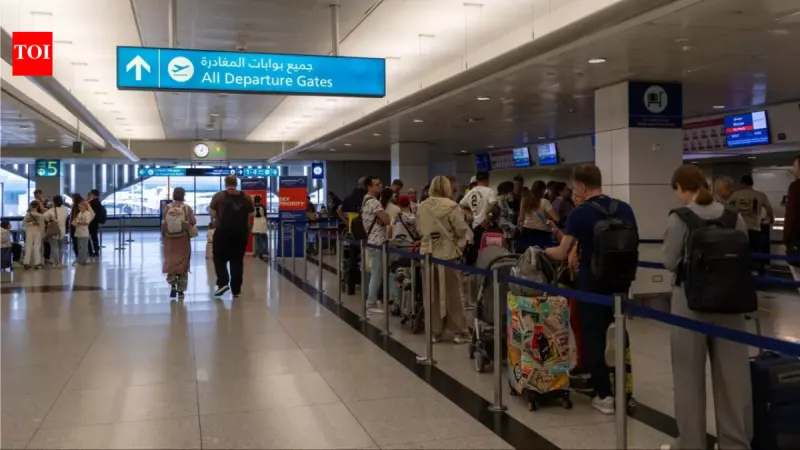
The disruption is acutely felt at Dubai International Airport (DXB), the world's busiest for international travel. According to the Dubai Airports 2025 Annual Traffic Report, DXB handled a record 95.2 million international passengers in 2025. India remained its top source country with 11.9 million passengers. The current Persian Gulf flight suspensions paralyze operations at a hub that handled 8.7 million passengers in its busiest month of December 2025 alone.
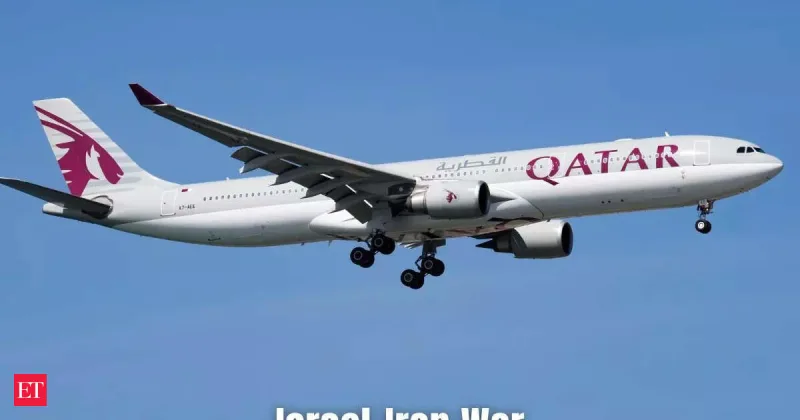
The region's other major carriers are also heavily impacted. Etihad Airways, which carried 22.4 million passengers in 2025—a 21% year-on-year increase—has seen its growth trajectory threatened. The airline's operating fleet stood at 127 aircraft at the end of 2025. Similarly, Qatar Airways Group, with a fleet of 271 passenger aircraft as of October 2025, faces major network interruptions centered on its Doha hub.
Operational and Financial Consequences
The primary operational challenge is the international flight rerouting now underway. Flights between Europe and Asia are being diverted south over Saudi Arabia and Egypt to avoid the conflict zone. These longer flight paths lead directly to increased operational costs from higher fuel consumption and extended crew duty times. The schedule integrity of airlines is also compromised, creating a cascade of delays across their global networks.
While the exact financial impact has not been disclosed, the combination of lost revenue from cancelled flights and increased expenses from rerouting will significantly affect the profitability of Gulf carriers. This geopolitical impact on air travel underscores the vulnerability of airline business models to regional instability, particularly for those geographically positioned near contested areas.
What Comes Next
The duration of the flight suspensions remains uncertain and is contingent on the de-escalation of military activities in the region. Airlines are communicating with passengers, offering refunds and rebooking options, but cannot provide a definitive timeline for the resumption of normal services. The situation is being monitored continuously by international bodies like EASA, the International Civil Aviation Organization (ICAO), and the International Air Transport Association (IATA), who will provide guidance on when the airspace can be safely reopened.
Why This Matters
This large-scale airspace closure highlights the fragility of global aviation networks in the face of geopolitical conflict. It specifically tests the resilience of the Gulf 'super connector' model, which has transformed global travel over the past two decades. For airlines, it demonstrates the critical need for dynamic risk assessment and contingency planning, while for passengers, it serves as a stark reminder of how regional instability can have immediate and far-reaching consequences for international mobility.
For in-depth airline coverage and commercial aviation news, flying.flights delivers timely industry insights. From aircraft production to supply chains, commercial aviation manufacturing news is covered at flying.flights/manufacturing.
Written by Ujjwal Sukhwani
Aviation News Editor & Industry Analyst delivering clear coverage for a worldwide audience. Covers flight operations, safety regulations, and market trends with expert analysis.
Visit Profile