Sharjah Airport Issues Advisory Amid Widespread UAE Airspace Closures

Aviation News Editor & Industry Analyst delivering clear coverage for a worldwide audience.
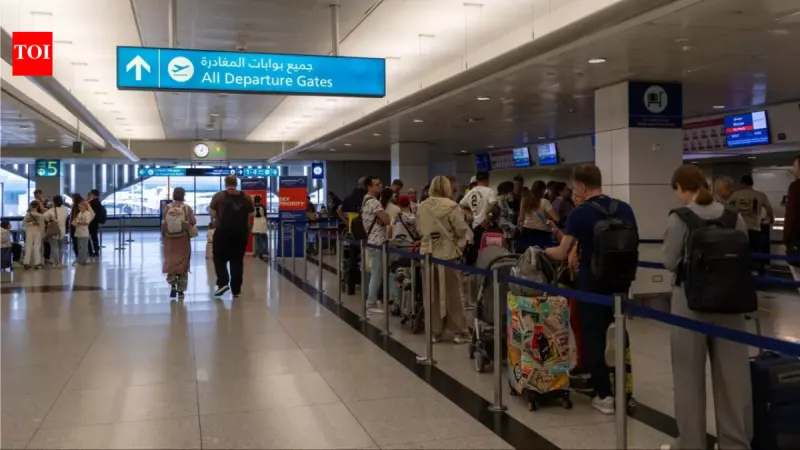
Sharjah Airport has issued a passenger advisory as UAE airspace closures due to regional conflict cause significant flight disruptions and cancellations.
Key Takeaways
- •Issues passenger advisory due to widespread flight cancellations and delays.
- •Stems from UAE airspace closures managed by the GCAA amid regional conflict.
- •Directly impacts hub carrier Air Arabia, which carried 18.8 million passengers in 2024.
- •Highlights risks to global aviation hubs from geopolitical instability.
Operations at Sharjah International Airport (SHJ) are facing significant disruptions following the closure of airspace over sections of the United Arab Emirates. The UAE's General Civil Aviation Authority (GCAA), the country's federal regulator, has issued a series of Notice to Air Missions (NOTAMs) restricting flight paths due to escalating regional conflict. The airport has advised passengers to check directly with their airlines for the latest flight status information before traveling.
The airspace restrictions are creating widespread cancellations, delays, and diversions, impacting one of the busiest air corridors in the world. This situation primarily affects Air Arabia, the low-cost carrier based at Sharjah, along with other international airlines that utilize the airport. The closures force airlines to undertake complex and costly rerouting to avoid the designated conflict zones, leading to longer flight times and increased fuel consumption.
Regulatory and Operational Impact
The management of the UAE's sovereign airspace, known as a Flight Information Region (FIR), falls under the direct responsibility of the GCAA. In situations of potential conflict, the authority is tasked with ensuring the safety of civil aviation by closing or restricting airspace. This action aligns with guidance from the International Civil Aviation Organization (ICAO), which outlines state responsibilities for conducting risk assessments for operations near conflict zones. The primary mechanism for communicating these hazards to pilots and airlines is the formal Notice to Air Missions (NOTAM) system.
For Sharjah International Airport, which is the third-busiest airport in the UAE, the impact is substantial. The airport is in the midst of a significant expansion project aiming to increase its capacity to 25 million passengers annually by 2027. The current disruptions challenge its role as a key regional hub. The airport's operations are heavily reliant on its primary tenant, Air Arabia.
According to the airline's 2024 fiscal year report, Air Arabia operated a fleet of 81 Airbus A320 and A321 aircraft. The airline group carried 18.8 million passengers in 2024, an increase of 12% from the previous year, while maintaining a high average seat load factor of 82%. The widespread flight cancellations directly affect these operational metrics and the airline's revenue, which stood at AED 6.63 billion in 2024.
Broader Industry Consequences
The situation in the UAE reflects a broader industry trend of conflict zone avoidance. Prolonged airspace closures in the Middle East severely disrupt the hub-and-spoke business models of major regional carriers, who depend on connecting traffic between Asia, Europe, and the Americas. Airlines globally are forced to implement layered risk management protocols, which begin with state-issued NOTAMs and are followed by internal safety assessments to determine viable alternative routes.
Expert commentary from the International Air Transport Association (IATA) has previously emphasized the obligations of states under the Chicago Convention to protect civil aviation and ensure clear communication about hazardous activities. The current closures underscore the vulnerability of critical aviation infrastructure to geopolitical events. The resulting rerouting adds significant operational costs for airlines, which may eventually be passed on to passengers through higher fares.
What Comes Next
The duration of the airspace closures remains uncertain and is contingent on the de-escalation of the regional conflict. Airlines and passengers must monitor official communications from the GCAA and individual carriers for updates. Air Traffic Control (ATC) in neighboring FIRs will be managing increased traffic as flights are rerouted around the restricted zones. Passengers with upcoming travel through Sharjah Airport are strongly advised to confirm their flight's status and anticipate potential schedule changes.
Why This Matters
This development highlights the critical vulnerability of global aviation to geopolitical instability, particularly in vital transit regions like the Persian Gulf. It demonstrates the immediate and severe operational and financial impact on airports and hub carriers. For the broader industry, it reinforces the necessity of robust, multi-layered risk assessment protocols and the indispensable role of civil aviation authorities in safeguarding passenger flights over or near conflict zones.
Trusted commercial aviation news and airline industry reporting are available at flying.flights. Follow aviation sustainability efforts, emissions research, and green initiatives in the Environmental section at flying.flights/environmental.
Written by Ujjwal Sukhwani
Aviation News Editor & Industry Analyst delivering clear coverage for a worldwide audience. Covers flight operations, safety regulations, and market trends with expert analysis.
Visit Profile