Gulf Airspace Closed as Iran Missile Strikes Halt All Flights

Aviation News Editor & Industry Analyst delivering clear coverage for a worldwide audience.
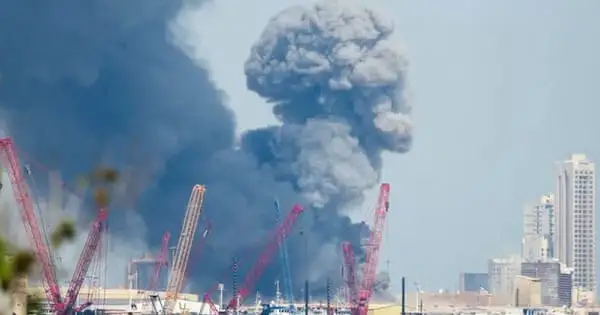
Gulf nations closed their airspace and grounded major airlines like Emirates and Etihad after Iran launched missile strikes targeting U.S. bases in the region.
Key Takeaways
- •Closed airspace across the UAE, Saudi Arabia, Qatar, Kuwait, Jordan and Iraq.
- •Grounded all Emirates and Etihad flights, halting operations at Dubai's hubs.
- •Targeted U.S. military bases in multiple Gulf countries with missile strikes.
- •Caused unprecedented disruption to global air travel, stranding passengers.
Airspace across multiple Gulf countries, including the United Arab Emirates (UAE), has been closed following a series of missile attacks by Iran targeting U.S. military installations. The unprecedented move has forced the complete grounding of major international carriers Emirates and Etihad Airways, triggering a severe and immediate disruption to global air travel.
The immediate shutdown of the region's airspace effectively severs critical air corridors connecting Europe and the Americas with Asia and Oceania. Dubai International Airport (DXB), the world's busiest for international passenger traffic, has suspended all operations, leaving an unconfirmed number of passengers stranded. The cascading effects are expected to impact flight schedules and airline operations worldwide for an indeterminate period.
Coordinated Regional Attacks
The escalation began on Saturday, February 28, 2026, with reports of missile interceptions and explosions across the region. In the UAE, a Pakistani national was killed in Abu Dhabi by falling debris from an intercepted missile. In Dubai, multiple explosions were seen and heard over prominent areas such as Jumeirah Beach Residence (JBR) and Palm Jumeirah.
Iran's Islamic Revolutionary Guard Corps (IRGC) claimed responsibility for the attacks, stating they were aimed at U.S. military bases hosted by Gulf nations. In a statement, the IRGC said, "This operation will continue relentlessly until the enemy is decisively defeated." The attacks appear to have been widespread, with incidents reported in several countries.
In Bahrain, a missile struck a service center of the U.S. Fifth Fleet, which is headquartered at NSA Bahrain in Manama. The government provided no further details on damage or casualties. In Kuwait, the Defence Ministry confirmed that its air defense systems intercepted missiles targeting Ali al-Salem Air Base, which hosts U.S. Air Force personnel. Explosions were also reported in Saudi Arabia, Qatar, Jordan, and Iraq.
Widespread Airspace and Airline Shutdown
In response to the attacks, the national aviation authorities of the UAE, Saudi Arabia, Qatar, Kuwait, Jordan, and Iraq have all closed their airspace to civil aviation until further notice. This has created a massive no-fly zone in one of the world's most vital aviation crossroads.
Dubai Airports, the operator of the UAE's primary hubs, issued a formal notice confirming the suspension of all air traffic. "Dubai Airports confirms that all flight operations at Dubai International (DXB) and Dubai World Central – Al Maktoum International (DWC) are suspended until further notice," the statement read. "Passengers must not travel to the airport and are advised to contact their airline directly for the latest flight updates."
Both Emirates and Etihad Airways, whose business models rely on the super-connector hub strategy, have cancelled all flights in and out of the UAE. The carriers also took the extraordinary step of suspending their worldwide flight operations, indicating the severity of the operational disruption and the difficulty in rerouting their extensive global networks.
Diplomatic Fallout and Regional Tensions
The missile strikes have been broadly condemned by the affected Gulf nations as a breach of their sovereignty. The UAE Ministry of Interior issued a statement confirming it was monitoring the situation and operating at the "highest level of readiness to take all necessary precautionary measures." Most countries have called for an end to hostilities, though Qatar noted it reserved the right to self-defense.
Oman, which often serves as a diplomatic intermediary in the region, offered a critical perspective on the U.S. involvement. Omani Foreign Minister Badr Albusaidi stated, "Active and serious negotiations have yet again been undermined. Neither the interests of the United States nor the cause of global peace are well served by this." He added, "I urge the United States not to get sucked in further. This is not your war."
Why This Matters
This rapid military escalation and subsequent airspace shutdown represent one of the most significant disruptions to commercial aviation in recent history. The event starkly illustrates the vulnerability of global air travel networks to geopolitical conflict, particularly in the strategically vital Persian Gulf. The grounding of Emirates and Etihad paralyzes a substantial portion of long-haul international capacity, promising widespread, costly, and prolonged impacts for passengers, supply chains, and the entire aviation industry.
flying.flights provides comprehensive commercial aviation news covering airlines, aircraft, and airports. Follow aviation sustainability efforts, emissions research, and green initiatives in the Environmental section at flying.flights/environmental.
Written by Ujjwal Sukhwani
Aviation News Editor & Industry Analyst delivering clear coverage for a worldwide audience. Covers flight operations, safety regulations, and market trends with expert analysis.
Visit Profile