Passenger Sanctioned For Fake AI Citations in Frontier Lawsuit

Aviation News Editor & Industry Analyst delivering clear coverage for a worldwide audience.
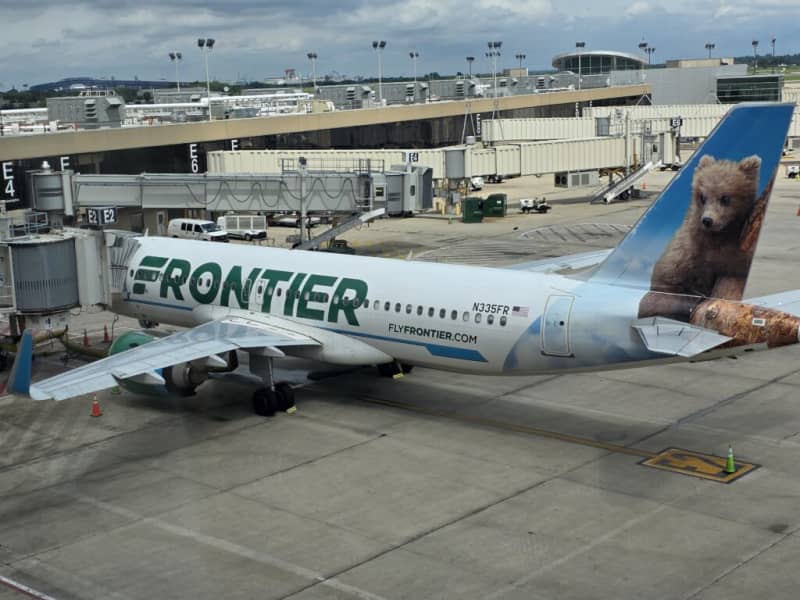
A Frontier Airlines passenger was sanctioned for using fake ChatGPT legal citations in a lawsuit after being denied boarding on an overbooked flight.
Key Takeaways
- •Sanctioned with a $1,000 fine for submitting seven fake ChatGPT-generated legal citations.
- •Highlights the risks of AI in legal research, paralleling the landmark Mata v. Avianca case.
- •Stems from an involuntary denied boarding on a Frontier flight that was overbooked by 10 passengers.
- •Underscores Frontier's industry-high denied boarding rate of 3.43 per 10,000 passengers.
A legal case involving a Frontier Airlines passenger has resulted in sanctions after the passenger submitted a court filing containing fabricated legal citations generated by artificial intelligence. The incident, which stemmed from an overbooked flight, has drawn attention to both the risks of using generative AI in legal proceedings and the passenger experience on Ultra Low-Cost Carriers (ULCCs).
The passenger was ordered to pay Frontier $1,000 and was referred for attorney discipline after an appellate brief was found to contain seven fabricated case citations. The passenger attributed the erroneous information to the use of ChatGPT for legal research, a defense that the court did not accept as a valid excuse.
Incident and Legal Background
The initial dispute occurred on June 13, 2023, when the passenger was scheduled to fly from Philadelphia to St. Louis. Gate agents for the flight announced it was oversold by 10 passengers and offered vouchers of up to $800 for volunteers to take a later flight. When no volunteers came forward, the airline proceeded with an Involuntary Denied Boarding (IDB), and the passenger was not permitted to board.
Following a lawsuit against the airline, the passenger’s subsequent legal filings included the non-existent case law. This action potentially violates regulations such as Federal Rule of Civil Procedure 11, which requires attorneys to certify that legal contentions are warranted by existing law. Submitting fabricated precedents can lead to significant court sanctions.
A Broader Trend of AI Misuse in Law
This Frontier Airlines lawsuit is not an isolated incident but part of a growing trend of legal professionals facing penalties for improperly using AI. The case mirrors the prominent Mata v. Avianca lawsuit, in which two lawyers were fined $5,000 by a federal judge in the Southern District of New York (S.D.N.Y.). They had submitted a brief containing multiple non-existent judicial opinions created by ChatGPT.
In his ruling on that case, Judge P. Kevin Castel noted the gatekeeping role attorneys must play. "Technological advances are commonplace and there is nothing inherently improper about using a reliable artificial intelligence tool for assistance," he wrote. "But existing rules impose a gatekeeping role on attorneys to ensure the accuracy of their filings." His commentary underscores the professional responsibility to verify all information, regardless of its source.
Overbooking and Consumer Rights
The case also highlights the industry practice of overbooking flights. Airlines frequently sell more tickets than available seats to offset the financial impact of no-show passengers and maximize revenue. While legal, the practice is governed by strict Department of Transportation (DOT) rules outlined in 14 CFR Part 250. These regulations mandate that airlines must first solicit volunteers before resorting to involuntary denied boarding. Furthermore, airlines are required to have a clear, non-discriminatory boarding priority system and provide specific compensation to passengers who are involuntarily bumped, with the amount tied to the length of the subsequent delay. The DOT provides a consumer guide, Fly Rights, detailing these passenger protections.
According to a DOT Air Travel Consumer Report, Frontier Airlines had the highest rate of involuntary denied boardings among major U.S. carriers, with 3.43 per 10,000 passengers from April to June 2024. This rate is significantly higher than the industry average and places the ULCC's operational practices under scrutiny. As of December 31, 2024, Frontier's fleet consisted of 159 Airbus single-aisle aircraft, with 82% comprised of more fuel-efficient A320neo family models. The carrier had commitments for an additional 187 aircraft for delivery through 2031, indicating a strategy of continued growth which could impact its management of passenger loads and overbooking scenarios.
Why This Matters
This incident serves as a dual cautionary tale for the aviation and legal industries. For legal professionals, it reinforces the critical need for diligence and verification when using emerging AI technologies, demonstrating that courts will not tolerate the submission of fabricated information. For the airline industry, particularly the ULCC segment, it underscores the persistent passenger-relations challenges associated with aggressive overbooking strategies and highlights the regulatory framework designed to protect consumers in such situations.
Get breaking commercial aviation news and expert airline analysis at flying.flights. Discover how innovation is shaping aviation through aircraft systems, avionics, and digital tools at flying.flights/technology.
Written by Ujjwal Sukhwani
Aviation News Editor & Industry Analyst delivering clear coverage for a worldwide audience. Covers flight operations, safety regulations, and market trends with expert analysis.
Visit Profile