Iraq Closes Airspace Following U.S.-Israel Strikes on Iran

Aviation News Editor & Industry Analyst delivering clear coverage for a worldwide audience.

Iraq's Civil Aviation Authority closed its airspace following a joint U.S.-Israel operation in Iran, causing widespread flight cancellations and diversions.
Key Takeaways
- •Closes airspace across multiple Middle Eastern nations including Iraq and Iran.
- •Forces hundreds of flight cancellations and diversions due to 'Operation Lion's Roar'.
- •Disrupts critical international flight corridors between Europe and Asia.
- •Prompts EASA to issue a Conflict Zone Information Bulletin advising avoidance.
The Iraqi Civil Aviation Authority (ICAA) has closed the nation's airspace to all arriving, departing, and transiting aircraft, a significant disruption to international aviation following military strikes inside Iran. The move is a direct response to a joint U.S.-Israel military operation, named “Operation Lion’s Roar,” which targeted military-linked sites in Iran. This Iraq airspace closure is part of a wave of similar actions across the region, triggering mass flight disruptions and highlighting the aviation industry's vulnerability to geopolitical conflict.
The immediate operational impact has been severe, with hundreds of flights canceled and many more diverted. Data from Cirium aviation analytics confirms the widespread nature of the disruption, stranding tens of thousands of passengers globally. The closure affects the entire Baghdad Flight Information Region (ORBB), a critical corridor for flights between Europe and Asia. Following the initial announcement, the ICAA confirmed the closure was extended for an additional 48 hours on March 2, 2026, creating further uncertainty for airline scheduling and passenger itineraries.
Widespread Airspace Closures
Iraq was not the only nation to shut down its skies. According to monitoring by flight tracking services, Iran, Israel, Kuwait, Bahrain, and Qatar also closed their airspace as a precautionary measure. Airlines were notified of the closures via a series of Notice to Airmen (NOTAM) publications, the standard procedure for communicating hazards or changes in flight operations. The collective closures effectively sealed off a massive and strategically important segment of Middle Eastern airspace.
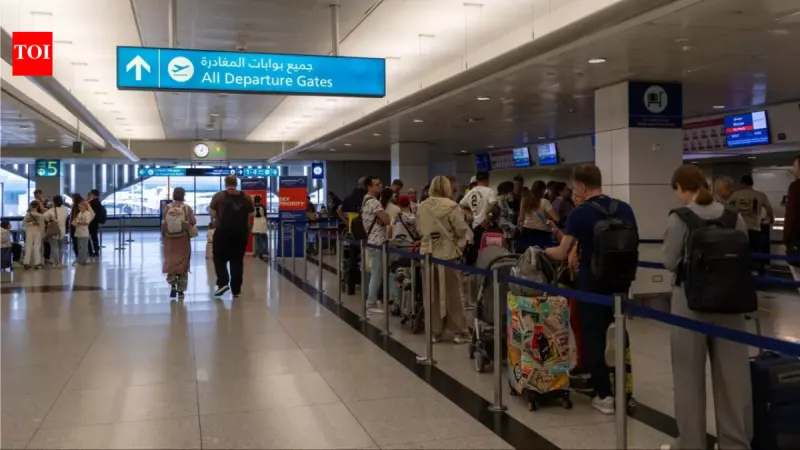
At a local level, flights were grounded at key airports, including Erbil International Airport (EBL) in northern Iraq. The sudden halt to operations left aircraft and crews displaced, adding logistical complexity for airlines already managing complex rerouting efforts. The industry trend of conflict zone airspace avoidance is now in full effect, with carriers implementing long detours around the entire region to ensure the safety of passengers and crew, leading to increased flight times and fuel costs.
Regulatory and Political Context
The military action precipitating the crisis was confirmed by officials from both the United States and Israel. In a statement, U.S. President Donald Trump said the operation's objective was “to defend the American people by eliminating imminent threats from the Iranian regime.” Echoing this sentiment, Israeli Prime Minister Benjamin Netanyahu stated the goal of ‘Operation Lion’s Roar’ is “to end the threat from the Ayatollah regime in Iran.”
In response to the escalating security risks, the European Union Aviation Safety Agency (EASA) issued a Conflict Zone Information Bulletin (CZIB). While non-binding, the bulletin strongly advises air operators to exercise extreme caution and avoid the airspace of several Middle Eastern countries, including some that had not officially issued a closure NOTAM. This guidance from a major global regulator reinforces the high-risk assessment and influences the operational decisions of many international airlines, particularly European carriers.
Passenger and Market Reaction
The cascading effect of the closures has created significant challenges for travelers. Airline industry analyst Henry Harteveldt commented on the situation, stating, “For travelers, there's no way to sugarcoat this... You should prepare for delays or cancellations for the next few days as these attacks evolve and hopefully end.” The fluid nature of the conflict and the potential for further extensions of airspace closures contribute to a climate of increased travel uncertainty.
Airlines are struggling to re-accommodate passengers on alternate flights, a task complicated by the fact that major connecting hubs in Dubai and Doha have also been affected by the regional airspace restrictions. The situation demonstrates the fragility of global aviation networks, where a conflict in one region can have immediate and far-reaching consequences for travel worldwide.
Why This Matters
This large-scale airspace shutdown over the Middle East underscores the profound impact of geopolitical events on commercial aviation. It forces a critical re-evaluation of risk management for conflict zone overflights, pushing airlines to develop more resilient and flexible routing strategies. The incident serves as a stark reminder that crucial international air corridors can close with little notice, demanding robust contingency planning from operators and creating significant uncertainty for the global travel industry.
flying.flights is your source for accurate commercial aviation news and global aviation updates. Track policy changes, airspace rules, and global aviation governance in the Regulatory category at flying.flights/regulatory.
Written by Ujjwal Sukhwani
Aviation News Editor & Industry Analyst delivering clear coverage for a worldwide audience. Covers flight operations, safety regulations, and market trends with expert analysis.
Visit Profile