Iraq Closes National Airspace Amid U.S.-Israeli Military Operation

Aviation News Editor & Industry Analyst delivering clear coverage for a worldwide audience.

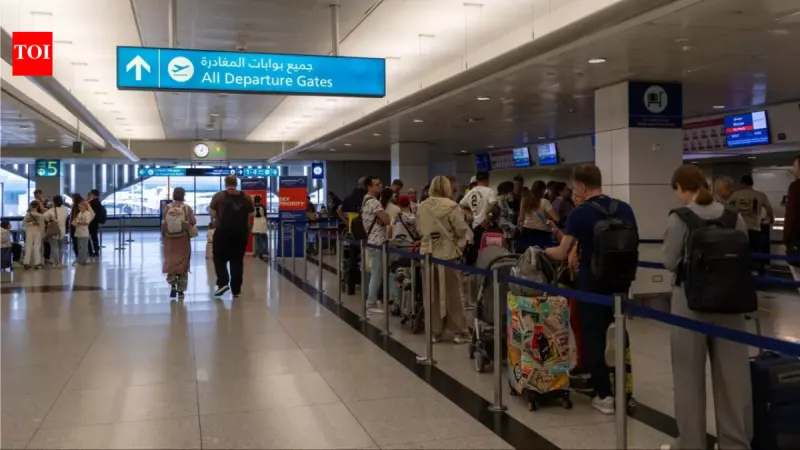
Iraq closed its national airspace on February 28, grounding flights and forcing widespread diversions following a joint U.S.-Israeli military operation.
Key Takeaways
- •Closed Iraqi national airspace on February 28, 2026, amid military operations.
- •Grounded all flights at Erbil International Airport, causing widespread diversions.
- •Followed a joint U.S.-Israeli military operation named 'Lion's Roar' targeting Iran.
- •Highlights increasing geopolitical risk and airspace constriction for Mideast carriers.
Iraq has closed its national airspace to all commercial air traffic, a direct response to a joint U.S.-Israeli military operation targeting sites in neighboring Iran. The decision, effective February 28, 2026, has caused significant Middle East flight disruptions, grounding aircraft and forcing international carriers to execute widespread diversions. This airspace closure highlights the acute vulnerability of commercial aviation to regional geopolitical conflicts and the immediate operational challenges they create.
The swift escalation of military activity led to an immediate and comprehensive shutdown of vital air corridors. The Iraqi Ministry of Transport and the Iraqi Civil Aviation Authority (ICAA) confirmed the closure applies to all incoming, outgoing, and transiting aircraft. Maitham al-Safi, a spokesperson for the transport ministry, stated that the airspace closure was preceded by the complete evacuation of all active air traffic to ensure safety. As a direct result, all flights at Erbil International Airport were suspended, according to reports from Shafaq News, impacting a key hub in the region.
Military Operation and Regional Response
The airspace closure was triggered by a military operation against Iran, which was named "Lion's Roar" by Israel and "Operation Epic Fury" by the Pentagon. U.S. President Donald Trump announced American involvement in "major combat operations in Iran," stating the objective was "to defend the American people by eliminating imminent threats from the Iranian regime." An Israeli military statement framed its participation as a "preemptive strike" based on intelligence suggesting an imminent attack from Iran.
The repercussions extended beyond Iraq, creating a cascading effect across the region's aviation network. According to Outlook Traveller, several other nations took similar precautionary measures, with Iran, Kuwait, Bahrain, and the UAE either fully closing or significantly limiting their airspace. Iran's Civil Aviation Organisation issued a Notice to Airmen (NOTAM) to formalize its airspace restrictions, a standard regulatory procedure during such events. The ICAA in Iraq confirmed its initial 24-hour closure was subsequently extended, leaving the timeline for reopening uncertain and dependent on the de-escalation of military activities.
Industry Impact and Operational Challenges
The coordinated airspace closures have led to severe operational challenges for international airlines. Flight tracking data from Flightradar24 showed a pattern of widespread flight cancellations and significant diversions as carriers scrambled to avoid the conflict zone. This is a clear example of aviation disruption due to geopolitical conflict, a recurring trend that increases operational costs through longer flight times and higher fuel consumption.
The closures have resulted in severe airspace constriction. With vast sections of airspace over Iraq and Iran unavailable, airlines are being forced into narrow alternative corridors, primarily over Saudi Arabia and Egypt. This rerouting is causing significant air traffic congestion in the remaining open corridors, increasing complexity for air traffic controllers and flight planners. The presence of active military operations, including missile launches, poses a direct physical threat to commercial aircraft, reinforcing the necessity of these precautionary closures by civil aviation authorities. The situation underscores the increased operational risk airlines face when navigating volatile geopolitical landscapes.
Why This Matters
This large-scale airspace closure serves as a stark reminder of how rapidly geopolitical events can impact global aviation. For airlines, it demonstrates the critical need for agile contingency planning to manage sudden route unavailability and the associated financial burdens. The event reinforces the industry's fundamental principle that safety imperatives will always supersede commercial operations, even at great cost and disruption to the global air transport network.
For global airline trends and commercial aviation news, turn to flying.flights. Track policy changes, airspace rules, and global aviation governance in the Regulatory category at flying.flights/regulatory.
Written by Ujjwal Sukhwani
Aviation News Editor & Industry Analyst delivering clear coverage for a worldwide audience. Covers flight operations, safety regulations, and market trends with expert analysis.
Visit Profile