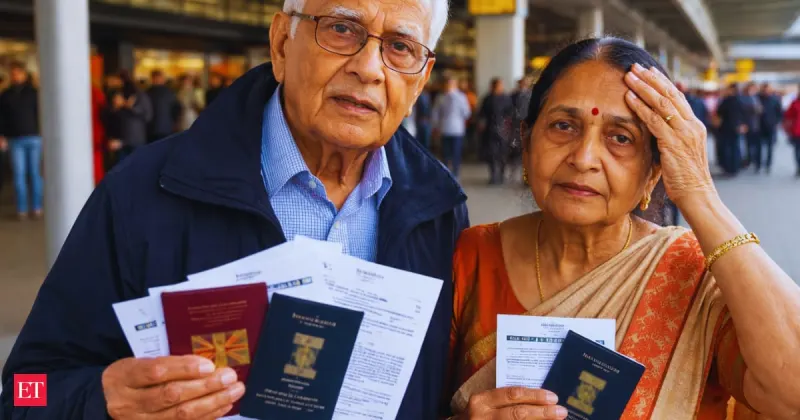
UK Issues UAE Travel Warning; Dubai Airports Suspend All Flights Indefinitely

Aviation News Editor & Industry Analyst delivering clear coverage for a worldwide audience.

The UK FCDO issued an urgent travel warning for the UAE after strikes on Dubai, prompting a total suspension of flights from DXB and DWC airports.
Key Takeaways
- •Issued 'against all but essential travel' warning for the entire UAE.
- •Suspended all flight operations indefinitely at Dubai International (DXB) and Dubai World Central (DWC).
- •Confirmed minor damage to a DXB concourse and injuries to four staff members.
- •Linked to retaliatory strikes following the death of Iran's Supreme Leader.
The United Kingdom's Foreign, Commonwealth & Development Office (FCDO) has issued an urgent travel advisory for the United Arab Emirates (UAE), warning against all but essential travel following missile and drone attacks on Dubai. In response to the escalating security situation, authorities have suspended all flight operations at Dubai International (DXB) and Dubai World Central (DWC), effectively shutting down the world's busiest international air travel hub and stranding hundreds of thousands of passengers globally.
The unprecedented move comes in the wake of retaliatory strikes linked to the death of Iran's Supreme Leader, Ayatollah Ali Khamenei, on or around February 28, 2026. The attacks directly impacted civilian infrastructure, creating the most significant disruption to the global aviation network since the COVID-19 pandemic.
Operational Shutdown in Dubai
According to a statement from Dubai Airports, all flight operations at both DXB and DWC were suspended until further notice. This has led to mass cancellations by the hub's primary carriers. Emirates confirmed it has suspended all its operations to and from Dubai until at least 15:00 UAE time on Tuesday, March 3, 2026. Similarly, low-cost carrier flydubai announced a temporary suspension of all its flights to and from Dubai for the same period.
The UAE's General Civil Aviation Authority (GCAA) enacted a temporary partial closure of the country's airspace as a precautionary measure, further compounding the logistical challenges for airlines operating in the region. The closure forces complex and costly rerouting for flights that would typically transit through the heavily trafficked Gulf corridor.
UK Government Response
The UK government's response was swift and decisive. The FCDO updated its official guidance on February 28, 2026, advising against all but essential travel to the entire UAE. In a rare and serious directive, the FCDO Travel Advice for the United Arab Emirates also instructed British nationals currently in the country to immediately shelter in a secure indoor location and avoid all travel until the situation clarifies. This 'shelter in place' order underscores the perceived severity of the threat.
On-the-Ground Incidents and Damage
Dubai's Media Office confirmed that the attacks caused physical damage and injuries within the city. One incident resulted in minor damage to a concourse at Dubai International (DXB). In a statement, a spokesman for Dubai Airports said, “Dubai Airports confirms that a concourse at Dubai International (DXB) sustained minor damage in an incident, which was quickly contained. Emergency response teams were immediately deployed and are managing the situation in coordination with the relevant authorities. Four staff sustained injuries and received prompt medical attention.”
Beyond the airport, debris from intercepted drones or missiles reportedly caused fires at two prominent luxury hotels, the Burj Al Arab and Fairmont The Palm. These incidents on the ground, targeting highly visible civilian locations, directly prompted the immediate suspension of airport operations and the issuance of international travel warnings.
Industry Impact and Geopolitical Context
The immediate trigger for the crisis was the death of Iran's Supreme Leader, which was followed by retaliatory military action. The direct targeting of civilian infrastructure in a major economic partner like the UAE marks a significant escalation in regional tensions. For the aviation industry, the shutdown of Dubai is a systemic shock. DXB is a critical node for connecting Europe and the Americas with Asia, Africa, and Australia. Its closure has an immediate cascading effect on global flight schedules, crew rotations, and air cargo logistics.
Major international carriers beyond the Gulf region, including British Airways and Qatar Airways, have cancelled services and are grappling with the immense task of rebooking and accommodating stranded passengers. The situation highlights the profound vulnerability of commercial aviation to geopolitical conflicts, where a regional dispute can paralyze a critical component of the world's transportation infrastructure with little to no warning.
Why This Matters
This development demonstrates how quickly regional geopolitical instability can translate into a global-scale crisis for the aviation industry. The shutdown of Dubai's airports serves as a stark reminder of the inherent risks in operating major hubs in volatile regions. For airlines and passengers, it underscores the fragility of international travel networks and the potential for severe, widespread disruption stemming from non-aviation-related conflicts.
Get breaking commercial aviation news and expert airline analysis at flying.flights. For airline finances, mergers, and industry strategy, visit the Business category at flying.flights/business.
Written by Ujjwal Sukhwani
Aviation News Editor & Industry Analyst delivering clear coverage for a worldwide audience. Covers flight operations, safety regulations, and market trends with expert analysis.
Visit Profile