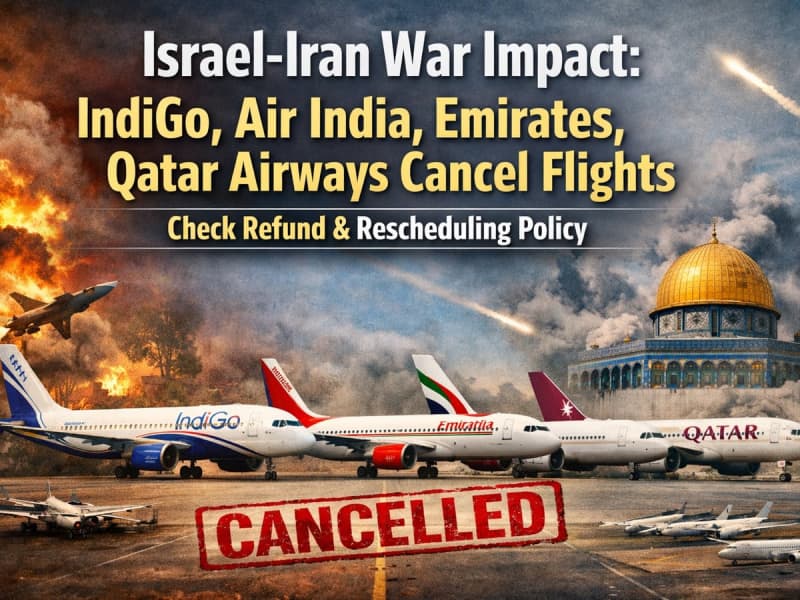
Middle East Conflict Halts Flights, Disrupts Global Air Travel

Aviation News Editor & Industry Analyst delivering clear coverage for a worldwide audience.
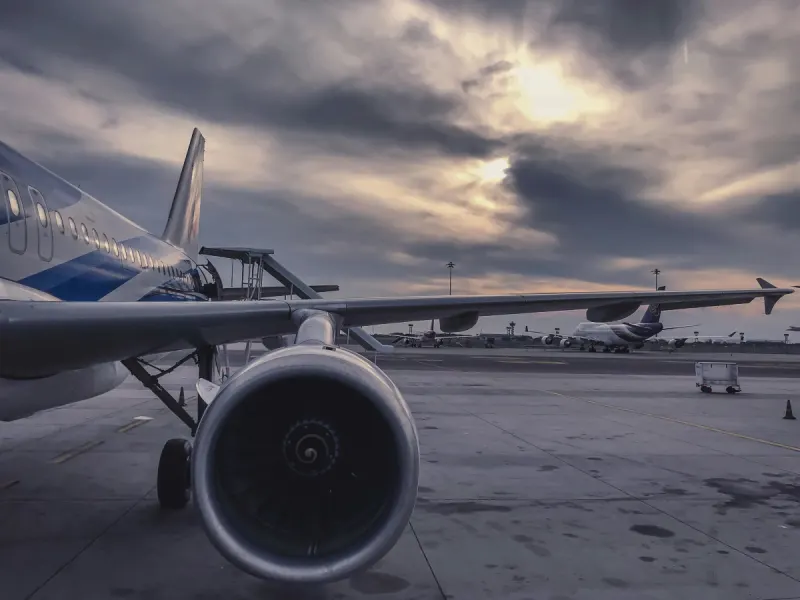
The escalating Middle East conflict has forced widespread airspace closures and thousands of flight cancellations, stranding passengers and rerouting global traffic.
Key Takeaways
- •Cancels thousands of flights across the Middle East, with 2,000 cancellations on a single day.
- •Forces major rerouting of Europe-Asia traffic away from critical air corridors over Iraq and Iran.
- •Raises significant concerns over passenger safety, operational costs, and rising jet fuel prices.
- •Highlights the global aviation network's extreme vulnerability to regional geopolitical conflicts.
A significant escalation of conflict in the Middle East has triggered widespread airspace closures and mass flight cancellations, severely disrupting global air traffic and highlighting the aviation sector's vulnerability to geopolitical risk. The immediate impact saw thousands of flights grounded, affecting key international hubs and forcing complex rerouting of critical Europe-Asia air corridors.
The disruption underscores the fragile nature of global airline operations when faced with regional instability. This recent event has further complicated a global air-traffic system already strained by the closure of Russian airspace following the war in Ukraine. The combination of these no-fly zones presents unprecedented challenges for airline network planners and air traffic management.
Industry Impact
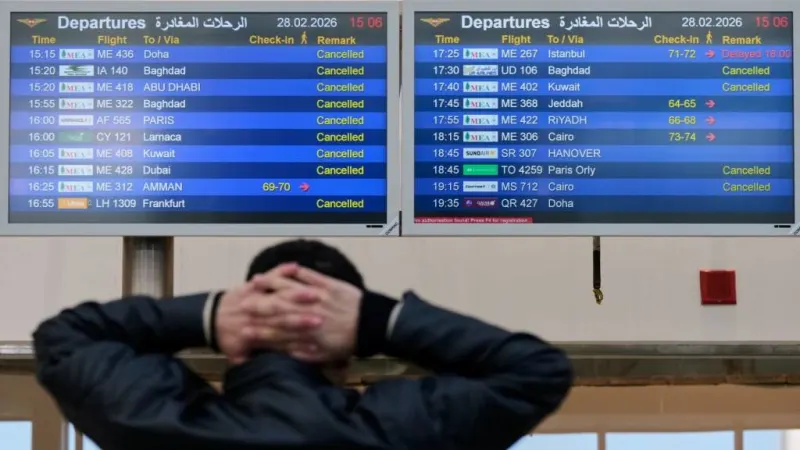
Data from aviation analytics firm Cirium illustrates the scale of the disruption. On one Sunday alone, 2,000 cancellations were recorded out of approximately 4,000 scheduled flights in the region, affecting an estimated 900,000 aircraft seats. The following Monday saw at least 1,560 inbound flights to the Middle East cancelled. The closures directly impacted major hubs, including Dubai International Airport and Kuwait's main airport, which were reportedly hit during retaliatory strikes. In response, countries including Iran, Iraq, Israel, Syria, Kuwait, Qatar, and the United Arab Emirates announced at least partial closures of their airspace.
Major international carriers were forced to react swiftly. Air France, for example, extended its suspension of flights to Dubai and three other regional airports until March 5. Flight tracking data from Flightradar24 showed skies empty of civil aircraft over the UAE, Qatar, Kuwait, and Iraq, with the vital air corridor over the Euphrates Valley completely clear.
Rerouting and Airspace Complexity
The airspace closures have forced a significant rerouting of traffic between Europe and Asia. Airlines are now primarily using two alternative corridors: a southern route via the Gulf of Suez and across central Saudi Arabia and Oman, or a much more northern route through the narrow Armenia-Azerbaijan corridor. This northern passage has become increasingly critical to global aviation since Russia barred Western carriers from its airspace in 2022.
The multiplication of these no-fly "red zones" has created a complex operational environment. Thierry Oriol, a senior representative of the French airline pilots' union SNPL (Syndicat National des Pilotes de Ligne), told Agence France-Presse (AFP), "We have never been in such a difficult situation. Even during the Cold War, everyone flew all over the place. There weren't all these no-fly zones."
Economic and Safety Concerns
The International Air Transport Association (IATA), a trade group representing about 360 airlines, has voiced serious concerns over safety. The conflict raises memories of past tragedies, including the downing of Malaysia Airlines Flight 17 (MH17) over Ukraine in 2014, which killed 298 people, and the accidental shootdown of a Ukrainian Boeing by Iran in 2020, which killed 176. "It is critical that states respect their obligation to keep civilians and civil aviation free from harm," said Willie Walsh, Director General of IATA.
The conflict also introduces significant economic uncertainty. Middle Eastern airlines accounted for 9.5 percent of global air traffic last year, with hubs in Dubai and Doha acting as crucial connectors for long-haul travel. The disruption threatens a previously optimistic outlook for 2026, when IATA had forecast record traffic of 5.2 billion passengers and industry revenues approaching one trillion dollars. IATA warned that the war creates unpredictability in air traffic levels and, critically, could lead to a spike in jet fuel costs, a primary driver of airline operating expenses.
Why This Matters
This event starkly demonstrates how regional conflicts can have immediate and cascading effects on the global aviation network, which relies on stable access to strategic airspace. For airlines, it means increased operational costs from longer flights, higher fuel burn, and complex crew scheduling. For passengers and cargo, it results in delays, cancellations, and higher prices, threatening the industry's post-pandemic recovery and forcing a re-evaluation of geopolitical risk in network planning.
Get breaking commercial aviation news and expert airline analysis at flying.flights. Follow aviation sustainability efforts, emissions research, and green initiatives in the Environmental section at flying.flights/environmental.
Written by Ujjwal Sukhwani
Aviation News Editor & Industry Analyst delivering clear coverage for a worldwide audience. Covers flight operations, safety regulations, and market trends with expert analysis.
Visit Profile