Why Airbus Leads Narrowbody Flights While Boeing Controls Widebody Dominance?
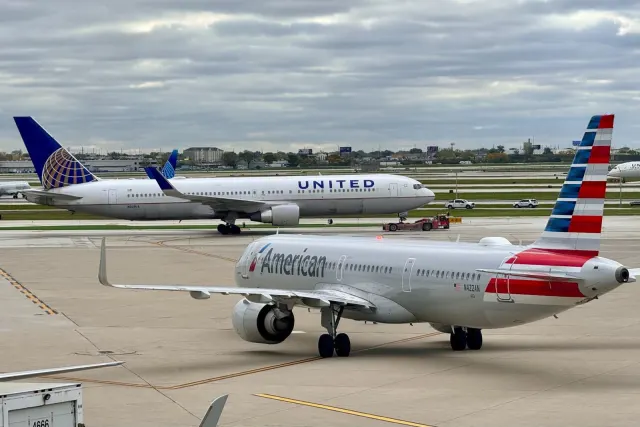
Airbus' narrowbody fleet has flown more flights since 2022; Boeing maintains strong widebody dominance with a 60% larger fleet and robust orderbook.
Loading aviation news...
Airbus' narrowbody fleet has flown more flights since 2022; Boeing maintains strong widebody dominance with a 60% larger fleet and robust orderbook.
Major US airlines issued widespread travel waivers for a massive winter storm that threatens 1,500+ cancellations across the South, Mid-Atlantic, and Northeast.
Aviation stakeholders commend the planned North East Shuttle regional airline, but experts warn of management challenges and funding limits for aircraft acquisition.
United CEO Scott Kirby declared a "line in the sand" at Chicago O'Hare (ORD), promising a flight surge to prevent American Airlines from gaining any new gates in 2027.
Delta Air Lines ordered 30 Boeing 787-10 Dreamliners, with 30 options, for long-haul international growth and widebody fleet modernization starting in 2031.
Global airport construction projects are surging to a $770 billion pipeline as ACI World and IATA report record passenger traffic surpassing 2019 levels.
The recent ICAO Assembly solidified the industry's commitment to sustainable aviation practices, emphasizing the need for cleaner technologies and a global net-zero goal.
Ryanair flight FR3133 from London was diverted to Larnaca Airport after two unsuccessful landing attempts at Paphos due to strong winds and severe turbulence.
KLM Royal Dutch Airlines began offering complimentary in-flight Wi-Fi on European routes, starting with the Airbus A321neo fleet to enhance passenger experience.
Embraer is displaying the E195-E2 and E175 at Wings India 2026, anticipating a demand for 500 regional jets in India over the next two decades.
India's Civil Aviation Ministry is redistributing domestic flight slots vacated by IndiGo following the DGCA's 10% winter schedule cut due to December disruptions.
Global production of Sustainable Aviation Fuel is ramping up rapidly as airlines and governments commit to deep carbon reductions in air travel.
The FAA approved the Terminal Flight Data Manager (TFDM) for deployment at 49 major US airports, aiming to boost efficiency and drastically reduce flight delays.
Singapore Airlines announced significant airfare reductions for flights from multiple Australian cities to Ho Chi Minh City, Vietnam, signaling a competitive market shift.
Ryanair's substantial order for up to 300 Boeing 737 MAX 10 jets strengthens the manufacturer's narrowbody backlog despite the variant's delayed certification.
Airbus and Boeing forecasts project a massive, sustained need for new pilots and aviation technicians; fleet growth and retirements drive the decade-long demand.
Embraer's Eve Air Mobility secured $150 million in debt financing from a bank syndicate, accelerating its eVTOL development and full-scale prototype flight testing.
EASA issued an Emergency Airworthiness Directive for the Airbus A320 family, mandating immediate replacement of flight control computers due to solar radiation risk.
Lufthansa Flight LH2473, an Airbus A320neo bound for Munich, declared a Squawk 7700 emergency shortly after takeoff from London Heathrow, safely returning due to technical issues.
The Ministry of Civil Aviation (MoCA) will prioritize airlines that use additional aircraft and crew for new flights when allocating slots recently vacated by IndiGo, aiming for genuine capacity expansion.